
Organic-first growthfor ecommerce —paid when it earns it.
An ecommerce digital marketing agency built around the channels that compound — SEO, content, and email — with paid added only once the funnel proves it converts. For store owners watching CAC climb while organic stops growing. We start where the margin is yours, not ours.
By Manpreet Singh, Founder · Proscube
Proof
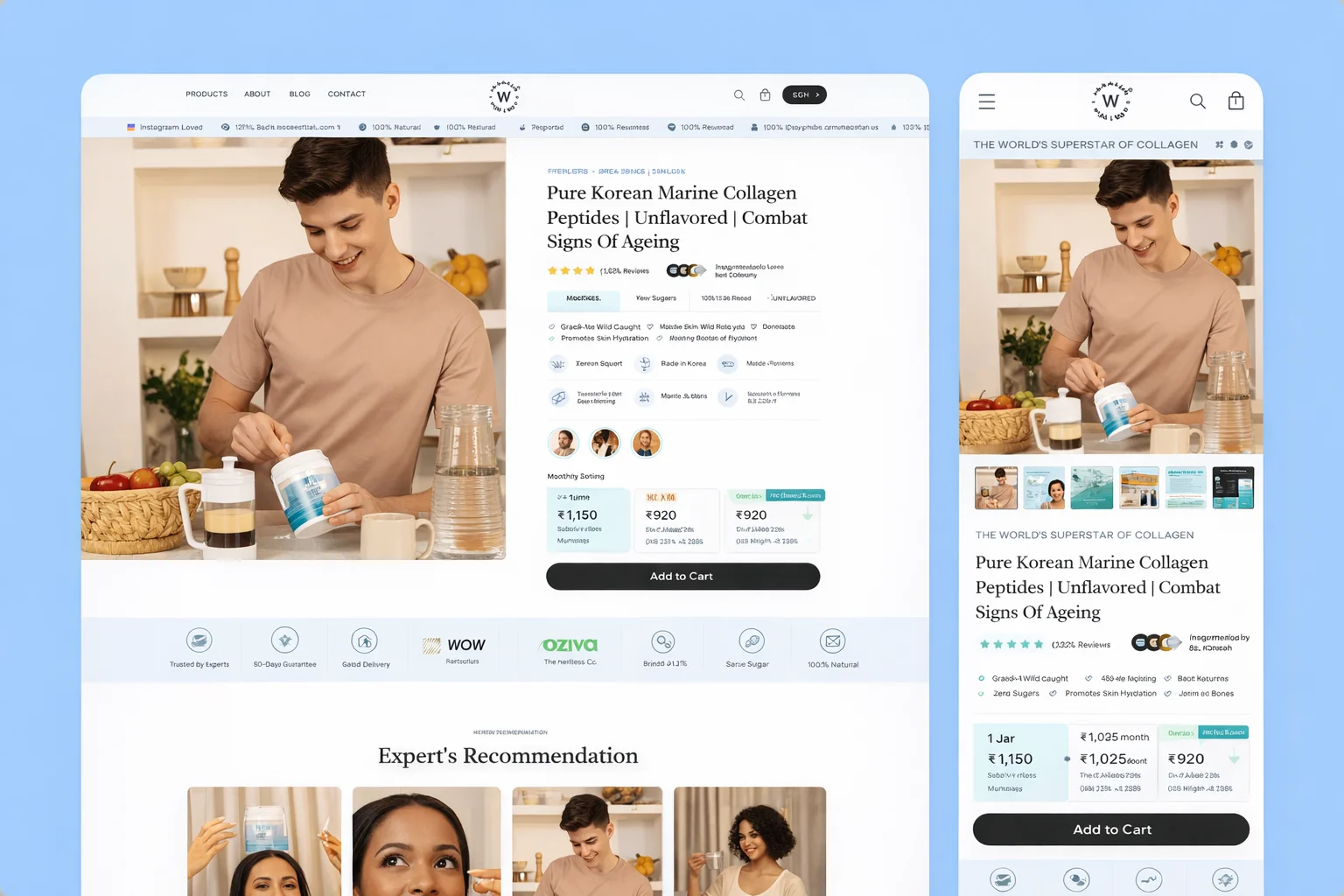
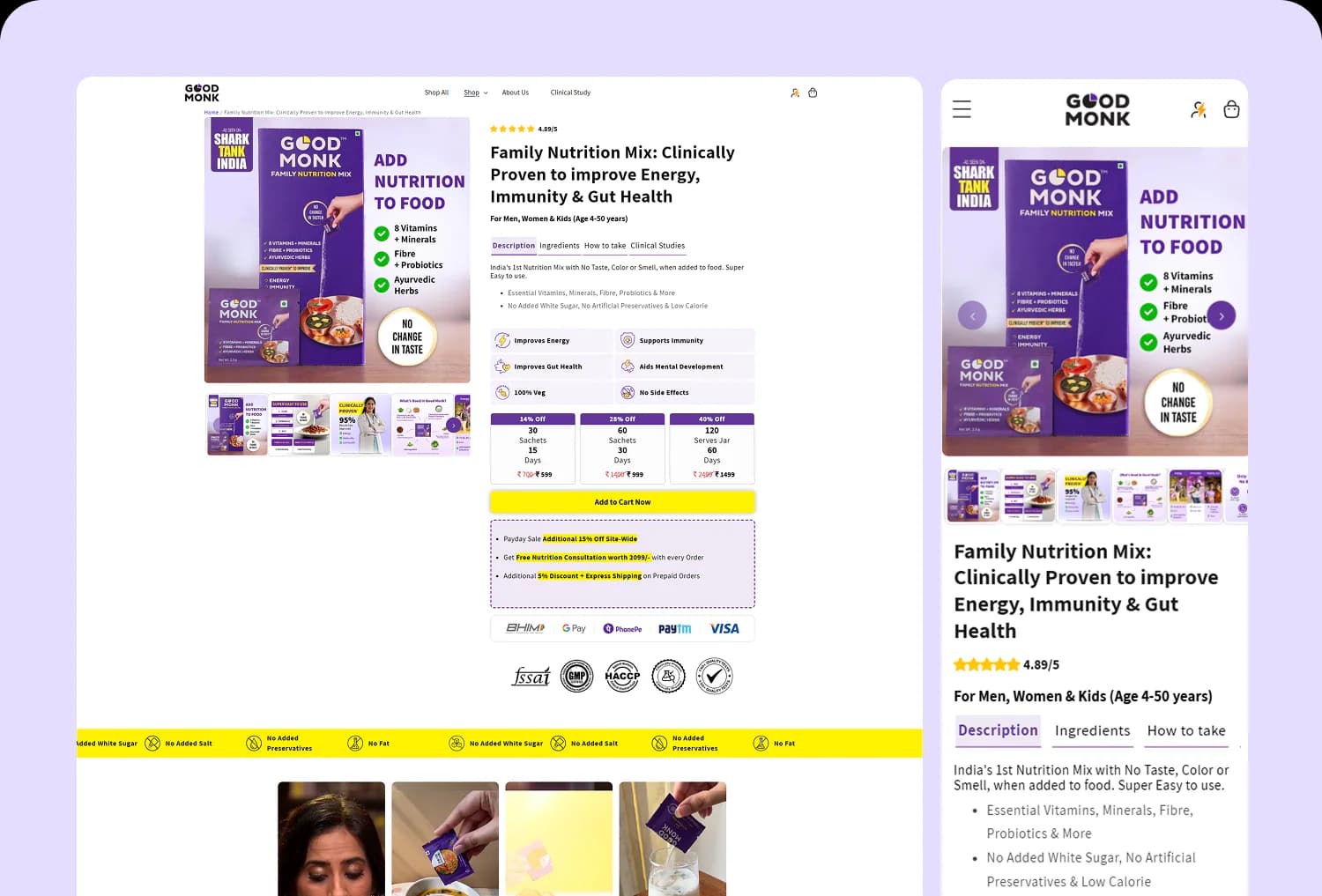
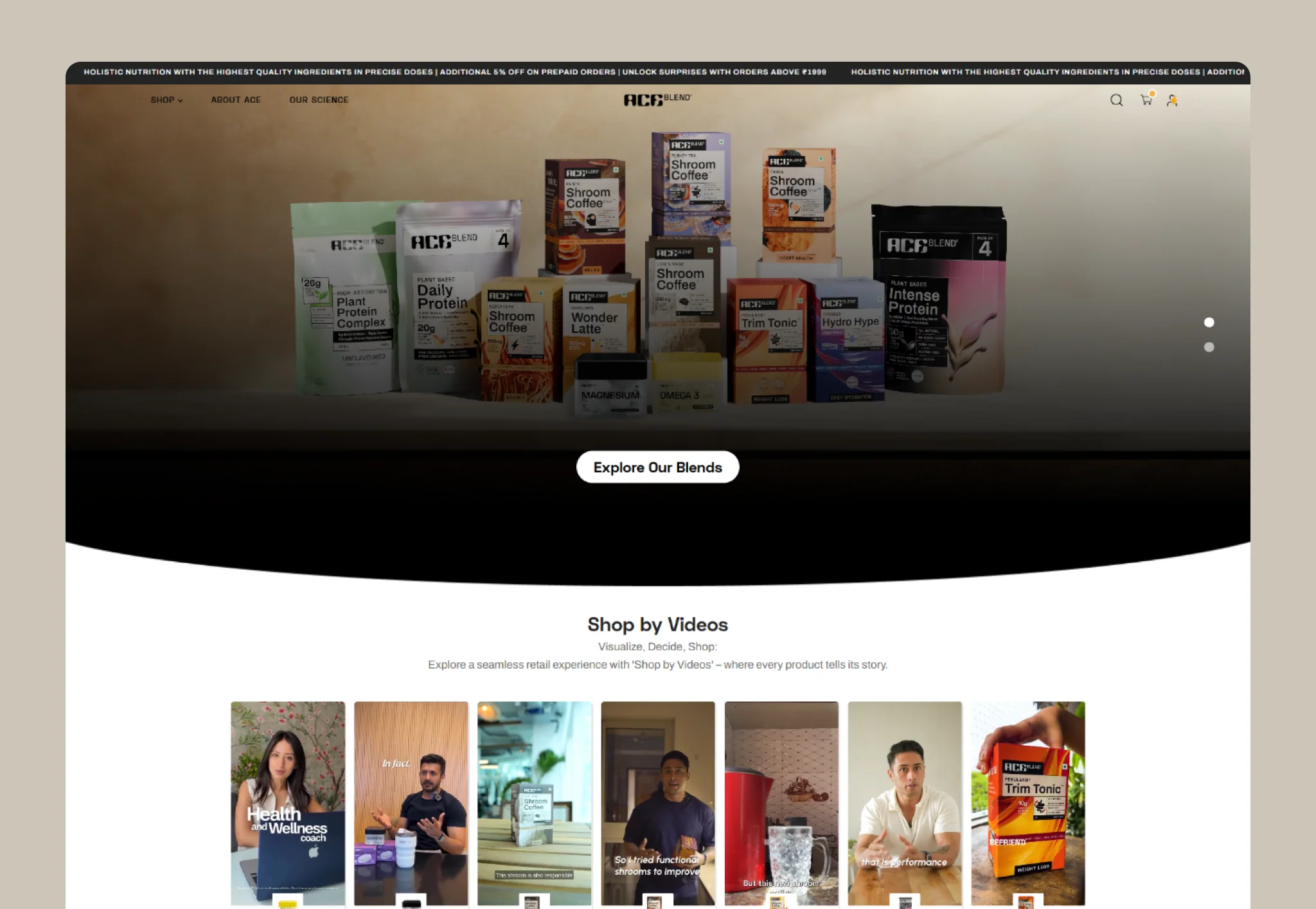
Stores we have built.


When CAC climbs and organic stops compounding
You can feel both halves of this problem in the same monthly report. Paid is getting more expensive — your cost to acquire a customer has crept up quarter over quarter, ad platforms keep raising the floor, and the same budget buys fewer customers than it did a year ago. Meanwhile the channel that's supposed to offset that — organic — has gone flat. Your rankings aren't growing, your blog hasn't moved the needle in months, and your email list is a database you barely send to.
So you're in the worst version of the trap: increasingly dependent on the most expensive channel, with the cheap compounding channels neglected. Every new customer costs more, and you have no growing source of traffic that isn't metered. The instinct is to spend more on ads, because that's the lever that moves fastest — but it's also the lever that makes the dependency worse.
The way out isn't to abandon paid; it's to rebalance. The channels that compound — SEO, content, and email — get cheaper per customer over time, because the work you did last quarter keeps paying this quarter. Paid stays flat or gets more expensive; you're renting that traffic, and the rent goes up. A healthy ecommerce growth engine uses both, but it's built on the compounding channels and uses paid to accelerate — not as the whole strategy. That rebalancing is what we do.
Organic-first, because the margin should be yours
Here's something most agencies won't tell you: the industry is structurally biased toward paid media, because that's where agencies make their easiest margin. A percentage of ad spend scales with the budget you hand over, the work is recurring, and "spend more" is an easy recommendation to make. So a lot of "growth marketing" is really just media buying with a strategy deck attached.
We start the other way around. Our model is organic-first: we build the channels you own — SEO, content, and email — into a compounding engine, and we add paid only when the funnel has proven it converts. That order matters. Running paid traffic into a store that doesn't convert, or a brand with no organic foundation, just means paying full retail for every customer forever. Fix the foundation first, and paid becomes an accelerant on a machine that already works, instead of life support for one that doesn't.
This isn't anti-paid — paid is a real, powerful channel, and for some brands it's the right primary one (more on that below). It's that the default should be the channels where the margin compounds in your favor. We'd rather build you an asset than rent you an audience.
What's included
A growth engagement is built from the channels that compound, with paid layered in when it earns its place:
Technical & on-page SEO
Site health, Core Web Vitals, crawlability, structured data, and on-page optimization — the foundation everything else compounds on.
Content strategy & production
A keyword and topic plan mapped to buyer intent, then the content itself — written, optimized, and built to rank and convert, not just fill a blog.
Email & SMS (Klaviyo)
Lifecycle flows — welcome, abandoned cart, post-purchase, winback — plus campaign calendars, in Klaviyo or your existing platform.
Analytics & attribution
GA4, proper event tracking, and reporting tied to revenue — so you can see which channel is actually driving customers, not just clicks.
Paid media management
Meta and Google managed against revenue and contribution margin — added once the funnel converts, not on day one by default.
Conversion handoff
When the bottleneck is the store converting rather than the traffic, we flag it and bring in CRO — because more traffic to a leaky funnel is wasted spend.
Strategy & reporting
A clear monthly plan and a report you can actually read — what we did, what it returned, and what comes next, on a recurring call.
Brand & messaging consistency
Positioning and messaging kept consistent across channels, so SEO, content, email, and ads reinforce one story instead of three.
What's in a typical month
Vague retainers hide vague work, so here's roughly what a month looks like — it flexes by engagement size, but the shape is concrete.
On a typical mid-tier engagement, a month includes:
- 4–8 pieces of content (blog posts, landing pages, or product-content updates), researched, written, and optimized.
- A batch of technical SEO fixes — usually 5–15 issues worked through, from site speed to structured data to internal linking.
- 4–8 email/SMS sends (campaigns plus flow improvements), built and scheduled in Klaviyo.
- Ongoing keyword and ranking monitoring, with the content plan adjusted to what's actually moving.
- A monthly strategy call and a written report tying the work to revenue, plus async availability through the month.
Larger engagements scale the volume — more content, more channels, paid management on top. Smaller ones focus on one or two channels done well. What stays constant is that you can see the work: specific deliverables, not "we did some marketing." If a month's plan is light, you'll know why and what we're prioritizing instead.
How we work
Growth channel audit
We assess SEO, content, email, paid, and analytics — and find the most underused channel and the biggest leak — before recommending a plan.
Foundation
Fix tracking, technical SEO, and the highest-impact email flows — the groundwork the compounding channels need to actually compound.
Compound
Consistent content, SEO, and email execution — the recurring work that builds owned traffic and revenue month over month.
Scale
Once the funnel converts, layer in or scale paid to accelerate — managed against revenue, with the organic engine still doing the compounding.
What it costs
We work on monthly retainers, scoped to the channels and volume you need. SEO retainers start at $3,000/month. SEO and content combined start at $5,000/month. Full-stack growth — SEO, content, email, and paid management together — runs $8,000 to $15,000/month, depending on scope and how many channels are active.
One thing we're explicit about: paid media spend is separate and is not included in the retainer. The retainer is our fee for the work and management; your ad budget goes directly to Meta, Google, or wherever you're running — we don't currently mark up ad spend or take a percentage of it, because that's the incentive that pushes agencies to recommend more spend than you need.
What moves the number:
- Channel count: one channel done well costs less than a full-stack engine across four.
- Content volume: more content and more campaigns mean more production.
- Competitiveness: ranking in a crowded category takes more work than an underserved one.
We scope after the growth channel audit. One expectation to set up front: most engagements start with a three-to-six-month minimum runway — not a lock-in contract, but the time the compounding channels genuinely need, since SEO and content can't be fairly judged in 30 days.

Ready to talk?
Send us your store and we'll show you which channel is most underused right now — and whether your problem is traffic, conversion, or retention. An honest read, not a pitch.
Reply within 1 business day. Real read, not a sales call.
When organic isn’t enough
Organic-first is our default, not a religion. There are real situations where paid should be your primary channel, and we'll tell you so instead of selling you a content plan that won't move fast enough:
- You need revenue now, not in two quarters. SEO and content compound over months; if you have an urgent target or runway pressure, paid is the channel that delivers this quarter.
- You're launching, with no traffic and no rankings to build on. Paid buys you the first customers and the data to learn from while organic is still being built.
- Your category barely gets searched. If your customers don't search for what you sell — a genuinely new product, an impulse category — there's little organic demand to capture, and paid (especially social) is where you create demand.
- You're testing product-market fit. Paid gives fast, controllable signal; you don't want to invest in compounding channels before you know what's working.
In those cases, paid leads and organic follows once there's a foundation to build on. The point of an organic-first default isn't to avoid paid — it's to make sure you're not renting all your traffic when you could own some of it. If paid is genuinely your best primary channel right now, that's also exactly what our performance marketing work is for.
Who this is for
This is for established ecommerce brands — typically doing $500K+ a year — who are feeling rising CAC and want to build traffic they own instead of renting all of it. It's for store owners who can see that their email list is underused, their content has stalled, and their paid spend is carrying too much of the load, and who want a partner that builds compounding assets rather than just managing ad accounts.
Who it's not for:
- Pre-launch brands with no traffic and no product-market fit. Start with paid for signal; come back for organic once there's a foundation.
- Anyone wanting guaranteed rankings or a viral month. SEO and content are compounding bets, not lottery tickets, and we won't pretend otherwise.
- Brands looking only for a media buyer to spend a budget. If paid is all you want, our performance marketing service is the better fit.
If organic-first isn't right for where you are, we'll point you at what is — often paid first, then back to compounding once it's earned.

Organic-first vs the usual agency model
| Proscube | Paid-first agency | In-house generalist | Freelancer | |
|---|---|---|---|---|
| Default channel | Compounding (SEO/content/email) | Paid media | Whatever they know | Their specialty |
| Fee model | Flat retainer | % of ad spend | Salary | Hourly/project |
| Incentive | Your margin | More spend | Mixed | More hours |
| Channel coverage | Full-stack, organic-led | Paid-heavy | Limited bandwidth | Single channel |
| Builds owned assets | Yes | Rarely | Sometimes | Varies |
| Reporting | Tied to revenue | ROAS-focused | Varies | Varies |
| Typical cost | $3K–$15K/mo | % of spend + fee | Salary load | $2K–$6K/mo |
It depends on your situation, and we'll tell you honestly which. If you have an existing store with traffic and time to compound, organic-first is usually right — it builds traffic you own and lowers blended CAC over time. If you're launching, need revenue this quarter, or are still testing product-market fit, paid first makes more sense — it's faster and gives you data while organic builds. Most established brands benefit from organic-led with paid layered on once the funnel converts. The growth channel audit answers this for your specific case rather than defaulting to whatever pays us more.
Honestly, months, not weeks — and anyone promising faster is overpromising. Technical fixes and on-page work can show movement in 4–8 weeks; content and authority building typically take three to six months to compound into meaningful traffic, longer in competitive categories. That's exactly why we pair SEO with email (which produces revenue quickly) and, when needed, paid (which produces it immediately) — so you're not waiting months with nothing happening while the compounding channels build.
We do, by default — research, writing, and optimization are part of the engagement, so it's not another job on your plate. That said, the best content blends our SEO and production with your product and customer knowledge, so we'll pull on you for expertise, review, and brand voice. If you have an in-house writer, we're happy to brief and edit instead of writing from scratch — whatever produces better content for your budget.
Yes. We work in Klaviyo by default for email, and either Klaviyo or a dedicated SMS platform like Postscript or Attentive for SMS, and we're comfortable in the tools you already use — GA4, Shopify's analytics, your existing SEO and reporting stack. We're not here to force a migration to whatever we get a kickback on; we use what works for you and only suggest a change when a tool is genuinely holding results back.
Most engagements start with a three-to-six-month runway, because the compounding channels need time to show their return — judging SEO or content after one month is judging it before it's had a chance to work. We're not interested in long lock-in contracts; the runway exists so the work can actually compound, not to trap you. If a faster channel is what you need, we'll structure around that instead.
First, we define what 'working' means up front — revenue, traffic, and the specific metrics that matter for your goals — so it's measurable, not vibes. We report against those monthly and adjust based on what the data shows. Marketing is iteration, not a guarantee, and we won't promise a number we can't control. What we will do is be honest early: if a channel isn't returning, we say so and reallocate, rather than quietly running the same plan and billing for it.
Got a project?
Ready to grow without renting all your traffic?
Send us your store URL or your idea. You’ll hear back within one business day — an honest read on whether we’re the right fit. No sales call, no slide deck.