
Get cited inChatGPT, Perplexity,and AI Overviews.
Search is splitting from blue links to AI answers. AI engine optimization — AEO, or generative engine optimization (GEO) — gets your brand cited in ChatGPT, Perplexity, and Google AI Overviews. We're early in this discipline, and the case study you're reading is one of them.
By Manpreet Singh, Founder · Proscube
Proof
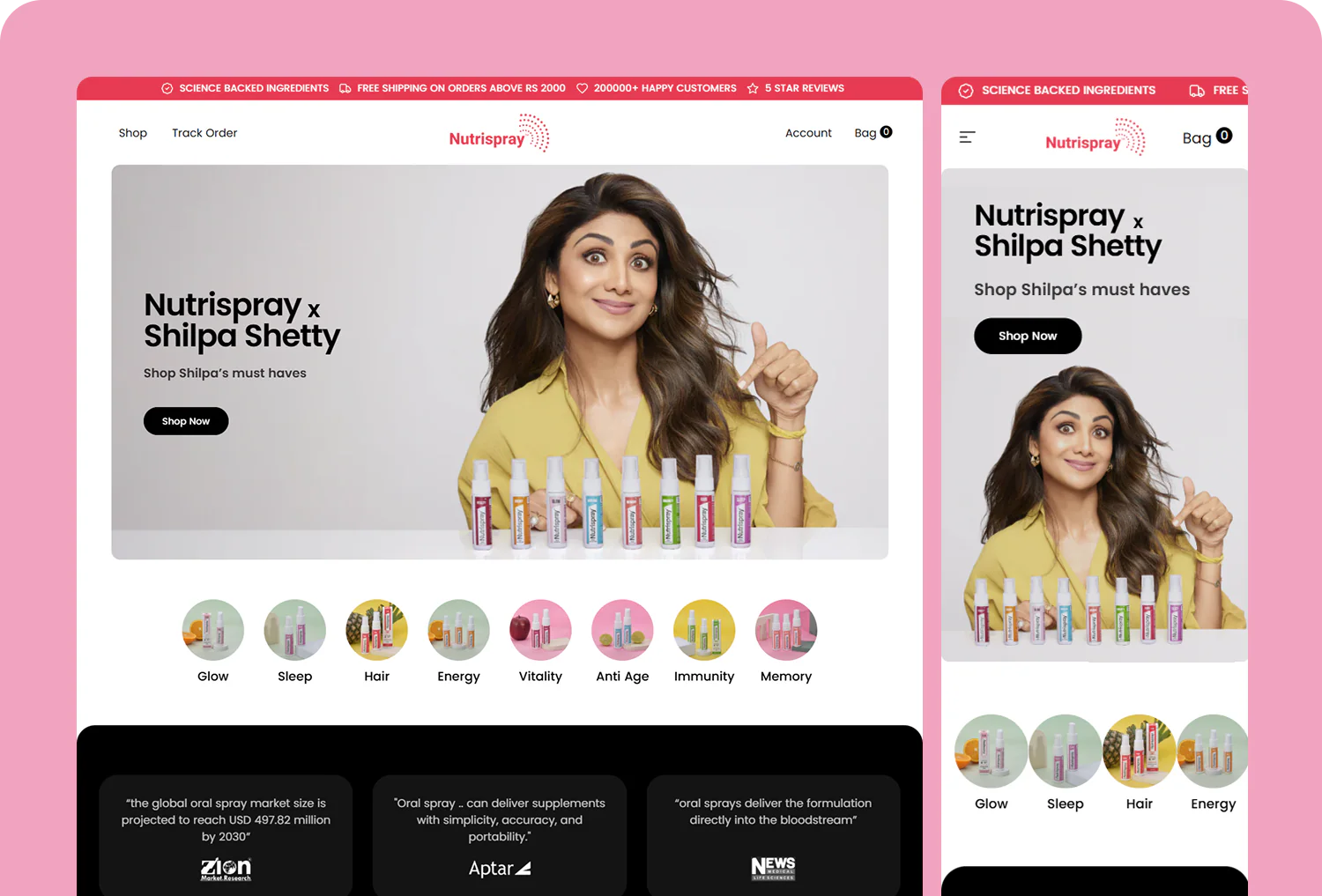
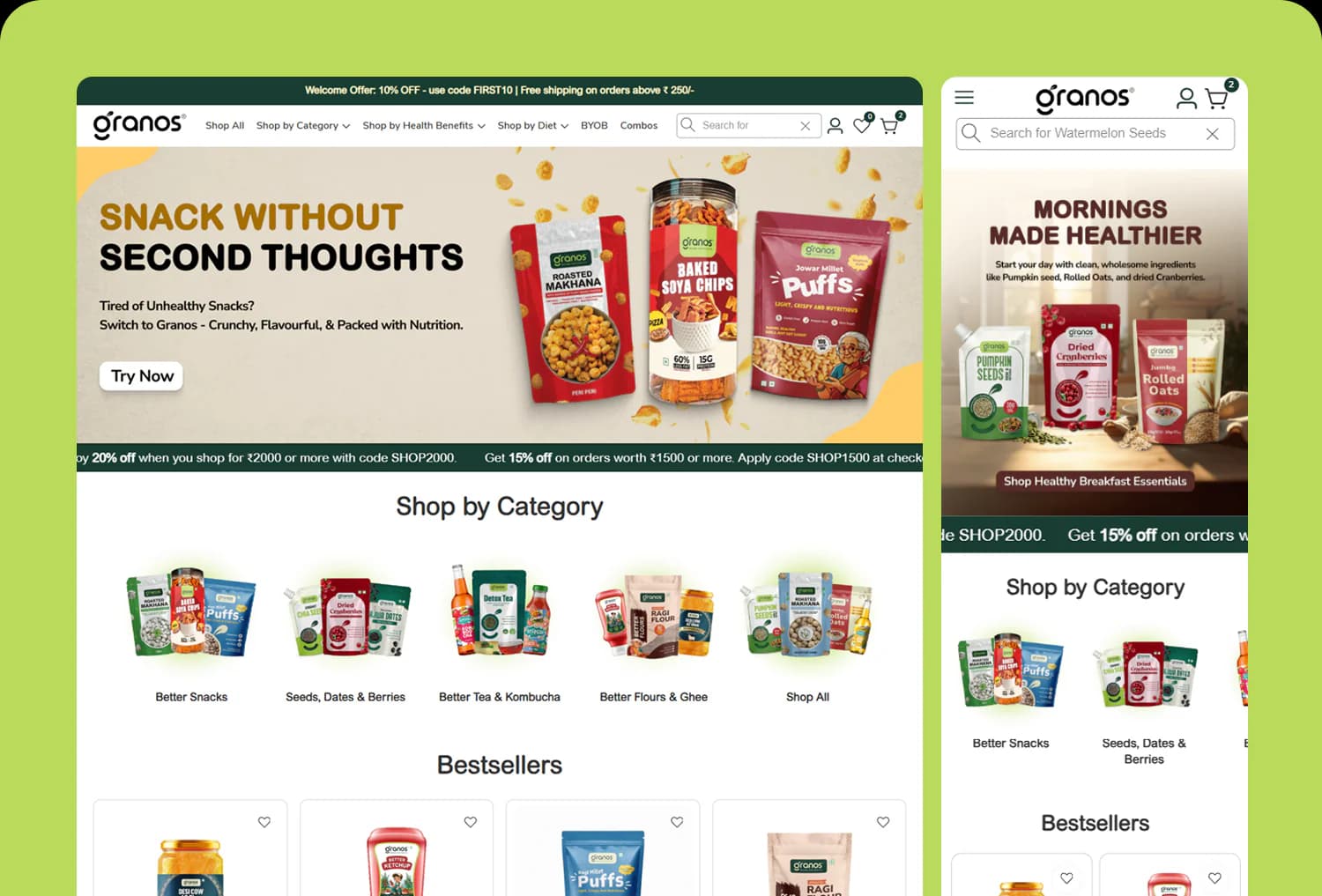
Stores we have built.


Search stopped sending the clicks it used to
Something changed in your analytics, and it wasn't your rankings. You're still on page one for the terms that matter. But organic traffic stopped compounding — it flattened, or started slipping — even though your positions held. The clicks just aren't coming the way they did.
Here's what's happening. Search is splitting from a list of blue links into a layer of AI answers. Ask ChatGPT or Perplexity a question and you get a written answer with a handful of cited sources — often with no click to anyone. Google now puts an AI Overview above the organic results, summarizing the answer so the user never scrolls. For a growing share of searches, the answer is the destination. The ranking still exists; the click doesn't.
That breaks the deal SEO was built on. For two decades the game was: rank for a keyword, earn the click. The new game is: get cited in the answer. If ChatGPT names three brands when someone asks for the best option in your category and you're not one of them, you've lost the customer before a single page loads — and your keyword ranking didn't save you.
AI engine optimization — AEO, also called generative engine optimization, or GEO — is how you compete in that layer. It isn't a rebrand of SEO; it's optimizing for a different mechanism: being the brand an AI cites, recommends, and pulls into its answer. The brands that get this right early own the answer while their competitors are still optimizing for a results page fewer people read every month.
What changes when AI cites your brand
When AI engines start citing you, the pattern is consistent even if the exact wording never is. Someone asks an assistant a question in your category — a comparison, a "best X for Y," a "how do I" — and your brand appears in the answer, named alongside or instead of competitors, sometimes with a link, sometimes just as a recommendation.
You don't rank for that the way you rank for a keyword. You earn it by being the source the model trusts: content structured so a machine can extract a clear, quotable answer; entities — your brand, products, people — defined unambiguously; structured data that tells the engine what you are; and enough corroboration across the web that the model treats you as authoritative.
We won't show you fabricated screenshots of "your brand in ChatGPT." Citations vary by prompt, model, and day, and anyone showing you guaranteed placements is selling something. What we can describe is the mechanism — because it's the same one we're using on this site: make your content the clearest, best-structured, most citable answer to the questions your buyers actually ask an AI, and become the brand that gets named when they ask.
What an AEO/GEO engagement includes
Scope depends on your content and starting point, but a typical engagement covers:
AEO/GEO audit
We assess how AI engines currently see — or ignore — your brand, where your content fails machine extraction, and which questions in your category you should own.
Entity & content restructuring
Rewriting and restructuring key content so it answers real questions clearly and quotably — the format AI engines pull from.
Schema & structured data
Implementing the schema types that matter — Service, Article, Organization, FAQPage, HowTo — so engines can parse what you are and what you know.
Topical authority & content clusters
Building clusters of interlinked content that establish you as the authority on a topic, not a one-page also-ran.
Author & trust signals
Named author attribution, credentials, and the freshness and citation signals that make a model treat your content as trustworthy.
Measurement & monitoring
Tracking how AI engines reference your brand and category over time, and refining based on what actually gets cited.
The technical signals AEO/GEO runs on
For the technically inclined — these are the signals we build for, because they're what AI engines actually weigh:
Entity-clear content
Unambiguous definitions of your brand, products, and people, so a model knows exactly what you are.
The right schema types
Service, Article, Organization, FAQPage, and HowTo structured data — machine-readable context on every page.
Topical authority through clusters
Content organized into interlinked clusters that prove depth on a subject, not scattered one-offs.
Named author attribution
Real authors with credentials — models weigh source trust, not just text.
Freshness signals
Updated, dated content. Staleness is a trust penalty in AI answers.
Citation density
Linking out to authoritative sources, the same way the content models trust does.
How an AEO engagement runs
AEO/GEO audit
We map how AI engines see your brand today, the questions you should own, and the gaps in your content and structured data.
Strategy & roadmap
A prioritized plan: which topics to own, which content to restructure or create, and which technical signals to fix first.
Build & ship
Content restructuring, schema and entity work, content clusters, and author and trust signals — built and shipped.
Monitor & compound
We track citations and category visibility over time and keep refining. AEO compounds — the work gets stronger as authority builds.
What AEO/GEO costs
AEO and GEO are newer than the rest of our work, and we price them transparently. An AEO/GEO audit starts at $3,000 — how AI engines see you today, the questions worth owning, and a prioritized roadmap. A full engagement — restructuring content, implementing schema and entity work, building topical clusters — runs $8,000 to $25,000, depending on how much content you have and how far it is from machine-readable. Because AEO compounds, most brands move to an ongoing retainer after the initial work: AEO retainers run $4,000 to $10,000/month.
What moves the number:
- Content volume: a 20-page site is a different job from a 500-URL content library.
- Current state: clean, well-structured content needs less rework than a decade of legacy posts.
- Ambition: owning one topic cluster is cheaper than competing for a whole category.
What's not included: paid media. And we're upfront that AEO is a medium-term play — read the timeline question below before you budget for it.
These are early-market prices for early-mover advantage. The brands investing now are doing it while the space is uncrowded — which is exactly why it works.

Ready to talk?
See how ChatGPT, Perplexity, and AI Overviews treat your brand today — and what it would take to get cited in your category.
Reply within 1 business day. Real read, not a sales call.
Who this is for
AEO is for brands already doing $1M+ a year, with an existing SEO presence, who watched organic traffic stop compounding even though rankings held. If you've done the foundational SEO work — you rank, you have content, you have authority — AEO is how you defend and extend that into the AI layer. It's most valuable in categories where buyers actively ask AI for recommendations.
Who it's not for:
- Pre-revenue brands. AEO builds on existing authority; if you have none yet, start with fundamentals.
- Brands that haven't done foundational SEO. AEO isn't a shortcut past SEO — it's the next layer on top of it. If your site isn't crawlable, structured, and ranking, that's the work to do first, and we'll tell you so.
- Anyone wanting guaranteed citations next week. This is a medium-term play; the brands that win treat it that way.
If you're not ready for AEO yet, we'll point you at the SEO and structure work that comes first.
Proscube vs other ways to do AEO
| Proscube | Agency that added "AEO" | SEO-only agency | DIY in-house | |
|---|---|---|---|---|
| Proof it works | Doing it on this site | Usually none yet | Optimizes for blue links | Learning as you go |
| Grasp of the mechanism | Entity, schema, clusters | Often surface-level | Partial (SEO overlap) | Varies |
| Schema & structured data | Full stack, hands-on | Sometimes | Basic | Depends on skill |
| Honesty on outcomes | Ranges, no guarantees | Often overpromised | N/A | N/A |
| Typical cost | $3K–$25K + retainer | Varies widely | SEO pricing | Staff time |
Our biggest case study is Proscube itself
Here's the honest version most agencies won't give you: nearly everyone selling AEO and GEO right now is selling a service they can't point to results for, because the discipline is barely two years old. We're early in it too. The difference is what we're early on.
We're running AEO on proscube.com right now — the page you're reading is part of it. Entity-clear content, the full schema stack, topic clusters, author attribution, the works. We'd rather show you the work we're doing on ourselves than invent client case studies that don't exist yet. As we build a track record with clients, we'll share it — with real numbers, when we have them.
So when we say we understand the mechanics, it isn't because we read a thread about it. It's because we're doing it, in public, on our own site, and you can inspect every signal we've described. That's the whole pitch: hire the team actually doing the thing, not the one that added "AEO" to a slide last quarter.
Related services
Related, not the same. SEO optimizes to rank in a list of links; AEO optimizes to be the answer an AI gives. They share foundations — crawlable, structured, authoritative content — but AEO adds entity clarity, machine-extractable formatting, and the schema and trust signals models weigh. You need SEO done first; AEO is the layer on top for the AI-answer era.
It's a medium-term play. Foundational changes — schema, structure, entities — land quickly, but citation visibility builds as authority and corroboration accumulate, typically over months rather than weeks, and it compounds. Anyone promising citations next week doesn't understand how these models build trust.
No. Citations vary by prompt, model, and even the day, and no honest practitioner controls what a model outputs. What we control is the input: making your brand the clearest, best-structured, most corroborated answer to the questions your buyers ask. We move the odds heavily in your favor; we don’t sell guarantees nobody can keep.
Both. Anywhere buyers ask AI for recommendations — "best running shoes for flat feet," "top supplement brands for X," "which CRM for a small team" — AEO applies. Ecommerce and DTC are squarely in scope; product, category, and comparison queries are exactly where AI answers are eating the click.
Mostly vocabulary. AEO (answer engine optimization) and GEO (generative engine optimization) describe the same goal — getting cited and recommended by AI answer engines. GEO is the term gaining traction in research; AEO is more common in marketing. We use them interchangeably; the work is the same.
We track how AI engines reference your brand and category over time — which questions surface you, where competitors appear instead, and how that shifts as the work lands. It's newer and fuzzier than ranking reports, and we're honest about that: we report what we can measure and don't dress up vanity numbers as outcomes.
Got a project?
Ready to own the answer?
Send us your store URL or your idea. You’ll hear back within one business day — an honest read on whether we’re the right fit. No sales call, no slide deck.