
Industry
Pet Care
Pet brands sell to an owner who is buying for someone who cannot tell them what they want. That makes reassurance the product, and community a bigger part of the buying decision than in almost any other category.
Proof in this category
Work we can show you.
What is different about this category
Pet ecommerce behaves like supplements crossed with fashion: repeat purchase and consumables on one side, identity and community on the other. Buyers make decisions on behalf of an animal that cannot give feedback, so what actually converts is evidence that other owners with a similar dog or cat had a good outcome.
Where it gets hard
The problems this category actually has.
Each one is the same shape: the version that leaks money on the left, the version that converts on the right.
The buyer is not the user
An owner cannot ask their dog whether the food worked. That uncertainty is the real obstacle, and it is why other owners’ experiences carry more weight here than a specification list ever will.
Size, breed and life stage fragment the catalogue
A product right for a puppy is wrong for a senior, and a portion for a terrier is wrong for a retriever. Get the selection wrong and you generate returns, refunds and a lost customer; make selection too complex and you lose the sale before it starts.
Consumables need replenishment to work
Food and treats run out on a predictable cycle. If the store does not make the reorder effortless and correctly timed, a subscription category quietly becomes a one-off category.
Community sells, and most stores ignore it
Pet buyers respond to real animals and real owners. A store that reads as a catalogue leaves the strongest asset the brand has sitting on Instagram instead of on the product page.
How we build for it
What we do differently here.
Each one shown as it runs on a store we built — not an illustration of the idea.
Put owners on the page
Customer video and photography of real pets, placed at the decision rather than in a testimonials section nobody scrolls to. Watchable proof outperforms a star rating in this category.

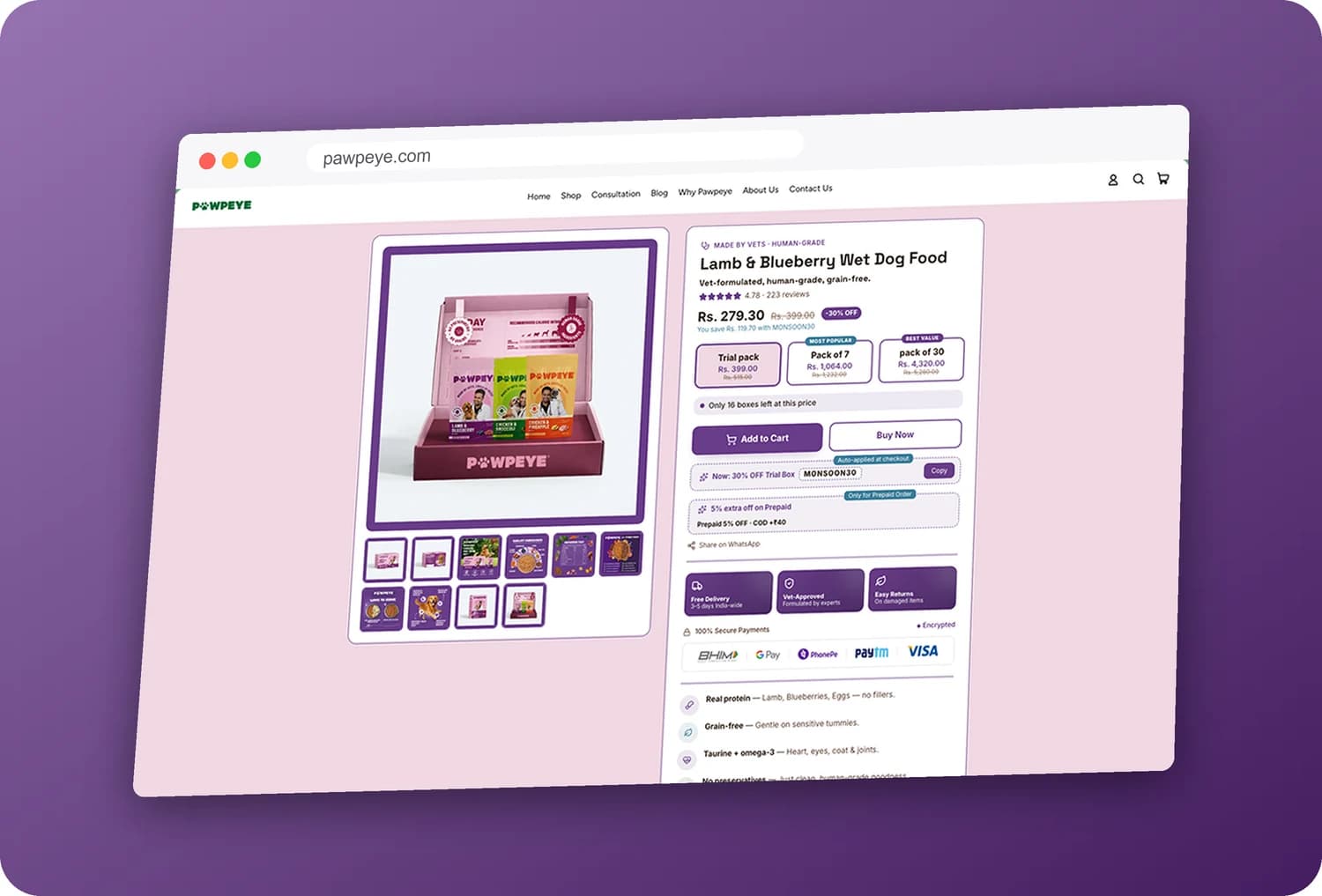
Pawpeye — owner reviews and the ingredient table, on the product page
Make selection a guided choice
Weight, breed and age reduced to a short, confident path to the right product — so the buyer is never guessing at a portion size.
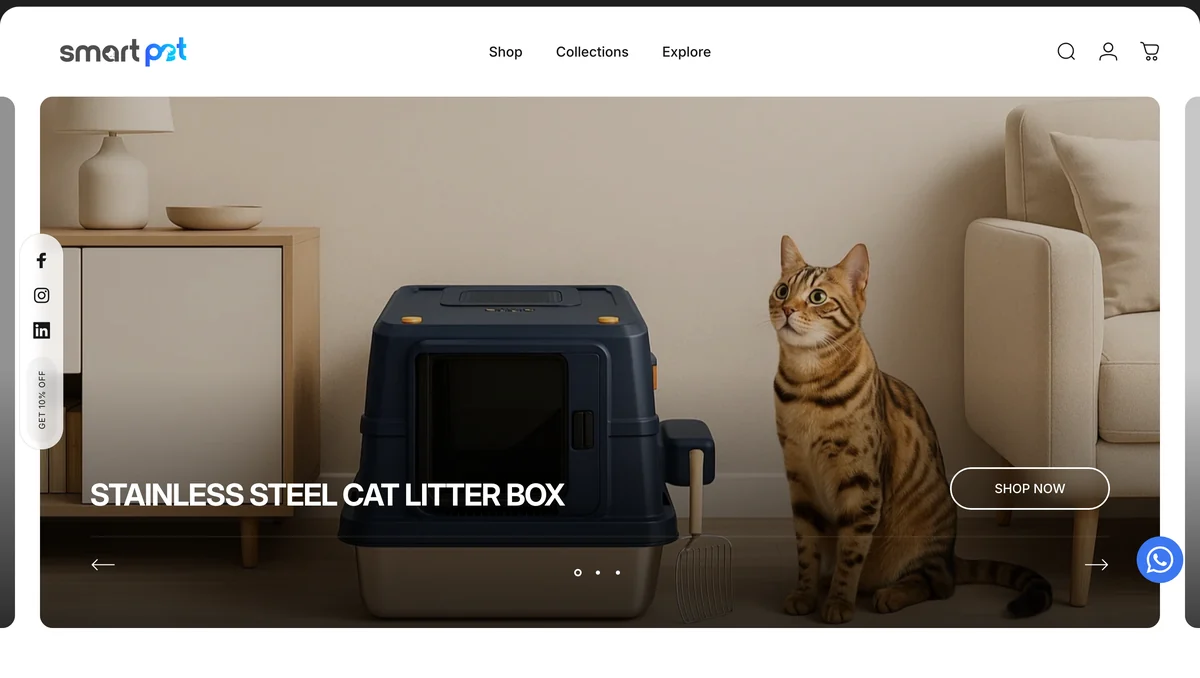
Smart Pet — the product shown in the room it lives in
Design the replenishment cycle
Subscription intervals matched to actual consumption, with skip and swap that are easy enough to keep people subscribed rather than driving them to cancel.
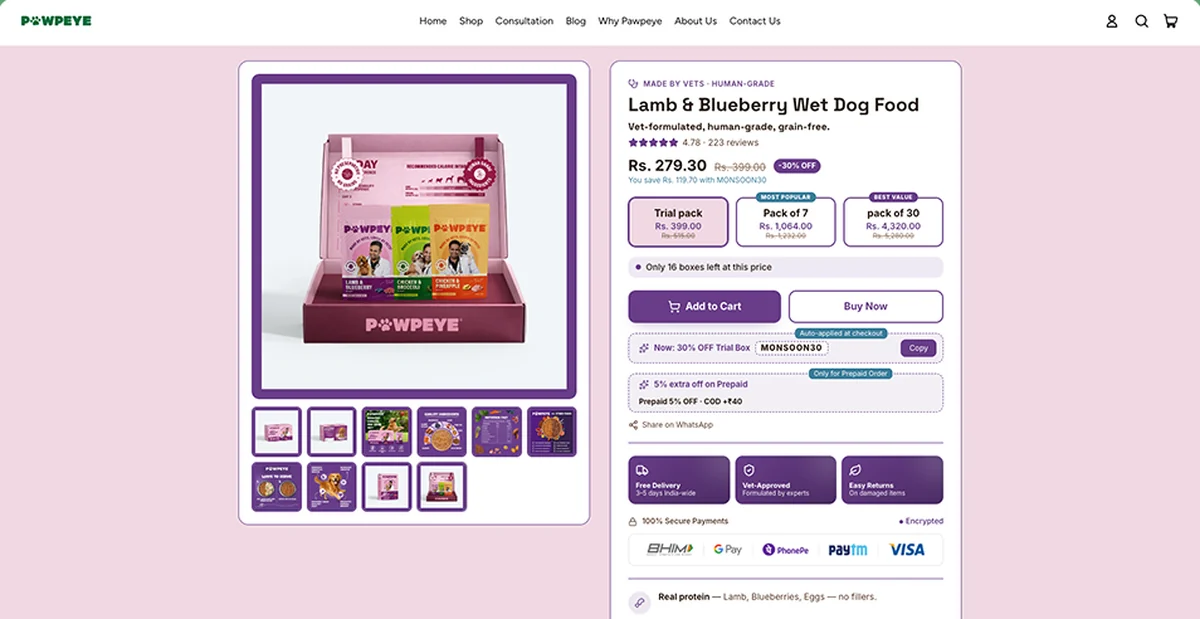
Pawpeye — pack tiers, unit price and payment trust in one block
Build for the follow-up purchase
The second bag, the treat that pairs with the food, the size up as the puppy grows. Most pet stores are built entirely around the first order.
Common questions
Pet Care, answered.
Yes. Weight-and-age-based portion calculators and saved pet profiles are common requests, and they earn their place when the catalogue genuinely varies by animal. If your range is simple, we will tell you the calculator is decoration and spend the budget where it converts.
By matching the interval to real consumption rather than a default 30 days, and by making skip and swap obvious. Most cancellations in this category are timing problems — the bag arrives before the last one is finished — not price problems.
Enough that a split test can settle — realistically a few thousand visitors a month on the page you want to test. Below that we would fix the obvious structural problems, which in this category is usually the pack ladder and where the owner reviews sit, and revisit testing once the traffic supports it. We would rather say that than sell a test neither of us can read.
The owner is paying and the pet cannot read, so the page is written for a person making a care decision on behalf of something they love. In practice that means ingredient transparency, other owners visible near the price, and a clear answer to "is this right for my animal" before any lifestyle photography. Pet content that is charming but uninformative converts badly.
Yes — accessories, grooming, supplements and toys. The mechanics differ: accessories behave like fashion and lean on photography and sizing, consumables behave like supplements and lean on replenishment.
How we help pet care brands
Selected work
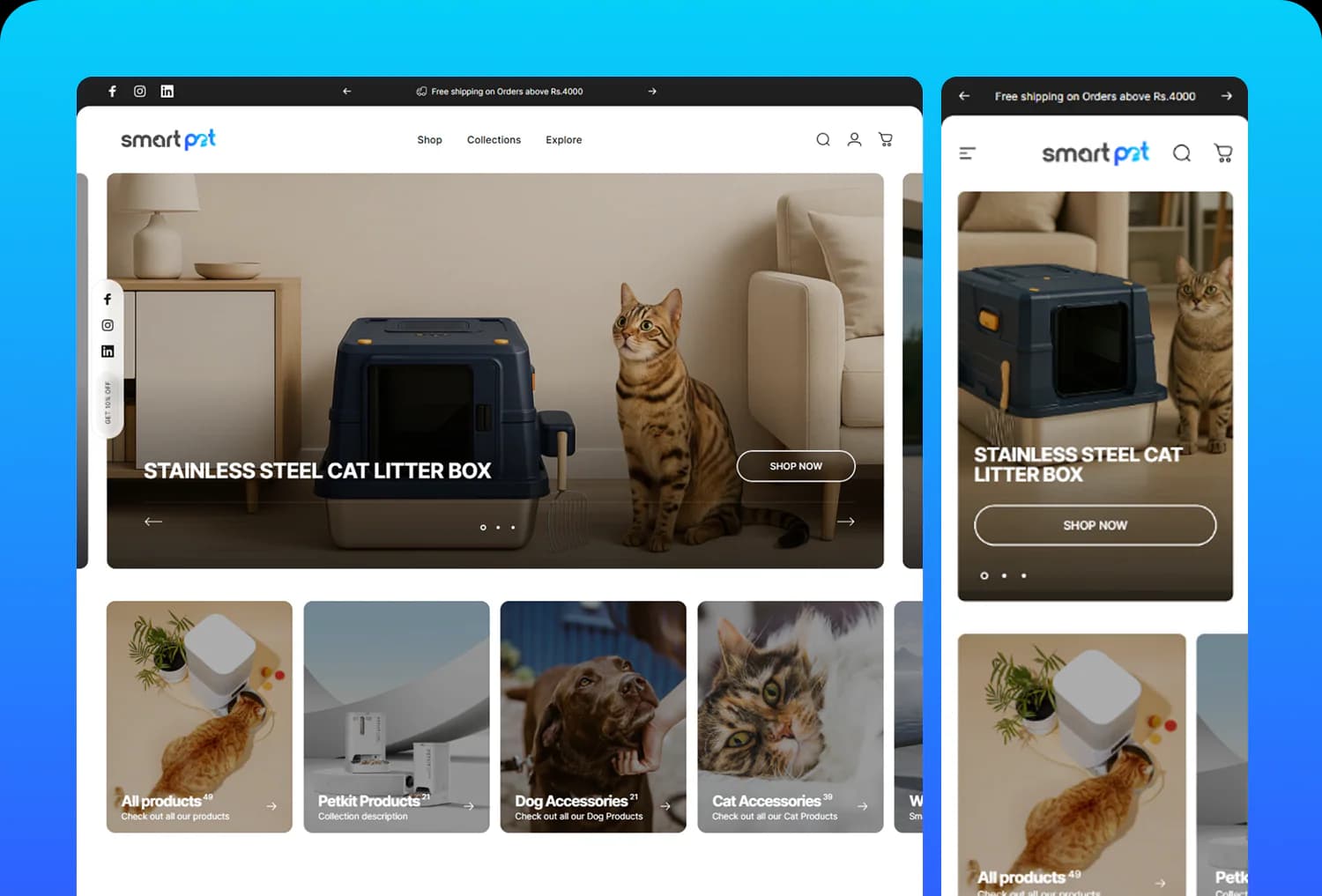
Ecommerce for pet brands and DTC pet products.
We rank for
The searches that bring pet care brands to us.
- Shopify agency for pet brands
- pet ecommerce development
- DTC pet store builder