
Proscube
 

Shopify + CRO for sleep and mattress

Nobody buys a mattress in one visit, and most stores are built as if they do.

A weeks-long decision across several sessions, decided on risk rather than price. This is our work on sleep brands, and what we would ask any agency before signing.

Clutch Premier VerifiedShopify Partner

Proscube is a Shopify and conversion-rate-optimisation studio working with mattress, bedding and sleep brands. We build for a considered purchase made across several visits — risk reversal stated plainly, comparison kept on your own site, and finance shown at the price. We work with DTC brands across the US, UK, Europe and Australia.

200+

Projects delivered

80+

Shopify stores built

20+

Shopify Plus builds

57.6%

Best measured ATC lift

Selected work

Sleep brands we have designed for.

A considered category where the store has to survive being left and returned to several times.

What actually moves a sleep PDP

Five things wrong with almost every mattress product page.

A conversion rate under 1% is normal here. That does not mean the page is fine.

01

The risk reversal is buried

The obstacle in this category is risk, not price. A trial period stated plainly beside the price — how long, who pays return shipping, how the refund works — is usually the highest-leverage element on the page, and it is normally a link in the footer.
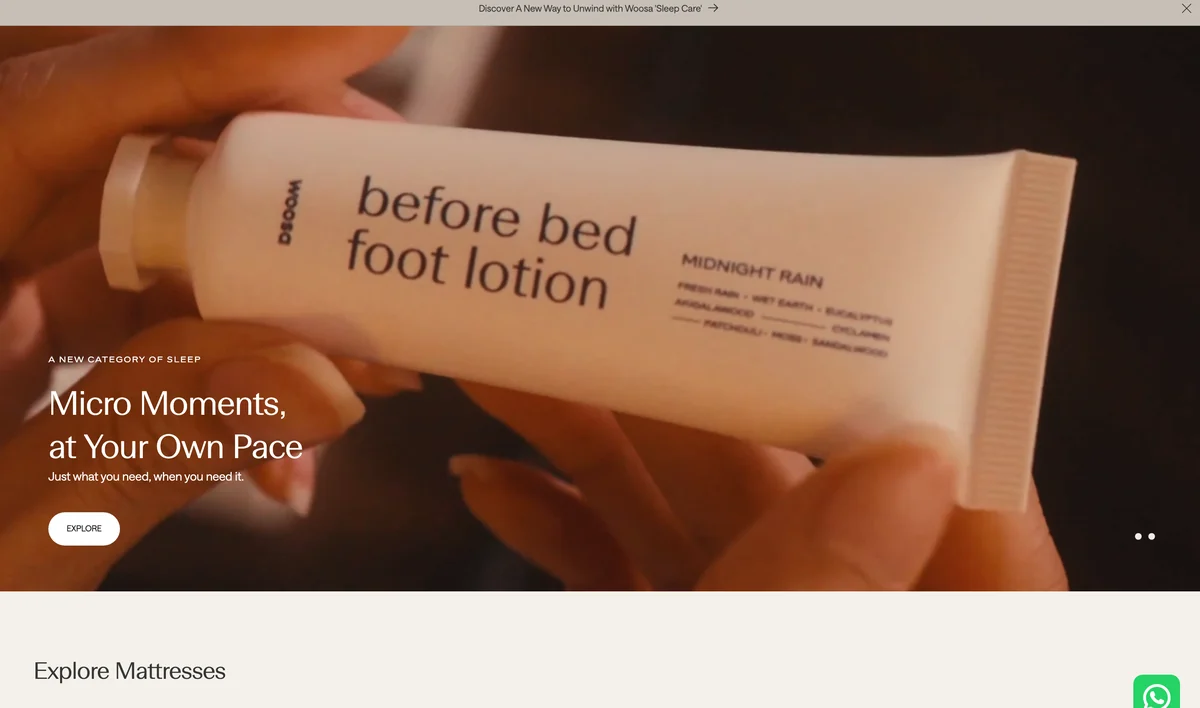
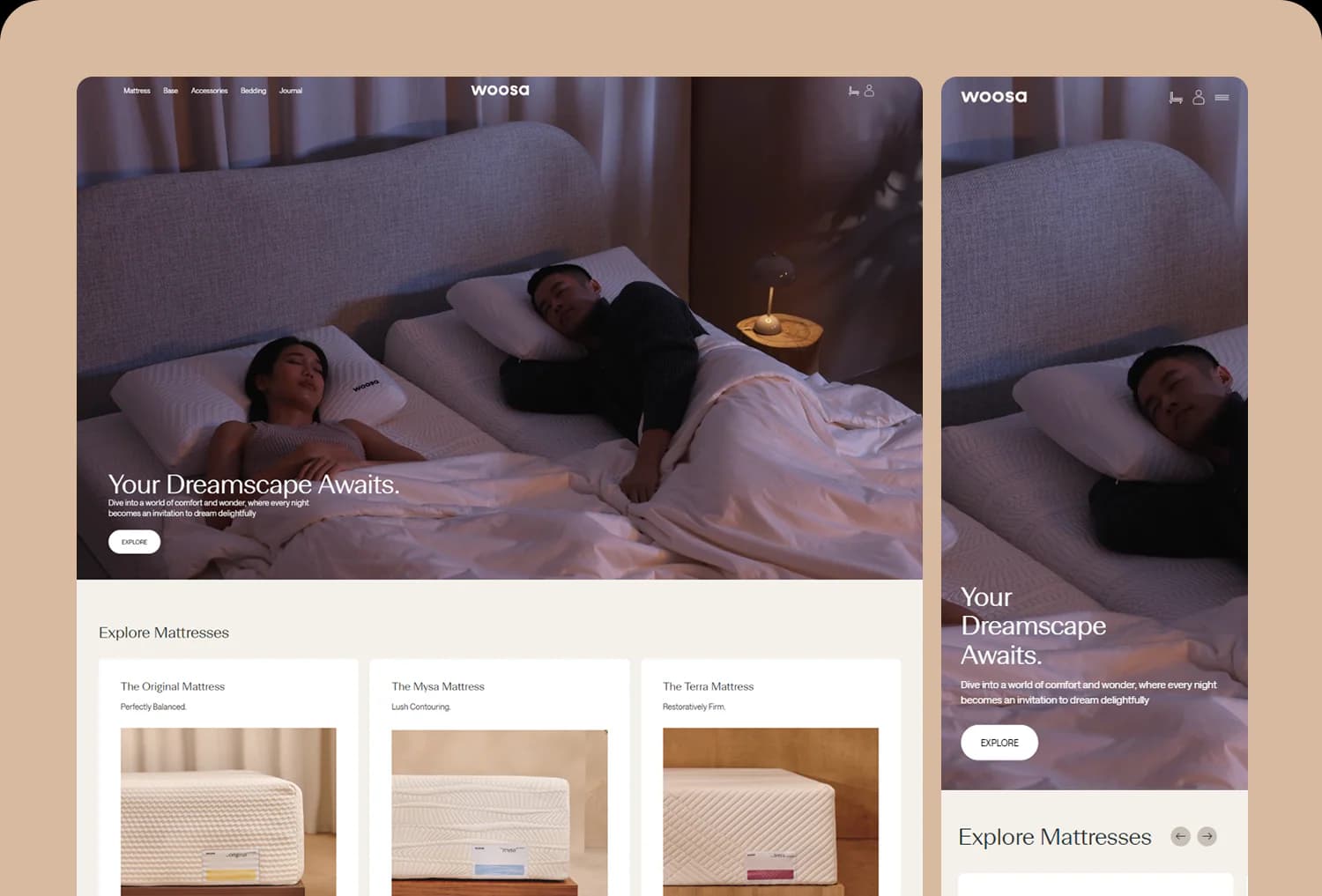
Woosa — brand and product presented as part of a routine rather than a spec sheet
Woosa — brand and product presented as part of a routine rather than a spec sheet

02

Comparison happens somewhere else

People compare mattresses in a spreadsheet or on a review site because your store made it hard. A proper comparison on your own pages keeps the decision where you can influence it.

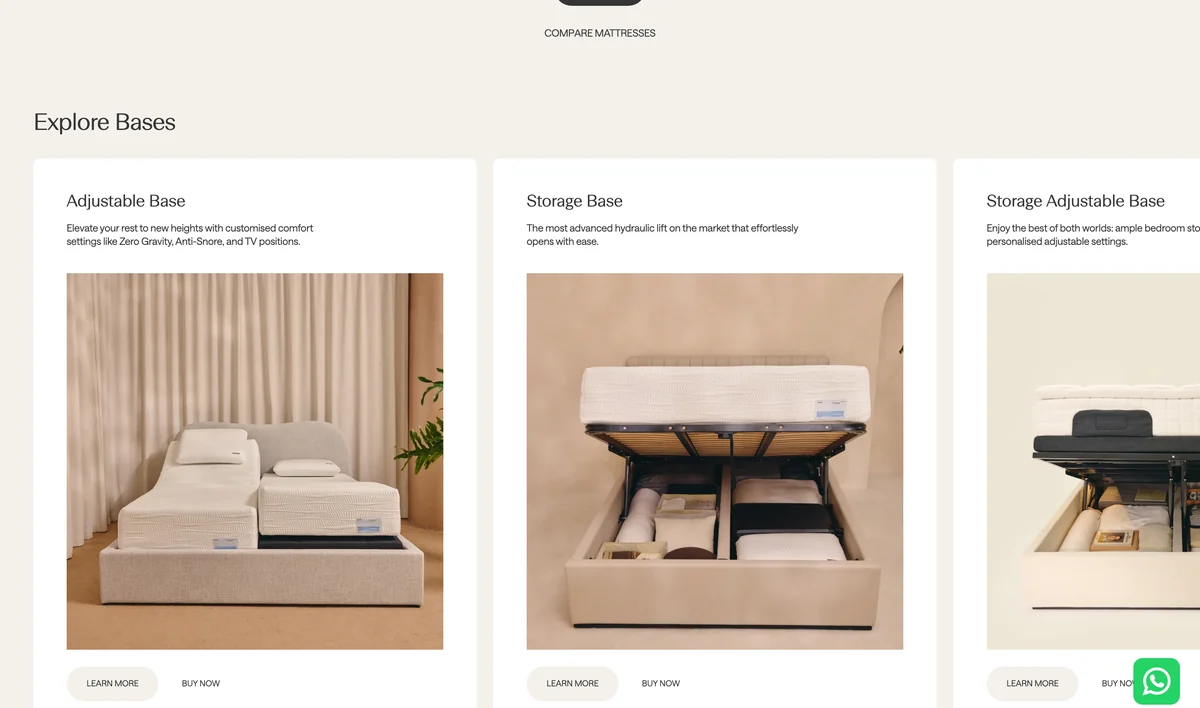
Woosa — bases compared side by side rather than across four tabs

Woosa — bases compared side by side rather than across four tabs

03

The site does not survive being left

The purchase spans weeks and several sessions. A returning visitor should land back where they were rather than starting over — saved configurations, a comparison that persists, an email capture that is worth taking.

04

Finance is not shown at the price

A monthly figure changes the choice set entirely in this category, and it belongs next to the total rather than being discovered at checkout. Brands that hide it get compared on the full price against competitors who did not.

05

Accessories are an afterthought

The mattress is bought once. Pillows, protectors, bases and bedding are the repeat business, and most sleep stores merchandise them as though nobody would ever come back.

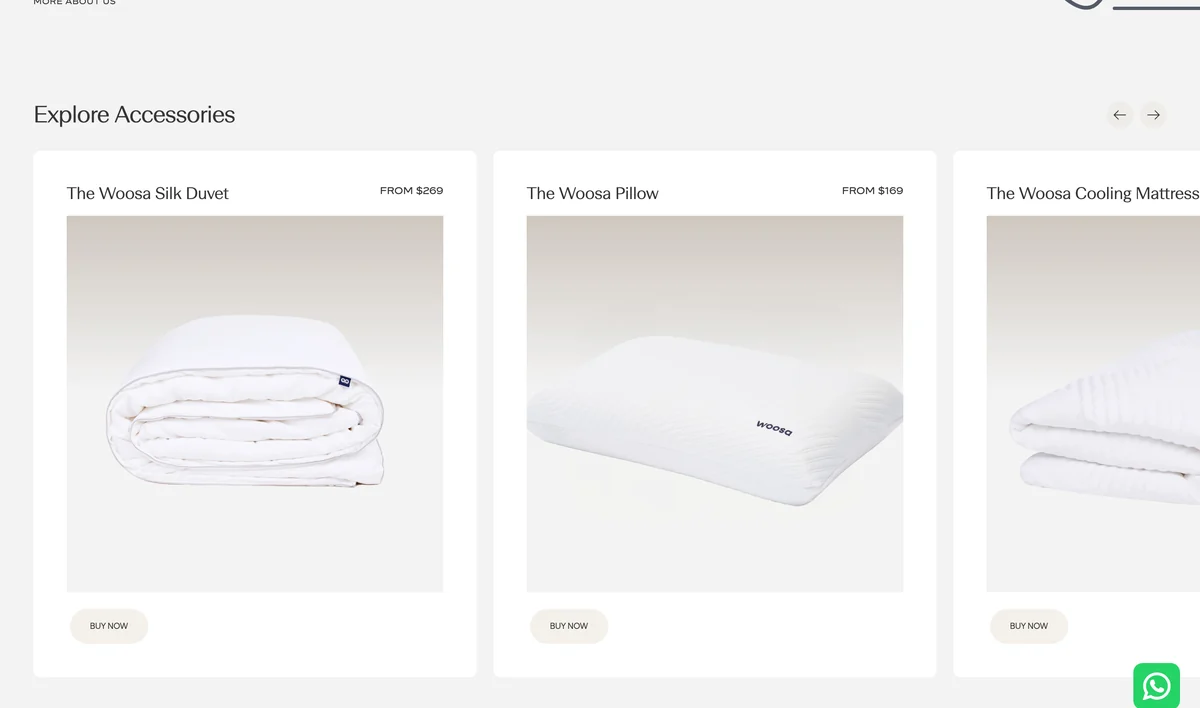
Woosa — accessories priced and shoppable for the visit after the mattress

Woosa — accessories priced and shoppable for the visit after the mattress

How we start

You only pay if it wins.

We rebuild one product page — the one carrying your ad spend, or your hero SKU. It goes live as an A/B test against your current page. If our version doesn't win, you don't pay, and you keep the page you had.

We can offer that because the test decides, not us. It also puts the risk of a first engagement on our side of the table rather than yours. If it wins, you pay for that page, and then you decide whether we carry on.

Pick a page to test
  • One page: the PDP behind your ads, or your best seller
  • Shipped live as an A/B test against your current page
  • If it doesn't win, no invoice — and your original page stays
  • If it wins, you decide whether we continue

Choosing an agency

Five questions worth asking. Ask us too.

If you are comparing agencies for a sleep brand, these separate them faster than a portfolio review will.

Can you show me a test that lost, or one that proved nothing?

The most useful question available. Anyone running a real volume of A/B tests has plenty of both — roughly half of all tests fail to beat control. A portfolio of unbroken wins is a filtered record, not a good one.

Our answer

Yes. Our Pawpeye test is published with its dashboard and the plain statement that the result has not settled — the raw numbers say a 77% lift and it rests on eleven add-to-cart events against six. We would rather say that than publish the headline.

Our conversion rate is under 1%. Is that broken?

The answer tells you whether the agency understands considered purchases. An agency that reacts with alarm is about to optimise for the wrong thing.

Our answer

Almost certainly not. Under 1% is normal for a high-value, weeks-long decision. What matters is return-visit rate, email capture quality and whether the comparison happened on your site — those are the numbers we would work on.

How will we agree what winning means?

Get the primary metric in writing before anything ships. "Conversion improved" measured against last month is a season, a promotion, or a change in traffic mix.

Our answer

One primary metric agreed before we start, usually add-to-cart rate. Even 50/50 split against your current page, reported from the dashboard you can open yourself. If a page cannot settle in a sensible window we say so before starting.

What happens if it doesn't work?

The answer tells you how the risk is shared. A fixed fee regardless of outcome is normal and defensible — but you should know that is what you are buying.

Our answer

No invoice, and your original page stays live. That is the offer above: we take the first engagement on the result rather than on the hours.

Where our clients are

US, UK and Europe, Australia.

We work with DTC brands across three time zones. What changes between them is rarely the structural problem — it is traffic volume, which decides how fast anything can be proven.

United States

Our largest market and the easiest place to test, because the traffic is there. A page with real US volume can settle a split test in days rather than weeks.

United Kingdom & Europe

Smaller per-market volume, so tests take longer and the temptation to call them early is stronger. Multi-currency and VAT are usually a Shopify Markets question rather than a design one.

Australia & New Zealand

Modest domestic volume and high shipping sensitivity. Free-shipping thresholds and pack economics tend to be the highest-leverage things to get right.

We work asynchronously and overlap live for calls. The test runs in your dashboard and you see exactly what we see.

Questions

The ones we get asked.

Something not covered here? Ask us directly.

Probably not. A mattress is a high-value purchase made over weeks and several sessions, and a sub-1% rate is normal for the category. The more useful numbers are return-visit rate, how many people come back within thirty days, and whether the comparison is happening on your site or on a review aggregator.

It is usually the single highest-leverage element on the page, because the obstacle here is risk rather than price. What decides whether it works is how plainly the terms are stated — who pays return shipping, what condition the product must be in, how long the refund takes. A generous trial buried in a policy page does far less than a modest one stated beside the price.

Yes, and more importantly we surface the monthly figure at the price rather than leaving it to be discovered at checkout. In this category the monthly number changes which products a customer considers at all, so hiding it means being compared on full price against competitors who showed it.

When the range genuinely varies by sleeping position, firmness preference or body type, a short quiz can outperform a comparison table and produces useful segmentation. When the range is narrow it adds a step and costs conversions. The test is whether a real customer could choose correctly without it.

Shopify builds start at $8K and CRO work at $5K. Those are starting points rather than quotes — we fix the number in writing after a discovery call. The single-page test is the exception: you pay only if it wins.

Next step

Send us your product page and your return-visit rate.

Those two together tell us more than a conversion rate does in this category. You will get a real read within a business day.

Clutch Premier VerifiedShopify Partner