
Performance marketingby the team thatalso builds your store.
An ecommerce performance marketing agency with a closed loop most can't offer: we also build your store. So when the ads aren't converting, we fix the landing page, the checkout, or the tracking — not just bid up. Meta and Google, managed against revenue, by a senior team — not a growth-hacker pitch.
By Manpreet Singh, Founder · Proscube
Proof
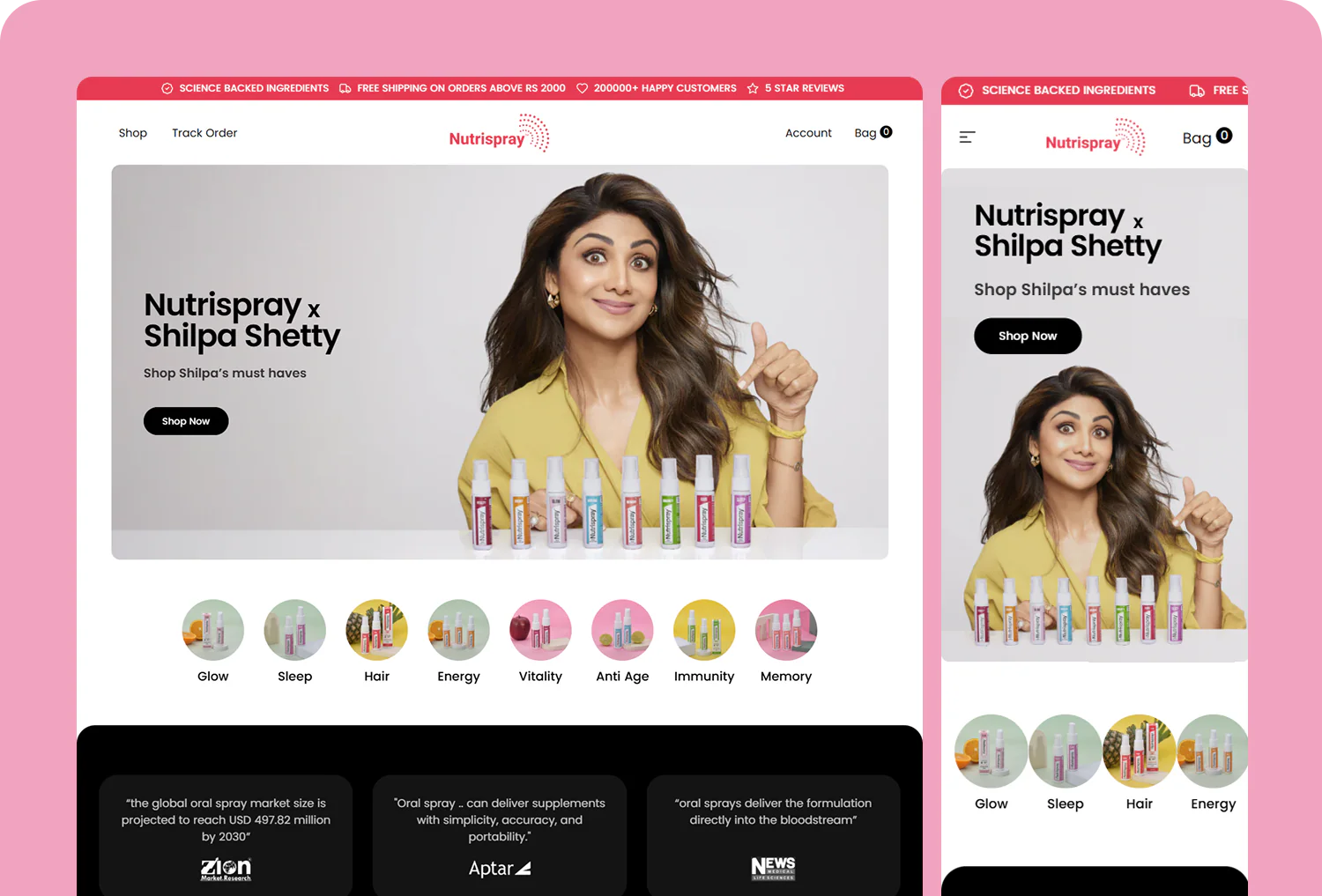
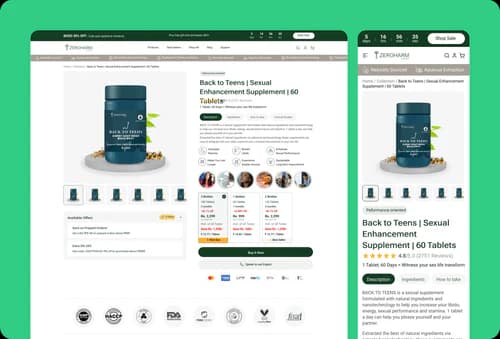
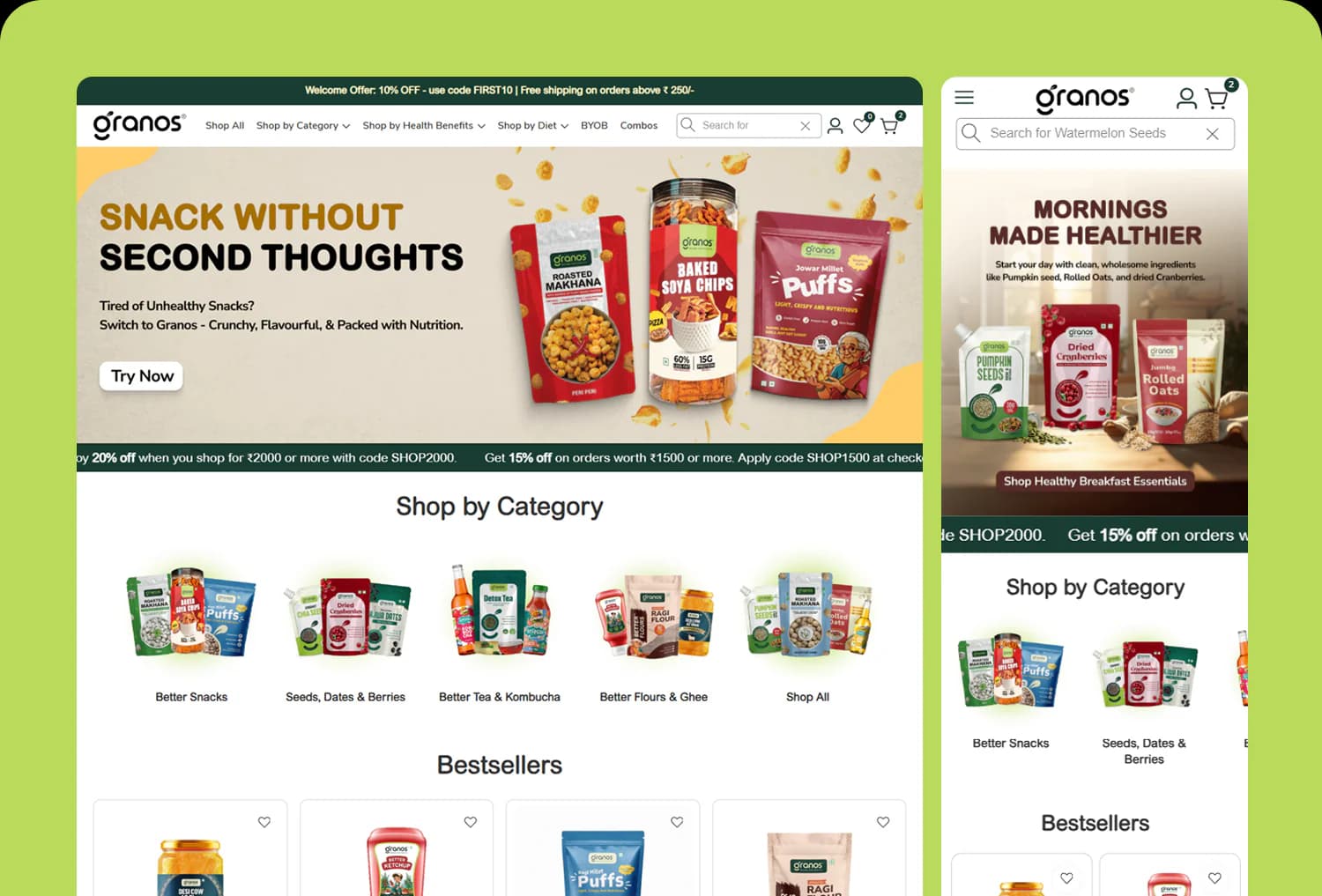
Stores we have built.


Ready to scale spend — or rescue an account that’s bleeding
Two situations bring brands to performance marketing, and you're probably in one of them.
The first: paid is working, and you want to scale it. You've found something that converts, you're ready to put more behind it, and you want a team that can grow spend without watching ROAS collapse the moment you push past your comfortable budget. Scaling paid is its own skill — what works at $10k/month often breaks at $50k, and you want someone who's navigated that ceiling before.
The second: paid is broken, and you need it fixed. The account that used to perform is bleeding — costs up, returns down, and you're not sure if it's the ads, the audience, the creative, or something else entirely. Maybe a previous agency left it a mess of overlapping campaigns, or maybe it slowly degraded and nobody caught it. You need a diagnosis before you need more spend.
Both start the same way with us: a paid account audit that looks at the whole picture, not just the ad account. Because in our experience, when paid isn't working, the problem is often not the ads at all — and that's where most agencies are structurally unable to help you.
We also build your store — which changes what we can fix
Here's the difference that anchors everything we do in paid. Most performance agencies are, functionally, spreadsheet jockeys: they optimize inside the ad account — bids, budgets, audiences, creative rotation — and when results stall, the only lever they have is to bid more or blame the market. They can't touch your store, because building stores isn't what they do.
We build stores. That's our core business, and it changes the entire equation. When your ads aren't converting, we don't just optimize the campaign and hope — we look at where the money is actually leaking, and we can fix it. If the landing page isn't built for ad traffic, we rebuild it. If the checkout is leaking, we fix the checkout. If the tracking is broken and you're optimizing on bad data, we wire it correctly. If the offer is weak, we'll tell you. That's the closed loop: the team running your ads is the team that can fix the thing the ads are pointing at.
It matters because paid media is the most expensive place to hide a conversion problem. Every dollar you spend driving traffic to a funnel that leaks is a dollar paying full retail for a customer you should have kept. An agency that can only optimize the ad will quietly let you overspend around a problem they can't see or solve. We close the loop between the ad and the store — which is the only place performance is actually won.
What separates performance from paid media
"Paid media" and "performance marketing" get used interchangeably, but they're not the same, and the difference is what you measure against. Paid media optimizes the ad. Performance marketing optimizes the business outcome — and reports against revenue, not activity.
The metrics that actually matter:
- ROAS (return on ad spend): revenue generated per dollar spent — the baseline, though not the whole story.
- Contribution margin: what's left after product cost and ad spend — because ROAS that ignores margin can be profitably wrong.
- Blended CAC: total acquisition cost across all channels, not just the in-platform number ad accounts flatter you with.
- Payback period: how long until a customer's spend covers what it cost to acquire them — the cash-flow reality.
- LTV:CAC ratio: lifetime value against acquisition cost — whether the customers you're buying are actually worth it.
The vanity metrics we don't optimize for: CPM, raw impressions, reach, and even click-through rate on its own. They're inputs, not outcomes — and an agency that reports them as wins is showing you motion, not results. Real performance reporting ties spend to dollars and margin, so you can see whether paid is building the business or just buying activity. That's the report you'll get from us: revenue and margin first, platform vanity metrics only where they explain the why.
What's included
A performance engagement covers the ad account and the funnel it points at:
Paid account audit
A full diagnosis of your account and funnel before any spend changes — what’s working, what’s leaking, and where the real opportunity is.
Meta & Google management
Day-to-day management of Meta and Google — structure, bidding, budgets, and scaling — against revenue, not in-platform vanity metrics.
Tracking & attribution
Meta CAPI, GA4 events, and server-side tracking wired correctly — because optimizing on broken data is worse than not optimizing at all.
Creative direction & testing
A testing framework for creative and offers — structured tests that find winners, not random swaps dressed up as optimization.
Landing page & funnel fixes
The closed loop: when the funnel is the bottleneck, we fix the landing page, PDP, or checkout — not just bid up around the problem.
Revenue reporting
Reporting tied to ROAS, contribution margin, blended CAC, and payback — a report you can run the business on, not a screenshot of impressions.
Scaling framework
A deliberate approach to growing spend without ROAS collapse — the skill that separates $10k/month from $50k/month and up.
Strategy & communication
A senior point of contact, regular reviews, and async availability — not a junior buyer and a monthly screenshot.
Why your ads might not be converting
When paid underperforms, the instinct is to blame the ads and bid more. But more often than not, the problem is upstream of the ad — in the funnel the ad points at — and these are the issues a paid-only agency can't see or won't fix. Here's the checklist we actually run:
- The landing page isn't built for ad traffic. You're sending paid clicks to a generic product page or homepage instead of a page designed to convert a cold visitor who just tapped an ad. Ad-traffic landing pages are their own discipline.
- Tracking is broken. Meta's Conversions API isn't wired, or GA4 events are firing wrong, so the platforms are optimizing on incomplete or incorrect data — and you're making decisions on numbers that aren't real.
- The audience is wrong. Broad targeting on a niche product (or over-narrow targeting on a broad one) burns budget on people who were never going to buy. Targeting has to match the product.
- The offer is weak. No urgency, no incentive, generic creative that looks like everyone else's. A great ad account can't sell a weak offer; the offer has to give someone a reason to act now.
- The site is slow. If your LCP is over three seconds, you're losing a chunk of paid traffic before the page even loads — and you paid for every one of those clicks. Speed is a conversion issue, not just an SEO one.
A paid-only agency hits this wall and bids up, because the ad account is the only thing they control. We can fix the actual problem — which is the whole reason the closed loop matters.
How we work
Paid account audit
We audit the account and the funnel together — ads, tracking, landing pages, and offer — and tell you where the money is really leaking before changing spend.
Fix the foundation
Tracking corrected, the worst funnel leaks fixed, and the account restructured — so spend goes to work on a funnel that can convert it.
Test & optimize
Structured creative, audience, and offer testing against revenue — finding what works before pouring budget into it.
Scale
Grow spend deliberately on what’s proven, watching contribution margin and payback — scaling the winners without breaking ROAS.
What performance marketing costs
We work on a monthly retainer, scoped to the size and complexity of the account: most engagements run $3,000 to $8,000/month. That fee is for the work — strategy, management, testing, tracking, reporting, and the funnel fixes the closed loop makes possible.
Here's our stance on pricing, and it matters: we don't take a percentage of your ad spend. The standard agency model — a cut of media dollars — quietly rewards the agency for telling you to spend more, whether or not it's the right call. We charge for the work instead. If a single account grows past roughly $50,000/month in managed spend, the retainer scales to match the added work — but it's still a retainer for work done, never a percentage of your media budget. Your incentives and ours stay pointed the same direction.
And to be explicit: paid media spend is separate and goes directly to the platforms. Your budget is yours; it never routes through us, and we never mark it up. We scope the retainer after the paid account audit, once we can see what the account actually needs.

Ready to talk?
Give us read access to your ad account and store, and we'll show you where the money is actually leaking — the ads, the funnel, or the tracking. A straight audit, not a pitch.
Reply within 1 business day. Real read, not a sales call.
Who this is for — and when paid alone isn’t enough
This is for established ecommerce brands with the margins and budget to run paid seriously — typically already spending on ads, either ready to scale or needing to rescue an account that's stopped working. It's especially for brands frustrated that their agency can only ever say "spend more," when the real problem is the funnel.
But paid alone is rarely the whole answer, and we'll say so: performance marketing is acquisition, and acquisition gets more expensive over time. If you're relying entirely on paid, you're renting all your traffic and your blended CAC will keep climbing. The brands that win pair paid with channels that compound — SEO, content, and email — so paid accelerates a business that also grows on owned channels. That's our digital marketing work, and if your real need is long-term compounding alongside paid, we'll point you there instead of just selling you more ad management.
Who this isn't for:
- Pre-revenue or razor-thin-margin brands that can't absorb a testing budget. Paid needs room to learn before it pays back.
- Anyone wanting a guaranteed ROAS number before we've seen the account. That's theater; we don't sell it.
- Brands looking only to offload spend to someone who'll report impressions. If you don't care whether paid builds the business, we're the wrong fit.
Closed-loop vs the usual performance agency
| Proscube | Paid-only agency | Freelancer | In-house buyer | |
|---|---|---|---|---|
| Can fix the funnel | Yes — we build stores | No | Rarely | Depends |
| Fee model | Flat retainer | % of ad spend | Hourly/retainer | Salary |
| Incentive | Your revenue | More spend | More hours | Mixed |
| Measures against | Revenue & margin | ROAS / vanity | Varies | Varies |
| Tracking setup | CAPI + GA4, done right | Sometimes | Varies | Depends |
| Seniority | Senior operator | Often junior buyers | One person | One or two |
| Typical cost | $3K–$8K/mo, no spend cut | % of spend + fee | $1.5K–$5K/mo | Salary load |
Related services
Honestly, it depends entirely on your margins, price point, and category — and anyone quoting you a target ROAS before seeing your numbers is guessing. A brand with 80% margins can thrive at a 2x ROAS; one with 30% margins might need 4x or more just to break even. That's why we report on contribution margin and payback period, not ROAS alone — a high ROAS on a low-margin product can still lose money. We'll set a realistic target together after the audit, based on your actual economics, not a number that sounds good in a pitch.
It depends on how people discover and buy your product. Google (search and shopping) captures existing demand — people already looking for what you sell — so it's often first for products with clear search intent. Meta creates demand through interruption, which suits visual, discovery-driven, or impulse products. Most scaled brands run both, but the starting point depends on your category and where your customers actually are. The audit tells us which deserves your first dollars rather than assuming.
Sometimes — if your product is visual, your audience skews younger, and you have creative that suits the platform's native, fast-moving style. TikTok can deliver cheap reach and discovery for the right brand. But it's creative-hungry and not a fit for every product, and chasing it because it's the platform of the moment is how budgets get wasted. We'll be honest about whether your brand and creative capacity actually fit TikTok, rather than adding it because it's fashionable.
Paid is the fastest channel — you can have traffic and sales within days of launching — but reaching efficient, scalable performance takes longer. Plan on roughly one to three months to fix tracking and the funnel, find winning creative and audiences, and gather enough data to scale confidently. The platforms also need conversion data to optimize, so the first weeks are partly the algorithm learning. Anyone promising immediate profitable scale is overpromising; real performance is built through testing, not switched on.
As a rough floor, paid generally needs around $5,000/month in media spend to gather enough data to optimize and scale meaningfully — below that, the platforms learn too slowly and testing takes forever. That's media spend, separate from our retainer. If you're below that, paid may not be your best first move yet, and we'll tell you honestly — sometimes the better return is fixing conversion or building organic first, then coming back to paid with a budget that can actually work.
You do, always. We work in your ad accounts, your business manager, and your analytics — never ours — so everything we build, all the data and learnings, stays with you if we part ways. There's no holding your account hostage, no rebuilding from scratch with the next team. It's your asset; we just operate it well while we work together. We think that's the only honest way to run someone else's media.
Got a project?
Ready to make paid pay back?
Send us your store URL or your idea. You’ll hear back within one business day — an honest read on whether we’re the right fit. No sales call, no slide deck.