Proscube
 

Shopify + CRO for skincare and beauty

The best Shopify agency for a skincare brand is the one that will show you its losing tests.

Everyone's portfolio looks good. Almost nobody publishes the number underneath it. This page is our work on skincare product pages — the rebuilds, the before-and-afters, the one test we can prove and the two we can't — plus what we'd ask any agency before signing with them, including us.

Clutch Premier VerifiedShopify Partner
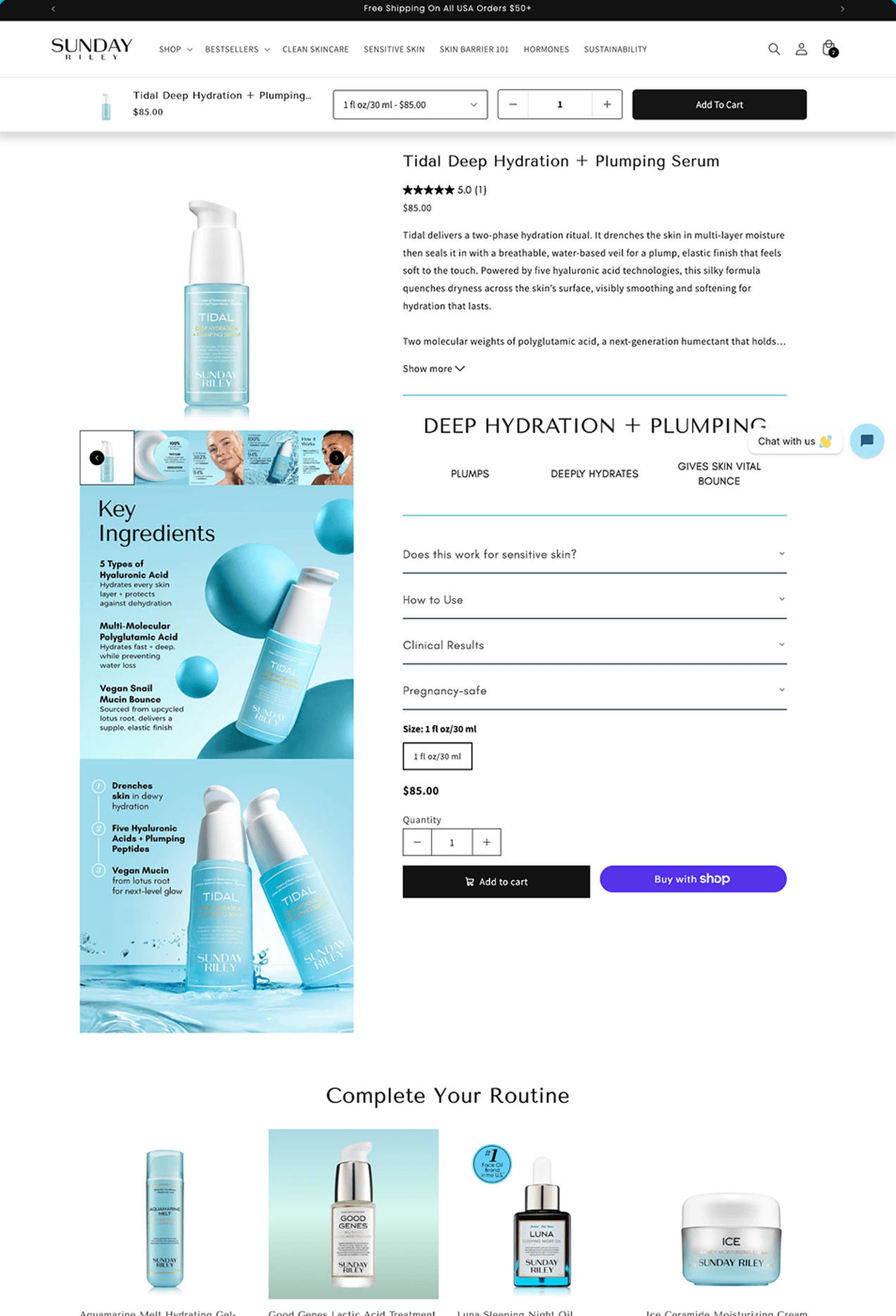
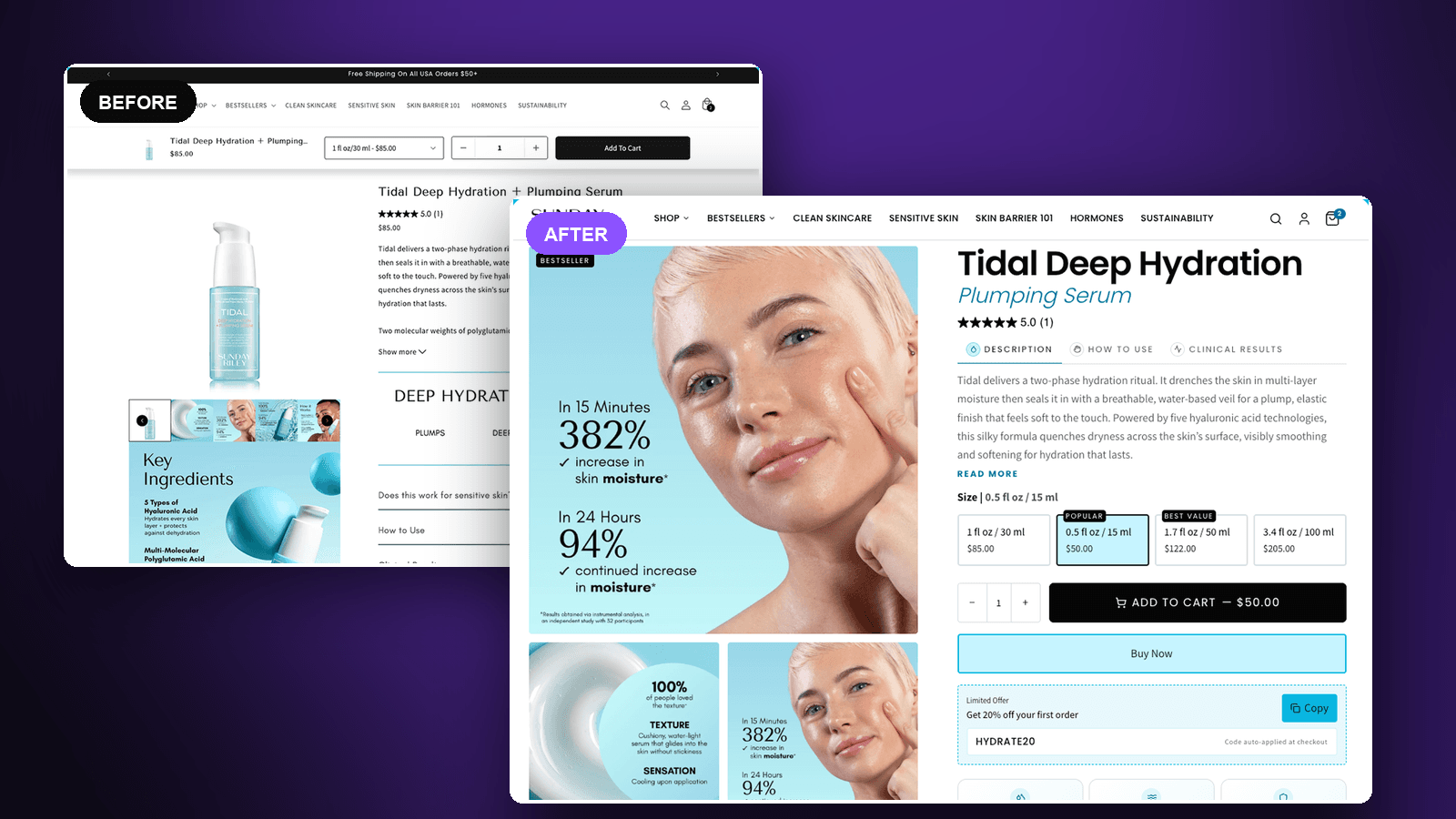
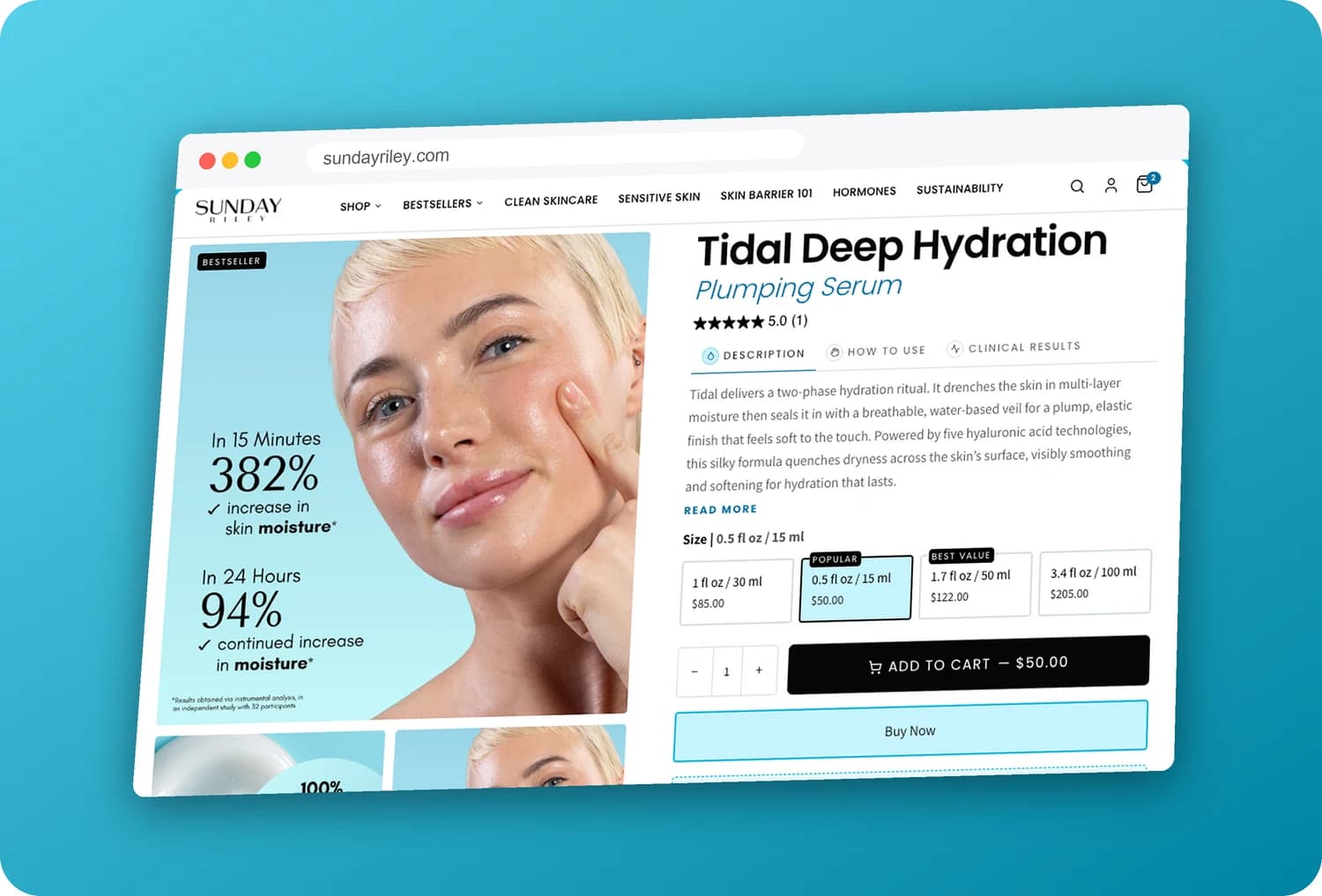
Sunday Riley Tidal serum product page, before and after the Proscube rebuild

Proscube is a Shopify and conversion-rate-optimisation studio for skincare, beauty and grooming brands. We rebuild the product pages that carry your ad spend, ship them as live A/B tests, and publish what the tests return — including results that did not reach significance. We work with DTC brands across the US, UK, Europe and Australia.

200+

Projects delivered

80+

Shopify stores built

20+

Shopify Plus builds

58%

Best measured ATC lift

The work

Three skincare and supplement pages, rebuilt.

Sunday Riley first, because it is the name you will recognise. InStrength last, because it is the one with a split test behind it.

Sunday Riley product page rebuilt by Proscube

Prestige skincare

One size at $85 became four, starting at $50.

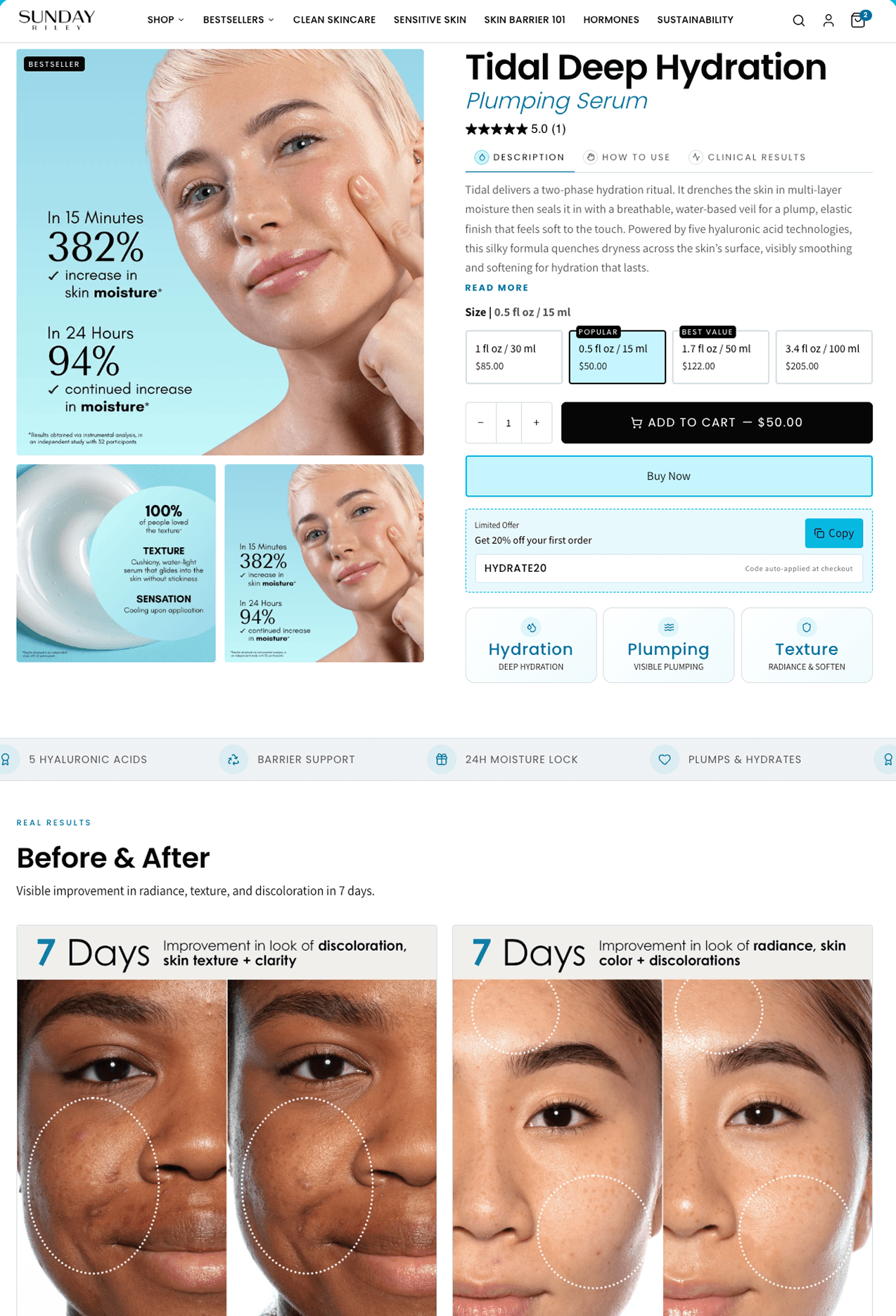
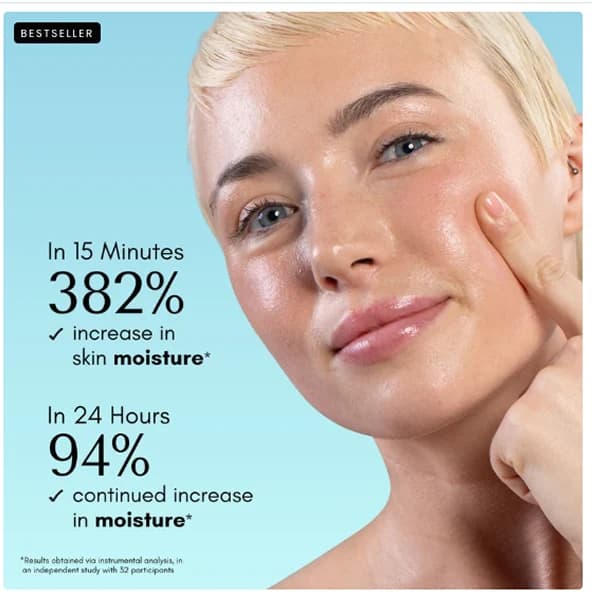
Sunday Riley's Tidal serum page had clinical data most brands would build their whole site around — a 382% increase in skin moisture in 15 minutes, 94% still elevated at 24 hours, 100% of testers rating the texture. It sat inside a Clinical Results accordion that was closed by default. Meanwhile the page offered one size, one price, and no way for a hesitant first-time buyer to spend less than $85 to find out if it worked.

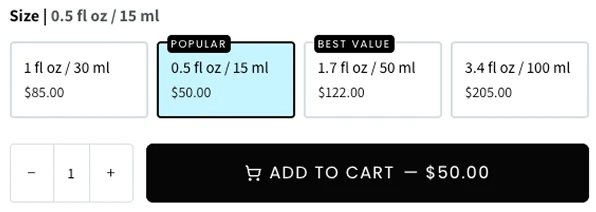
We made the clinical numbers the hero imagery and built a real size ladder: 15ml at $50, 30ml at $85, 50ml at $122, 100ml at $205. The page now opens on the trial size instead of asking for $85 up front.
Read the Sunday Riley case study
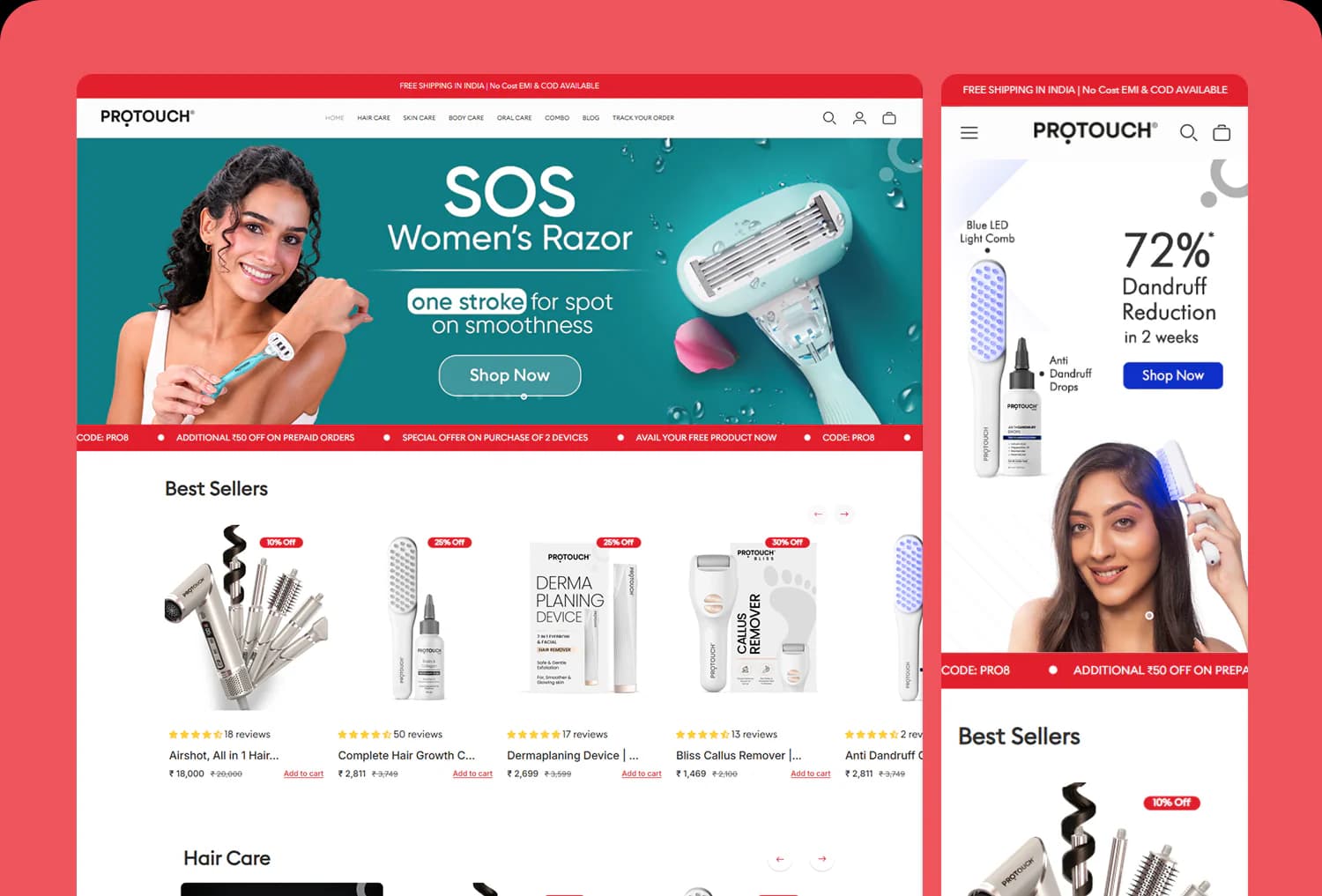
Oximan product page rebuilt by Proscube

Men's skincare

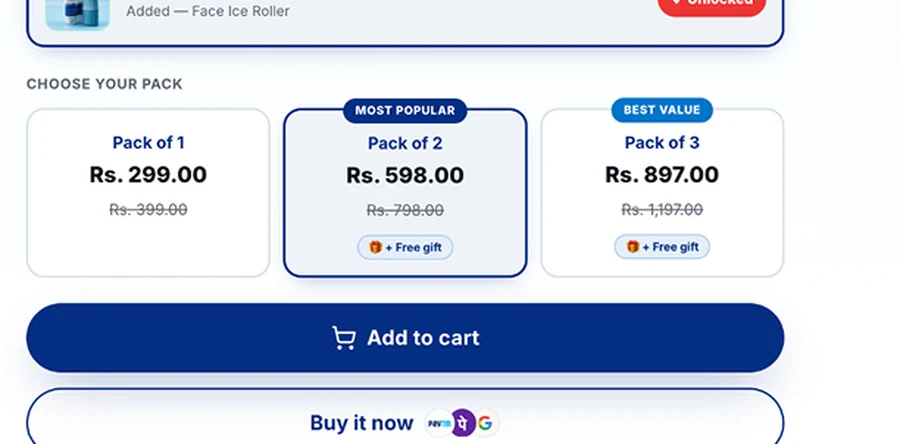
Three pack sizes, all discounted 25%. Trading up bought you nothing.

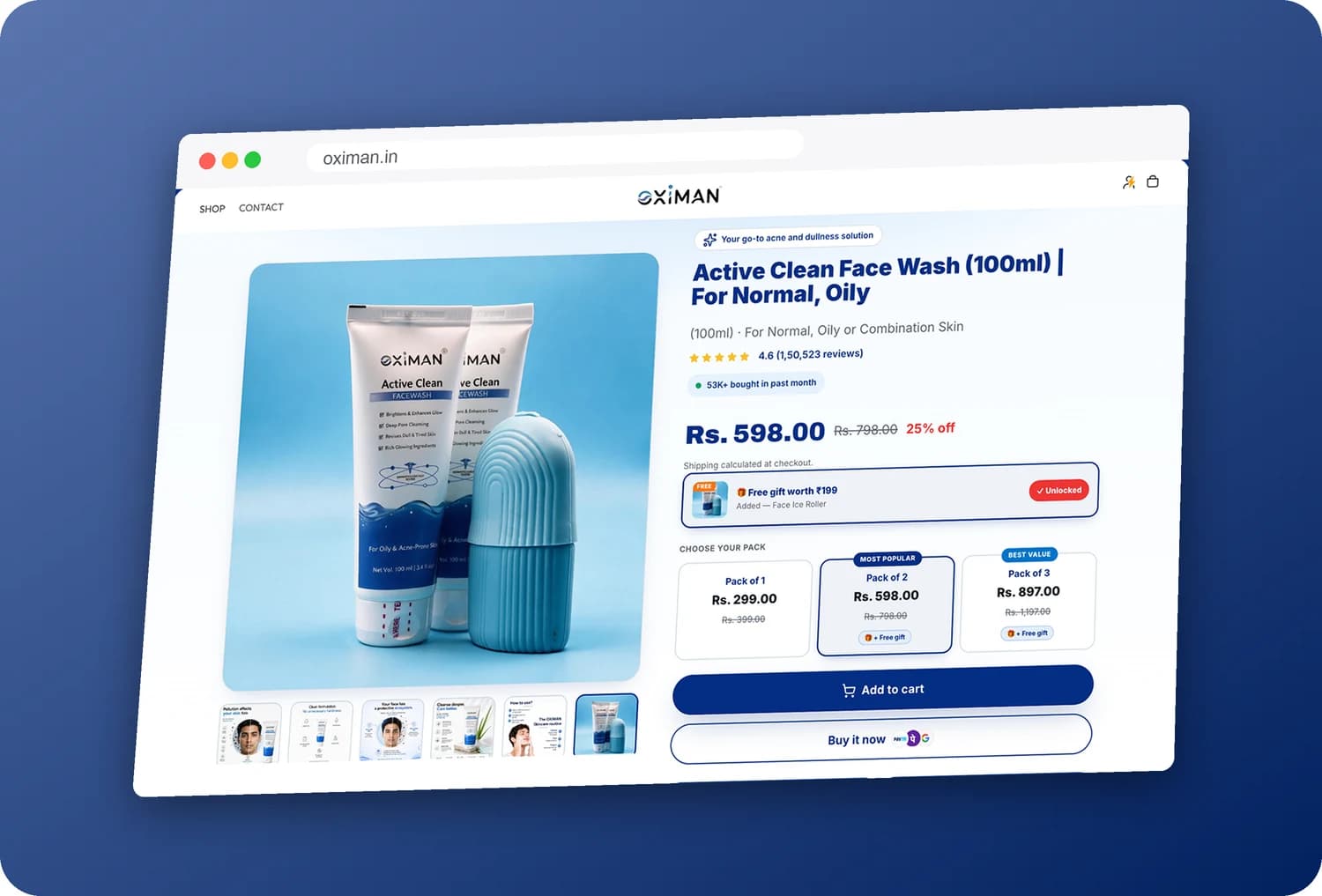
Oximan's Active Clean face wash had a pack ladder that wasn't a ladder. Packs of one, two and three carried the same 25% discount, so there was no argument for the bigger one — and the page defaulted to the single, the cheapest and least valuable option. Further down, an ice roller was being sold separately at ₹199, competing with the product page it was sitting on.

We made that roller the free gift that unlocks on the two- and three-packs. Same margin, one decision instead of two, and trading up now gets you something instead of just costing more. The 1,50,523 reviews moved up beside the title where they could do some work.

Read the Oximan case study
InStrength product page rebuilt by Proscube

Supplements · split tested

Add-to-cart went from 12.94% to 20.38%. Here is the whole readout.

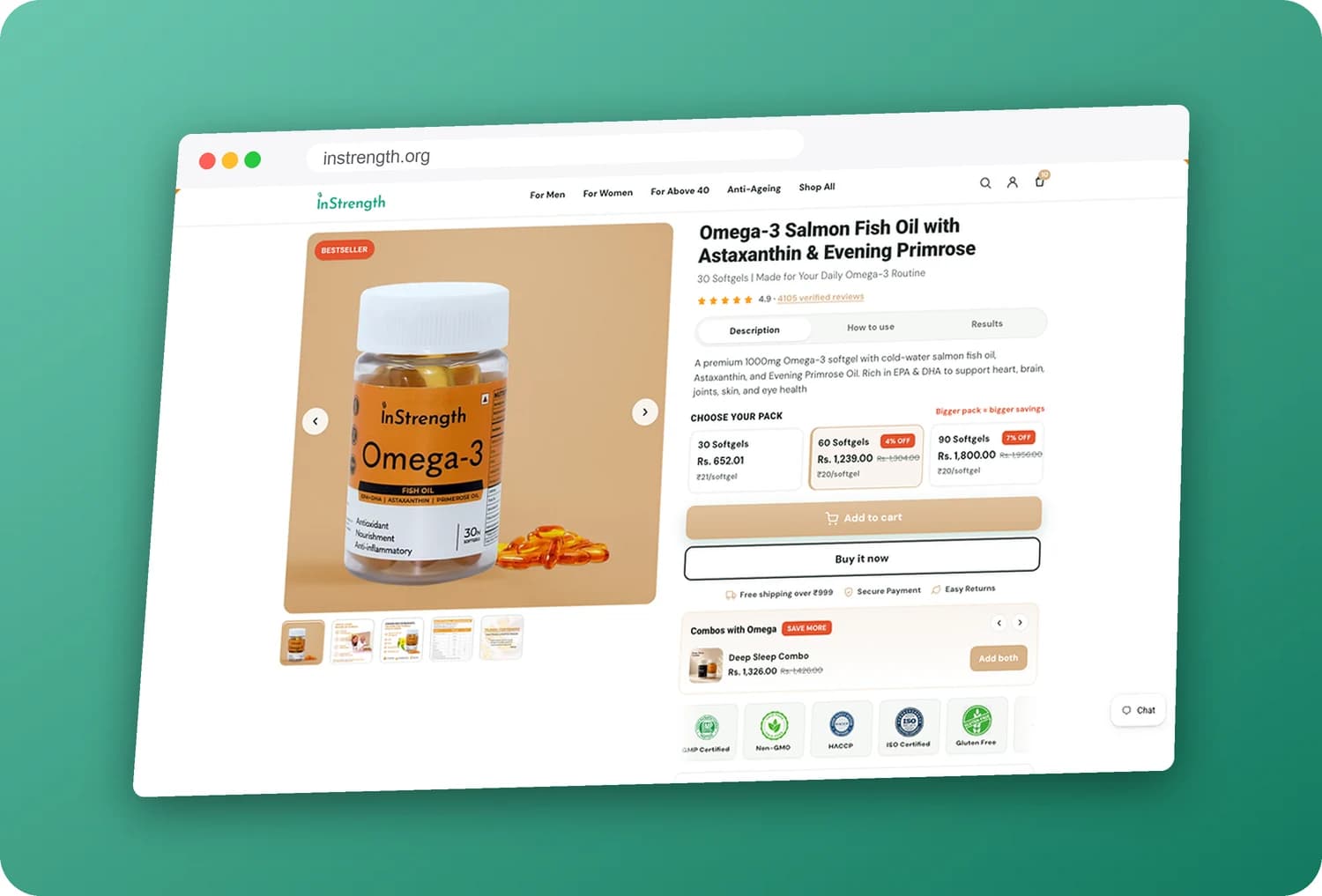
Same problem, adjacent category: three pack options as plain unpriced buttons, so the page never showed what a bigger pack saved you. We priced every tier, added the per-softgel unit price under one line — bigger pack, bigger savings — and moved the certifications inside the buying block.

Six-day test, 546 visitors, 50/50 split. Add-to-cart rate rose from 12.94% to 20.38% — a 58% relative lift, p = 0.02. The confidence interval runs roughly +9% to +106%, so 58% is the best estimate rather than a precise figure, and we would rather say that than round it off.

Read the InStrength case study

Before and after

Drag it. This is the actual page.

The Tidal serum product page as it was, against the rebuild. Desktop and mobile — skincare traffic skews heavily mobile, so both got rebuilt.

Product page

The original against the rebuild.

Product page — before
Before
Product page — after
After

What actually moves a skincare PDP

Five things wrong with almost every skincare product page.

Not a checklist we invented. These are the five that keep turning up, in roughly the order they cost you money.

01

Your best proof is filed where nobody reads it

Clinical percentages, trial data, third-party testing: the most persuasive assets a skincare brand owns, and they are almost always in a tab, a carousel or below the fold. Hesitation happens beside the price. That is where the evidence has to be. "382% increase in skin moisture in 15 minutes, independent study, 52 participants" beats any adjective you could put in its place.

Sunday Riley — the clinical result carried up into the gallery

Sunday Riley — the clinical result carried up into the gallery

02

One size is one hurdle

A single SKU at a premium price gives a nervous buyer no cheap way to test you and a convinced buyer nowhere to go. A trial size lowers the cost of being wrong; a larger format with the unit price shown makes trading up legible. On a high-ticket serum this changes the shape of the decision more than any copy rewrite will.

Sunday Riley — four sizes, a $50 way in, live price on the button

Sunday Riley — four sizes, a $50 way in, live price on the button

03

Your buyers read INCI lists now

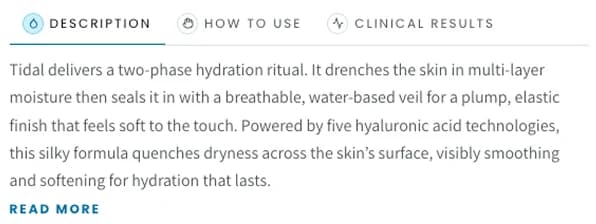
Ingredient literacy has gone up sharply. Buyers check concentrations and compare actives across brands, and vague benefit language now reads as evasion. Structure the formulation into tabs so the person who wants to scrutinise it can, and the person who does not is never blocked by it. Dumping the whole INCI list into a wall of text serves neither.

Sunday Riley — description, how to use and clinical results as tabs

Sunday Riley — description, how to use and clinical results as tabs

04

Products are used as routines and sold as items

Cleanser, serum, moisturiser, SPF — used together, merchandised separately. That costs order value, and it costs something worse: a customer who used one product alone, saw nothing in four weeks and left. In a category where the repurchase is the whole economic model, the routine is the product.

Oximan — a free gift that unlocks on the larger packs

Oximan — a free gift that unlocks on the larger packs

05

Skin type fragments everything

Oily, dry, sensitive, acne-prone, ageing. The right product genuinely varies by person, and a collection grid asks every visitor to self-diagnose. Sometimes the fix is a short quiz. Often it is just honest routing and real outcome photography — in a category built on scepticism, a watchable 7-day result does work a star rating cannot.

Sunday Riley — 7-day before and after, on the product page

Sunday Riley — 7-day before and after, on the product page

Selected work

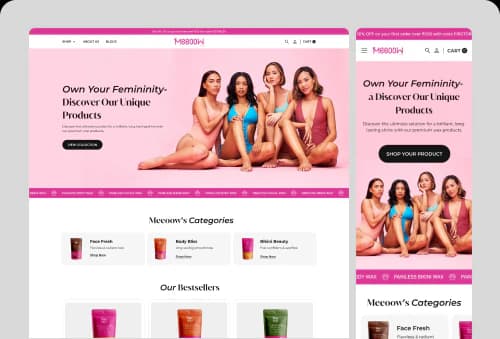
Beauty and personal care we designed and built.

Alongside the CRO work above, these are stores where the design and the build were both ours.

The part most agencies skip

Two of the three pages above have no number attached. Here's why.

Sunday Riley and Oximan both shipped before we ran split tests on everything, and the app Oximan's test lived in has since been deleted, taking the data with it. Conversion improved on both. We are not going to publish a figure we cannot produce the evidence for, so those two pages show the work and nothing else.

InStrength is the one with a controlled before-and-after, and its readout is on this page in full — including the confidence interval, which is wide. We publish that interval because an agency that only ever shows you round, flattering numbers is showing you a selection, not a record.

  • Sunday RileyNo published figure — predates our split-test setup
  • OximanNo published figure — testing app removed, data gone
  • InStrength12.94% → 20.38% ATC · p = 0.02 · 546 visitors

How we start

You only pay if it wins.

We rebuild one product page — the one carrying your ad spend, or your hero SKU. It goes live as an A/B test against your current page. If our version doesn't win, you don't pay, and you keep the page you had.

We can offer that because the test decides, not us. It also puts the risk of a first engagement on our side of the table rather than yours. If it wins, you pay for that page, and then you decide whether we carry on.

Pick a page to test
  • One page: the PDP behind your ads, or your best seller
  • Shipped live as an A/B test against your current page
  • If it doesn't win, no invoice — and your original page stays
  • If it wins, you decide whether we continue

Choosing an agency

Five questions worth asking. Ask us too.

If you are comparing skincare Shopify agencies, these separate them faster than a portfolio review will. Our answers are underneath each one, so you can see what a straight reply looks like.

Can you show me a test that lost?

The single most useful question you can ask. Anyone who has run a meaningful number of A/B tests has lost some — roughly half is normal. An agency with no losses either is not testing or is not telling you.

Our answer

Yes. We have shipped rebuilds that did not beat the control, and rolled them back. Two of the three case studies on this page carry no number at all because we cannot evidence one, which we would rather admit than paper over.

Who actually writes the code?

Plenty of agencies sell you a senior team and staff the project with whoever is free. Ask for the name of the person who will be in your theme, and ask whether they were in the room for the scoping call.

Our answer

The person who scopes your project builds it. No account-manager layer, no pass-through. It is the main reason we keep the number of concurrent projects low, and the honest cost is that our next start date is sometimes further out than you would like.

Show me a skincare product page you rebuilt — before and after.

Category matters here more than it does in most verticals. Skincare buying turns on clinical proof, ingredient scrutiny, size laddering and routine construction. An agency whose portfolio is all fashion will be learning that on your budget.

Our answer

Sunday Riley and Oximan are both on this page, both draggable, both desktop and mobile. The live pages are linked from each case study so you can check the work against the claim.

How will we know it worked?

Get the primary metric agreed in writing before anything ships. "Conversion improved" measured against last month is not a result — it is a season, a promotion, or a change in traffic mix.

Our answer

One primary metric, agreed before we start, usually add-to-cart rate. Even 50/50 split against your current page, reported from the same dashboard you can open yourself. If the sample cannot reach a conclusion in a sensible window, we say so before starting rather than running a test neither of us can read.

What happens if it doesn't work?

The answer tells you how the risk is shared. A fixed fee regardless of outcome is normal and defensible — but you should know that is what you are buying before you buy it.

Our answer

No invoice, and your original page stays live. That is the whole offer above: we take the first engagement on the result rather than on the hours.

Where our clients are

US, UK and Europe, Australia.

Skincare is one of the few categories where the same product page has to work across all three at once — different regulatory language, different price psychology, sometimes different actives entirely.

United States

Our largest market, and the one where the size ladder matters most: US skincare buyers are used to trial sizes and subscribe-and-save, and a single-SKU page reads as underbuilt.

United Kingdom & Europe

Tighter claim rules and a more sceptical read on before-and-after imagery. Multi-currency, multi-language and VAT handling are usually a Shopify Markets question rather than a design one.

Australia & New Zealand

Small domestic market, high shipping sensitivity, strong local competition. The free-shipping threshold and the pack ladder tend to do more here than anywhere else.

We work asynchronously and overlap live for calls. Most of our clients see us in writing far more than on video, which is generally what they want.

Questions

The ones we get asked.

Something not covered here? Ask us directly.

Category fluency, mostly. Skincare converts on evidence, ingredient credibility and routine construction, and the economics live in the repurchase rather than the first order. An agency that has not worked in the category will treat a serum page like a fashion page — hero image, one price, buy button — and leave the clinical data in an accordion where it does nothing. Ask to see a skincare product page they rebuilt, before and after, on mobile as well as desktop.

Yes — most of our work is with DTC brands in the US, UK, Europe and Australia. We work asynchronously with live overlap for calls, and the practical difference it makes to a project is small: the work is in your Shopify admin, the test runs in your dashboard, and you see the same numbers we do.

You can publish what you can substantiate, and you should — attributable results are the strongest asset a skincare brand has. What you cannot do is imply a drug claim. We structure pages so the substantiated data leads and the language stays inside the category rules, but your regulatory counsel signs off on the wording, not us.

Usually yes on a high-price serum or treatment, because the barrier there is risk rather than price — a trial size converts a sceptic and hands you a customer to sell the full size to. On a low-price cleanser it is often just cannibalisation. It is worth modelling before committing to it, and we would rather do that than assume.

Typically two to four weeks on a page with reasonable traffic. The InStrength test on this page reached significance in six days, which was unusually fast and reflects how large the difference turned out to be. If a page does not get enough visitors to conclude in a sensible window, we will tell you that before starting instead of running a test neither of us can read.

Yes — Shopify and Shopify Plus builds, replatforming and headless are all core work, and roughly half our projects are full builds rather than CRO. The single-page test is simply the cheapest way for both sides to find out whether we are any good before a larger commitment. If you already know you want a rebuild, we can scope one directly.

CRO work starts at $5K, Shopify builds at $8K and Shopify Plus at $20K. Those are starting points rather than quotes — the number depends on scope and integrations, and we fix it in writing after a discovery call so it does not move afterwards.

Next step

Send us the product page you are least happy with.

Not a brief, not a deck. One URL and a sentence about what you think is wrong with it. You will get a real read within a business day — including, sometimes, that you do not need us yet.

Clutch Premier VerifiedShopify Partner