Proscube
 

Shopify + CRO for fashion and lifestyle

In fashion, the return was caused on the product page weeks before the parcel came back.

Returns decide profitability in this category and almost all of them are expectation problems. This is our work on fashion, jewellery and lifestyle stores, and what we would ask any agency before signing.

Clutch Premier VerifiedShopify Partner

Proscube is a Shopify and conversion-rate-optimisation studio working with fashion, jewellery and lifestyle brands. We build stores designed around fit, merchandising and drop cadence, and we rebuild the product pages carrying ad spend as live A/B tests. We work with DTC brands across the US, UK, Europe and Australia.

200+

Projects delivered

80+

Shopify stores built

20+

Shopify Plus builds

57.6%

Best measured ATC lift

Selected work

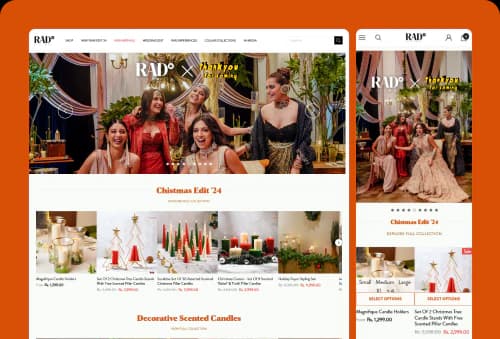
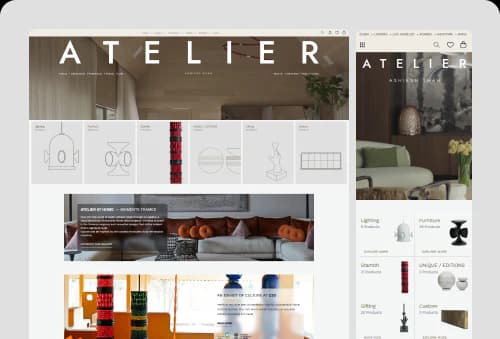
Fashion and lifestyle brands we have built for.

Jewellery, accessories, clothing and home. Every one of these is our design and our build rather than a template we dressed.

What actually moves a fashion PDP

Five things wrong with almost every fashion product page.

Ordered roughly by what they cost, which in this category means returns as much as lost conversions.

01

Scale is never communicated

A product photographed against white with no reference gives the buyer nothing to judge size against. It is the single biggest driver of returns in jewellery, accessories and homeware, and it is a photography decision rather than a copy one.

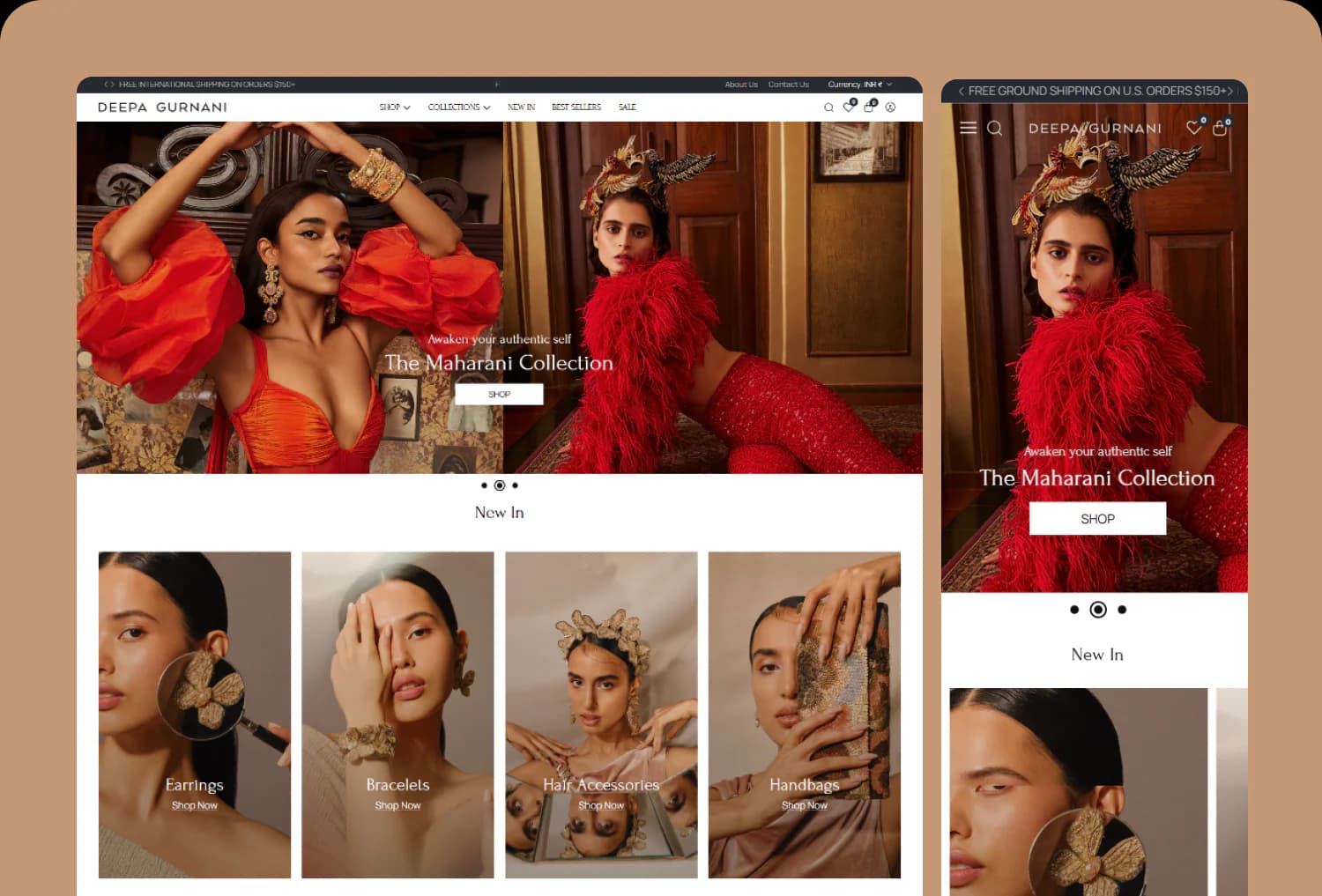
Deepa Gurnani — product grid and the craft story in the same scroll
Deepa Gurnani — product grid and the craft story in the same scroll

02

Fit guidance is a size chart

Centimetres are data, not guidance. What reduces returns is specific: the model is 175cm wearing a medium, this runs small, this is a relaxed cut. Brands fear saying a garment runs small and it reduces returns more than any chart.

03

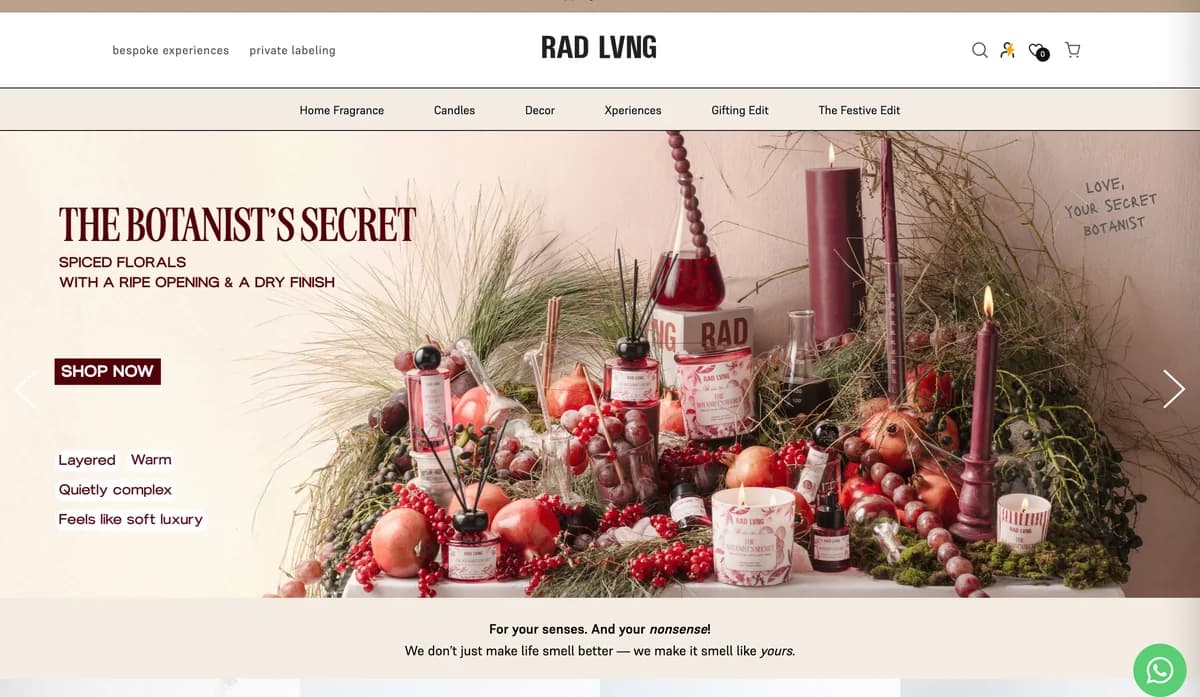
The store was built to the theme, not to the brand

Fashion is judged in about a second and most of that judgement is aesthetic. A store that looks like its theme is telling the customer the brand is generic before they read a word.

Rad Living — a storefront built to the brand rather than around a template

Rad Living — a storefront built to the brand rather than around a template

04

The catalogue will not sit still and the team cannot move it

Drops, seasons, sell-outs and restocks. If merchandising a new collection needs a developer, the store is throttling the business. The fix is real sections the team can rearrange, not a page builder bolted on top.

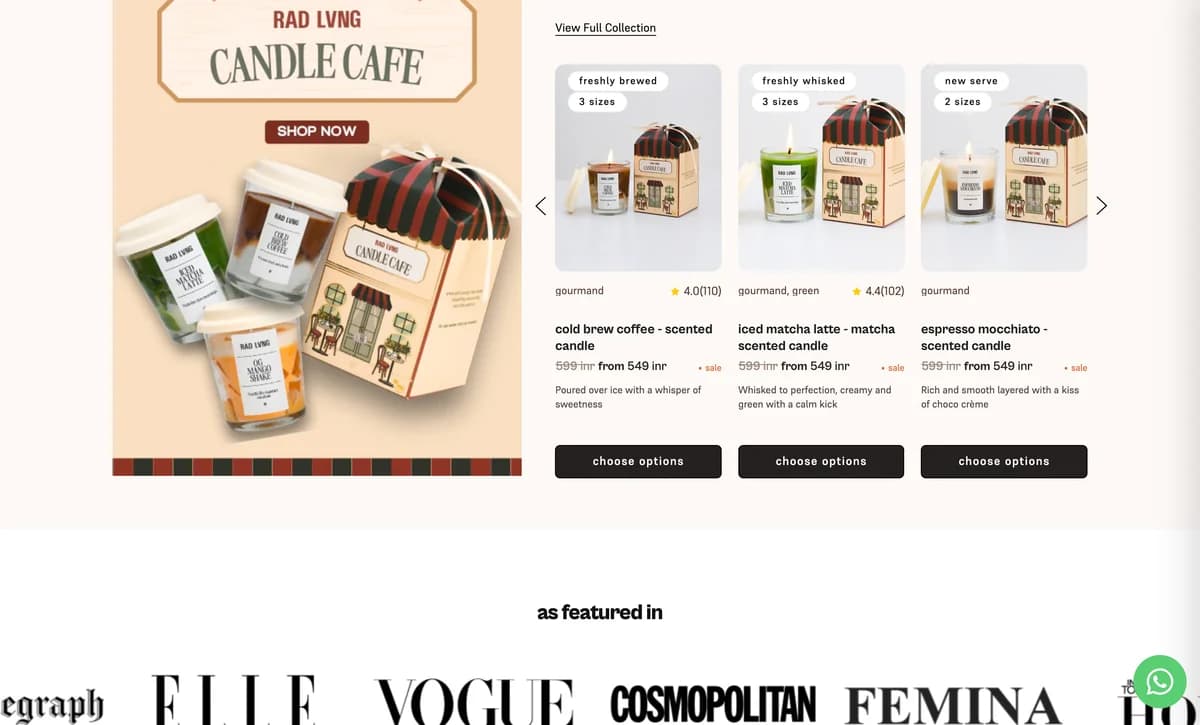
Rad Living — press coverage used as proof where it carries weight

Rad Living — press coverage used as proof where it carries weight

05

Discovery is treated as search

People rarely arrive knowing the product name. They browse by occasion, colour, material or mood, and a store organised only by product type makes them do the translation. Filtering that matches how people actually shop the category matters more here than almost anywhere else.

How we start

You only pay if it wins.

We rebuild one product page — the one carrying your ad spend, or your hero SKU. It goes live as an A/B test against your current page. If our version doesn't win, you don't pay, and you keep the page you had.

We can offer that because the test decides, not us. It also puts the risk of a first engagement on our side of the table rather than yours. If it wins, you pay for that page, and then you decide whether we carry on.

Pick a page to test
  • One page: the PDP behind your ads, or your best seller
  • Shipped live as an A/B test against your current page
  • If it doesn't win, no invoice — and your original page stays
  • If it wins, you decide whether we continue

Choosing an agency

Five questions worth asking. Ask us too.

If you are comparing agencies for a fashion brand, these separate them faster than a portfolio review will.

Can you show me a test that lost, or one that proved nothing?

Fashion agencies show the prettiest portfolios in ecommerce, and a portfolio is not evidence. Roughly half of all tests fail to beat control; a record with no losses has been filtered.

Our answer

Our Pawpeye test is published with its dashboard and a plain statement that the result has not settled — eleven add-to-cart events against six. We publish the interval rather than the headline, which is the same standard we would hold your results to.

What would you do about our return rate?

An agency that treats returns as an operations problem has missed where they are caused. In fashion the return rate is a product page metric, and any agency working in the category should have an opinion on it.

Our answer

We would look at photography for scale, fit specificity, and variant selection on mobile — a mis-tap on a swatch is a return you pay for twice. Then review attributes, so other customers answer the fit question for you.

How will we agree what winning means?

Add-to-cart is the wrong headline metric in fashion if returns are high — a page that lifts ATC and raises the return rate has moved cost, not revenue.

Our answer

We agree the primary metric before anything ships, and in fashion we watch return rate alongside it. A page that wins on add-to-cart and loses on returns is a loss, and we will report it as one.

What happens if it doesn't work?

Fashion runs on drops and seasons. An engagement that consumes a season without a result costs more than the fee.

Our answer

No invoice, and your original page stays live. We take the first engagement on the result, and we will tell you before starting whether your traffic can settle a test inside the season you care about.

Where our clients are

US, UK and Europe, Australia.

We work with DTC brands across three time zones. What changes between them is rarely the structural problem — it is traffic volume, which decides how fast anything can be proven, and the category rules that differ market by market.

United States

Our largest market and the fastest place to prove a change. It is also where returns expectations are highest — free returns are close to table stakes, so the page has to earn its margin before the parcel ships.

United Kingdom & Europe

Sizing conventions differ by market and a single size chart will cost you returns. Smaller per-market volume means tests take longer, and seasonality is sharper than most brands account for when reading a result.

Australia & New Zealand

Opposite-hemisphere seasons, which quietly breaks merchandising and email calendars built for the northern hemisphere. Shipping cost and delivery time are the two objections worth answering above the fold.

We work asynchronously and overlap live for calls. The test runs in your dashboard and you see exactly what we see.

Questions

The ones we get asked.

Something not covered here? Ask us directly.

Fashion converts on fit confidence and returns on the lack of it, so judge an agency on whether it has reduced a return rate, not just raised a conversion rate — the two can move in opposite directions. Ask what they did about size guidance, and what happened to returns afterwards. Proscube builds fashion and lifestyle stores on Shopify and publishes its test results with the interval.

Usually, and the work is on the product page rather than in the returns policy. Most returns in fashion are expectation gaps — scale, fit and material were not communicated well enough for the customer to judge. What we would not do is make the policy hostile to suppress the rate, because a generous policy is frequently what made the sale possible.

That is the point of building it properly. Real sections your team can rearrange, collection templates that handle a launch, and merchandising controls in the theme editor rather than in code. If every drop needs a developer, the store is limiting how fast the business can move.

Yes, and in this category it is usually the wrong project if you separate them. Fashion is judged aesthetically in the first second, and handing a design to a developer who was not in the conversation tends to lose exactly the details that made it worth doing.

Enough to answer the questions a return would have raised: scale against a body or a room, material texture up close, and the product in use. Six considered images beat twenty near-identical ones, and the sequence matters as much as the count.

Shopify builds start at $8K and CRO work at $5K. Those are starting points rather than quotes — we fix the number in writing after a discovery call. The single-page test described above is the exception: you pay only if it wins.

Next step

Send us the product page you are least happy with.

One URL and a sentence about what you think is wrong with it. You will get a real read within a business day, including what it is likely costing you in returns as well as conversions.

Clutch Premier VerifiedShopify Partner