
Proscube
 

Shopify + CRO for pet brands

The buyer is not the user, and most pet product pages forget it.

Pet is a category where the person paying cannot ask the person using it whether it worked. That changes what the page has to prove. This is our work on pet product pages, including a test we will not put a number on.

Clutch Premier VerifiedShopify Partner
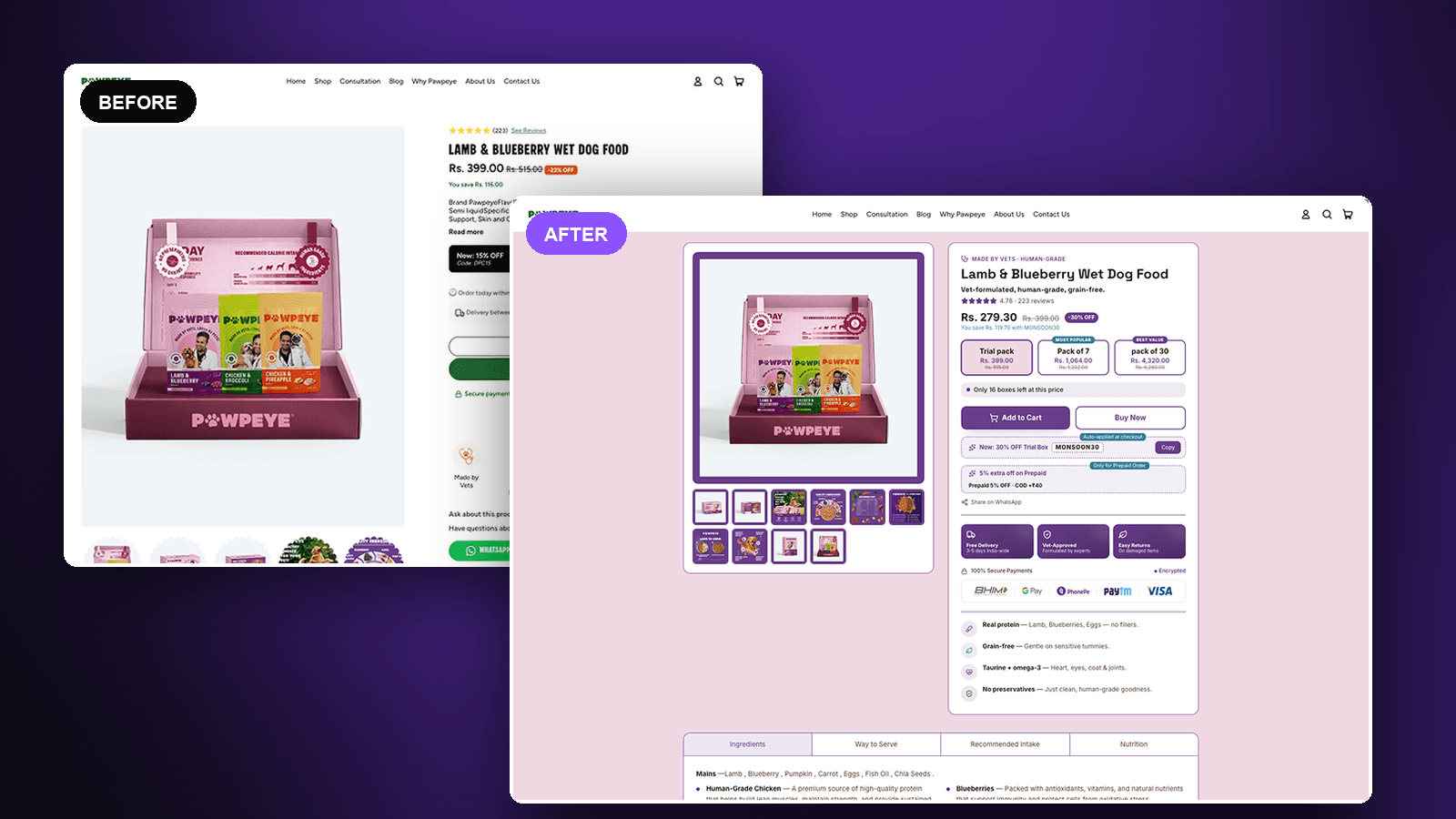
Pet Care product page, before and after the Proscube rebuild

Proscube is a Shopify and conversion-rate-optimisation studio working with pet food, treat and accessory brands. We rebuild the product pages carrying ad spend, ship them as live A/B tests, and publish the readout including tests that did not reach significance. We work with DTC brands across the US, UK, Europe and Australia.

200+

Projects delivered

80+

Shopify stores built

57.6%

Best measured ATC lift

2

Test dashboards published

Before and after

Drag it. This is the actual page.

The Pawpeye product page as it was, against the rebuild. Desktop and mobile — pet traffic skews heavily mobile, so both were rebuilt.

Product page

The original page against the rebuild — same product, same traffic, split 50/50.

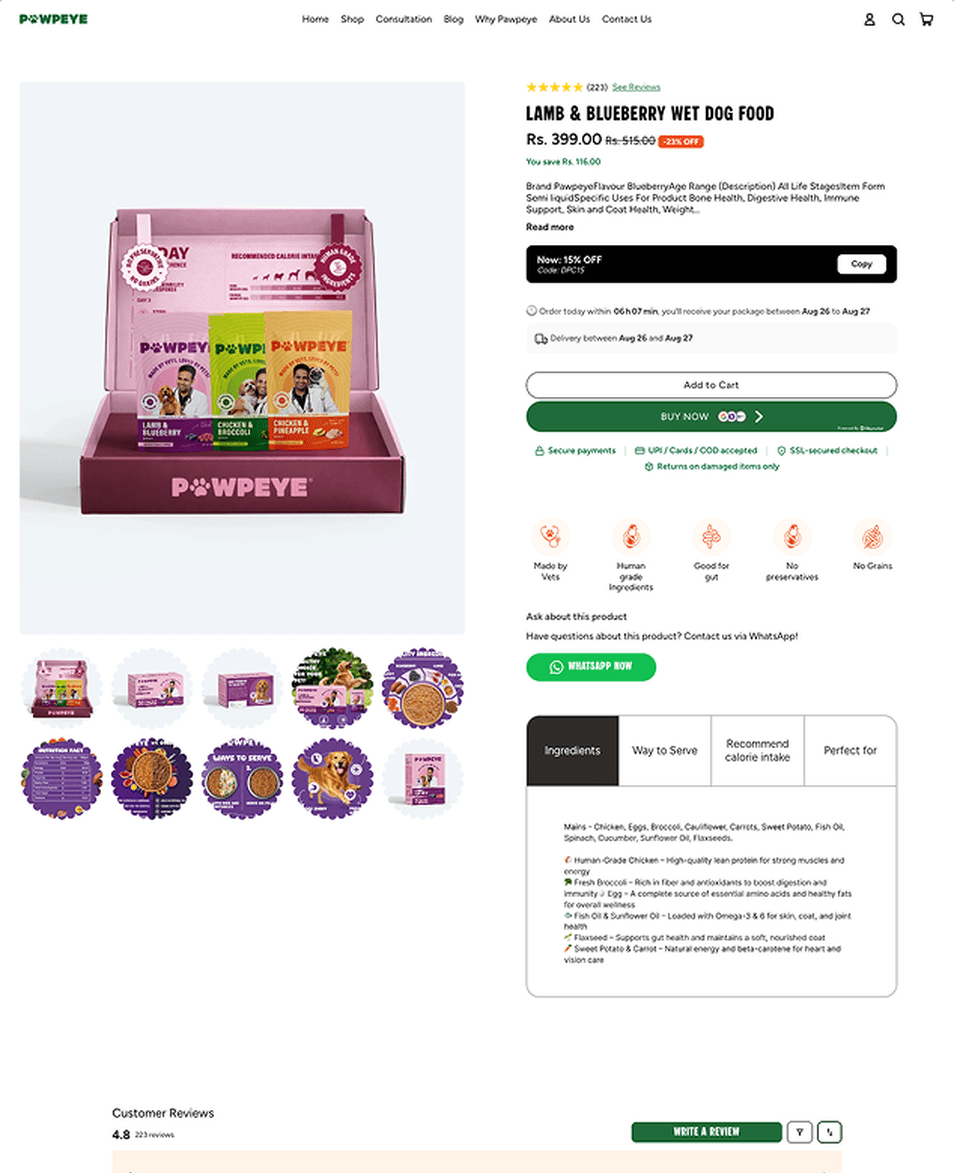
Product page — before
Before
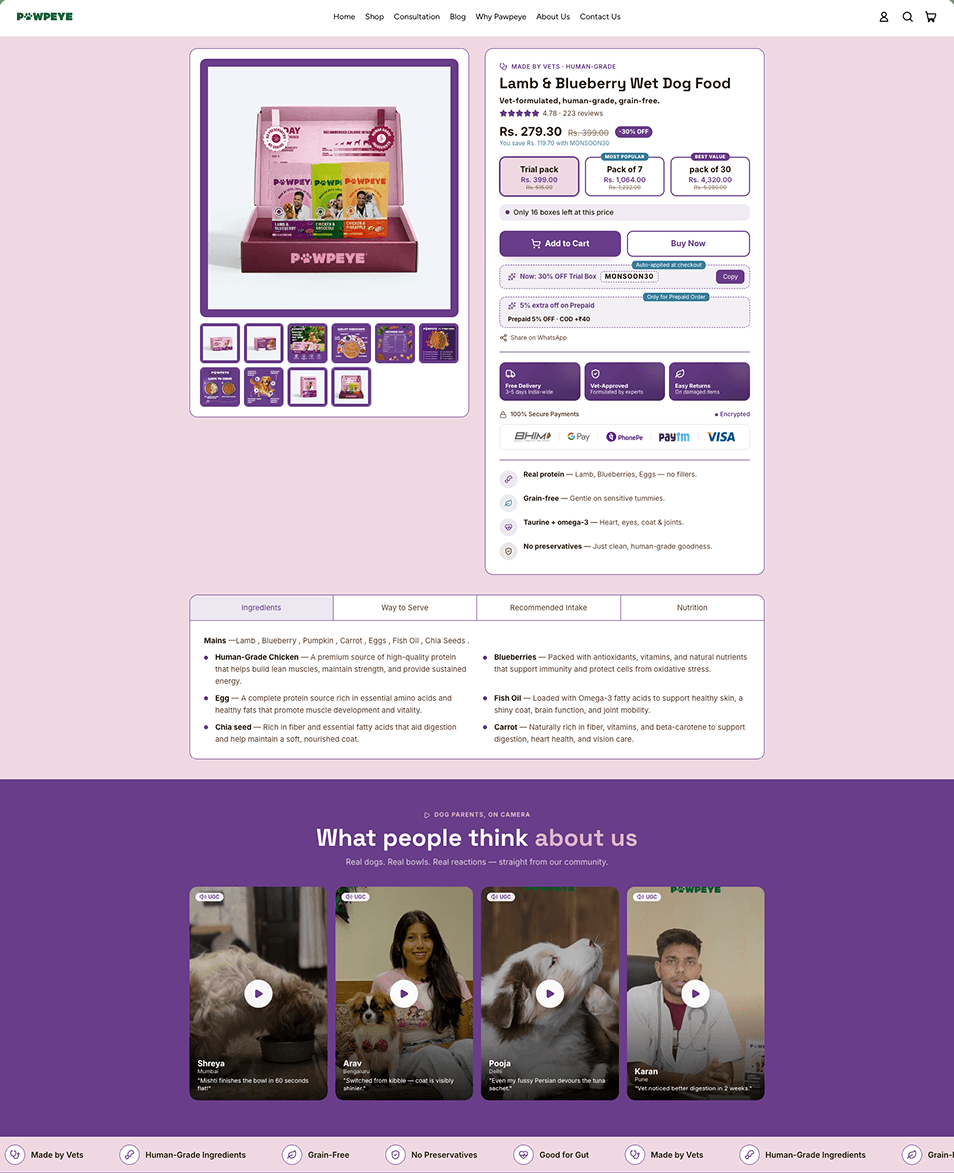
Product page — after
After

Selected work

Pet brands we have designed and built for.

Alongside the CRO work above, this is a store where the design and the build were both ours.

What actually moves a pet PDP

Five things wrong with almost every pet product page.

Not a checklist we invented. These are the ones that keep turning up, roughly in the order they cost money.

01

The page talks to the pet, not the person paying

Charming copy about a happy dog does not answer the question an owner is actually asking, which is whether this is safe and right for their animal. Ingredient transparency and other owners saying it worked do more than any amount of warmth.
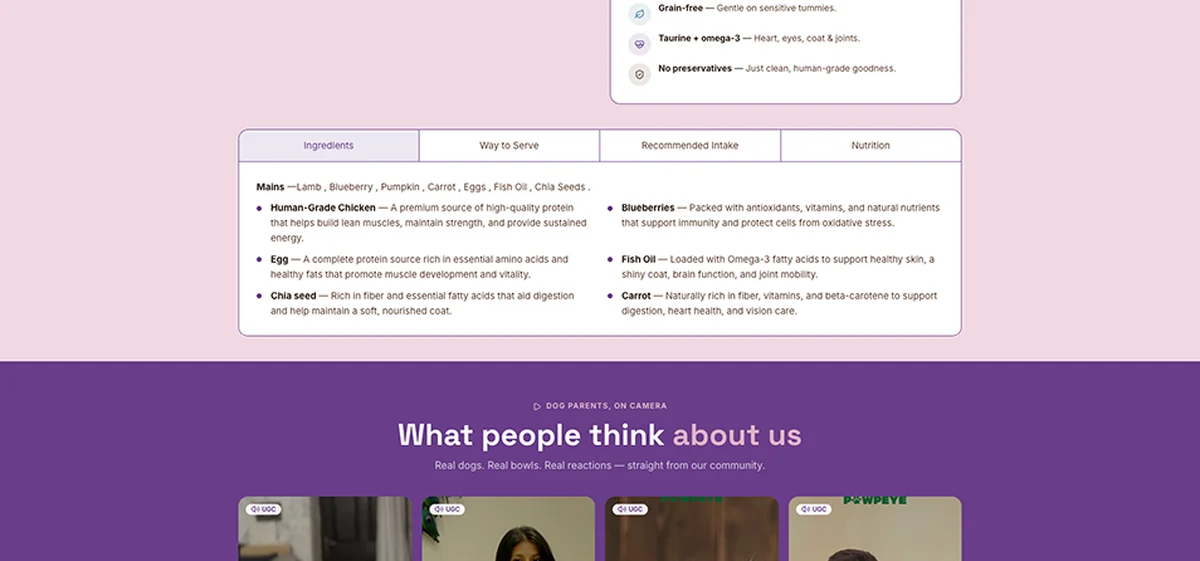
Pawpeye — owner reviews and the ingredient table, on the product page
Pawpeye — owner reviews and the ingredient table, on the product page

02

Size, breed and life stage fragment everything

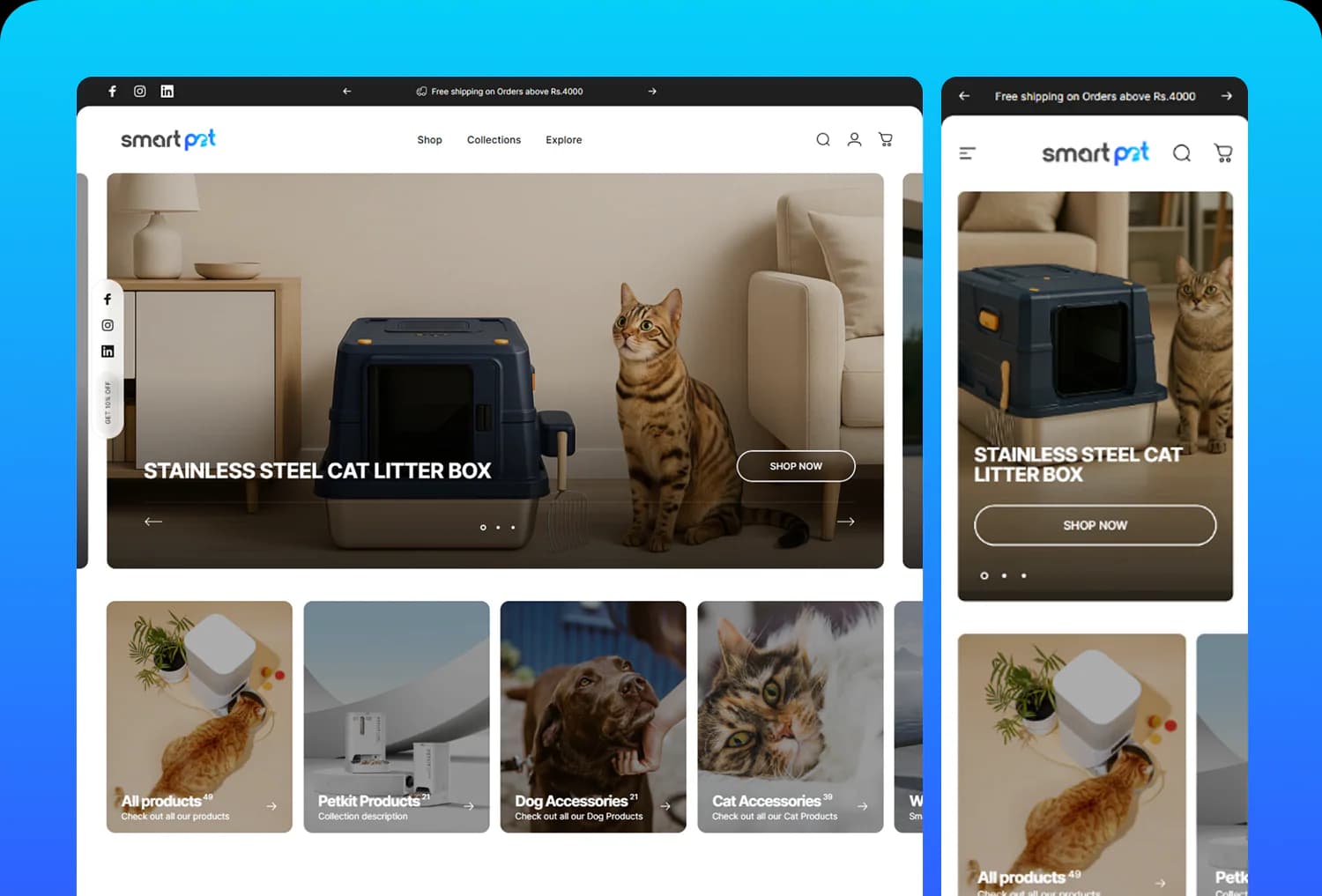
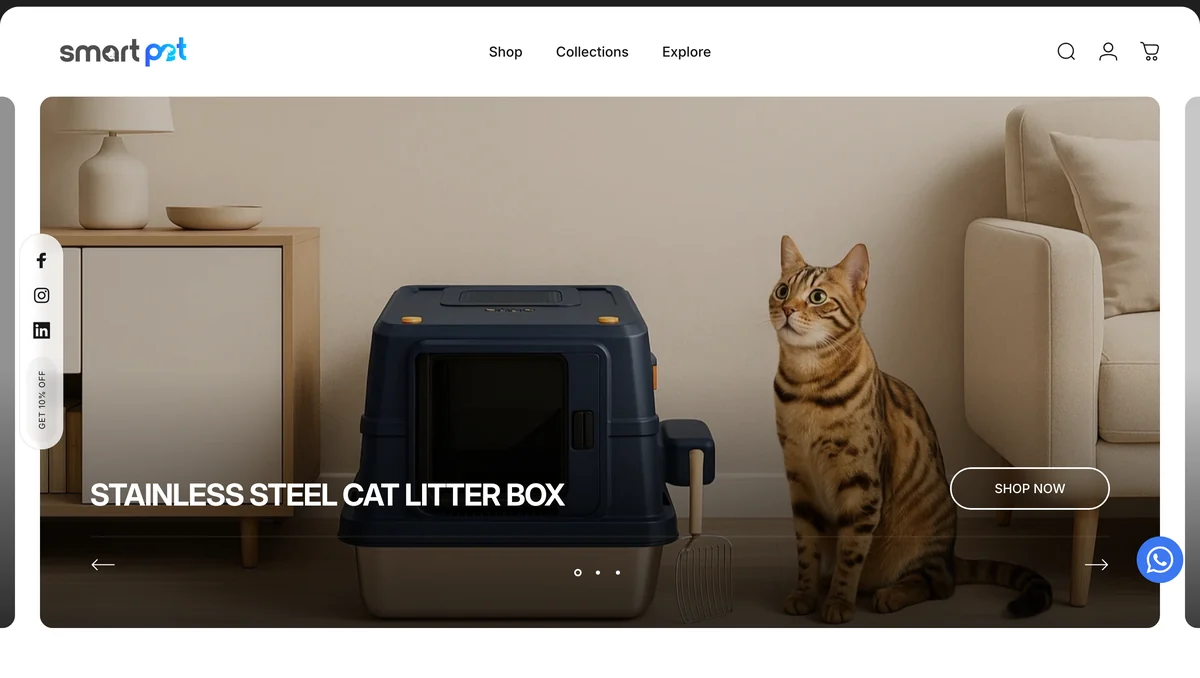
The right product genuinely varies by animal, and a collection grid asks every visitor to self-diagnose. Guided routing beats a filter panel, and showing the product in a real home answers the scale question a white background cannot.

Smart Pet — the product shown in the room it lives in

Smart Pet — the product shown in the room it lives in

03

The pack ladder argues for nothing

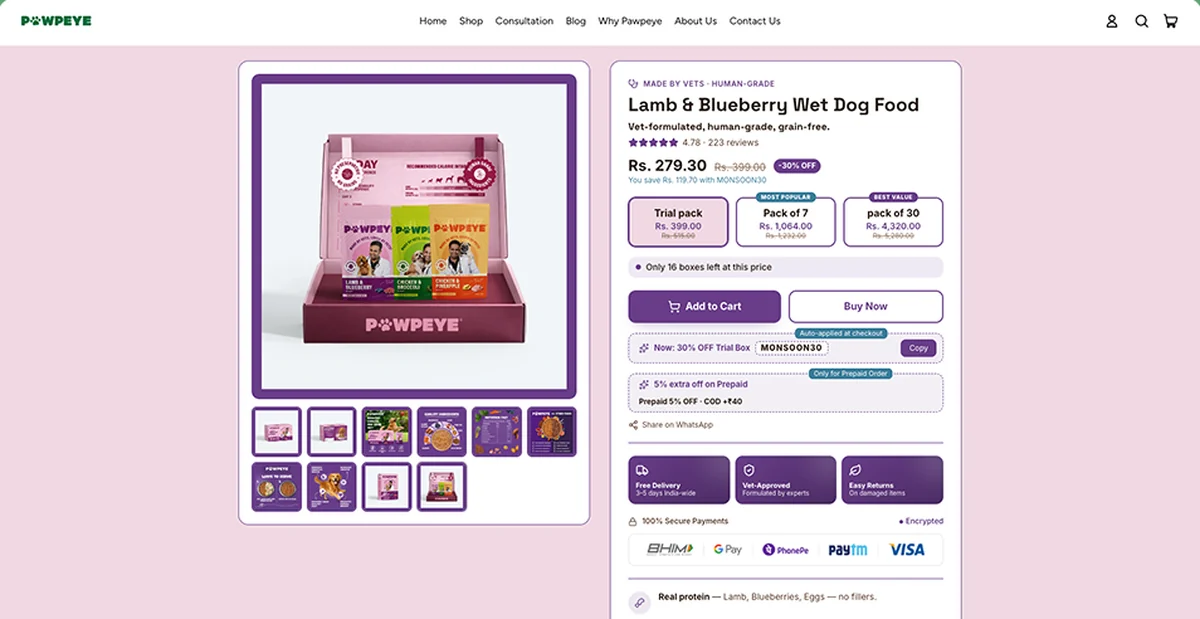
Consumables live or die on the repeat purchase, and the pack choice is where that starts. Price every tier, show the per-unit cost, and give a reason to take the bigger one that is not simply a bigger number.

Pawpeye — pack tiers, unit price and payment trust in one block

Pawpeye — pack tiers, unit price and payment trust in one block

04

Replenishment is left to the customer to remember

A bag of food runs out on a predictable schedule and almost nobody designs for it. Timing a reminder to actual consumption — not a fixed thirty days for every pack size — is the cheapest retention work available in this category.

05

The community is invisible

Pet owners are among the most willing customers in ecommerce to post photographs of the product in use. Most stores collect none of it, and a photo of someone else's dog eating the food is worth more than a paragraph of copy.

How we start

You only pay if it wins.

We rebuild one product page — the one carrying your ad spend, or your hero SKU. It goes live as an A/B test against your current page. If our version doesn't win, you don't pay, and you keep the page you had.

We can offer that because the test decides, not us. It also puts the risk of a first engagement on our side of the table rather than yours. If it wins, you pay for that page, and then you decide whether we carry on.

Pick a page to test
  • One page: the PDP behind your ads, or your best seller
  • Shipped live as an A/B test against your current page
  • If it doesn't win, no invoice — and your original page stays
  • If it wins, you decide whether we continue

Choosing an agency

Five questions worth asking. Ask us too.

If you are comparing agencies for a pet brand, these separate them faster than a portfolio review will.

Can you show me a test that lost, or one that proved nothing?

The most useful question available. Anyone running a real volume of A/B tests has plenty of both — roughly half of all tests fail to beat control. A portfolio of unbroken wins is a filtered record, not a good one.

Our answer

Yes. Our Pawpeye test is published with its dashboard and the plain statement that the result has not settled — the raw numbers say a 77% lift and it rests on eleven add-to-cart events against six. We would rather say that than publish the headline.

Have you worked in a category where the buyer is not the user?

Pet, baby and gifting all share this, and it changes what the product page has to do. An agency whose portfolio is all direct-use products will write copy aimed at the wrong person.

Our answer

Pet and baby-adjacent categories are a meaningful share of our work. The Pawpeye rebuild is on this page with its dashboard, and the thing we changed most was who the page was talking to.

How will we agree what winning means?

Get the primary metric in writing before anything ships. "Conversion improved" measured against last month is a season, a promotion, or a change in traffic mix.

Our answer

One primary metric agreed before we start, usually add-to-cart rate. Even 50/50 split against your current page, reported from the dashboard you can open yourself. If a page cannot settle in a sensible window we say so before starting.

What happens if it doesn't work?

The answer tells you how the risk is shared. A fixed fee regardless of outcome is normal and defensible — but you should know that is what you are buying.

Our answer

No invoice, and your original page stays live. That is the offer above: we take the first engagement on the result rather than on the hours.

Where our clients are

US, UK and Europe, Australia.

We work with DTC brands across three time zones. What changes between them is rarely the structural problem — it is traffic volume, which decides how fast anything can be proven.

United States

Our largest market and the easiest place to test, because the traffic is there. A page with real US volume can settle a split test in days rather than weeks.

United Kingdom & Europe

Smaller per-market volume, so tests take longer and the temptation to call them early is stronger. Multi-currency and VAT are usually a Shopify Markets question rather than a design one.

Australia & New Zealand

Modest domestic volume and high shipping sensitivity. Free-shipping thresholds and pack economics tend to be the highest-leverage things to get right.

We work asynchronously and overlap live for calls. The test runs in your dashboard and you see exactly what we see.

Questions

The ones we get asked.

Something not covered here? Ask us directly.

Understanding that the buyer is not the user. The owner cannot ask the animal whether it worked, so the page has to substitute evidence for feedback — ingredient transparency, other owners, and honest guidance on which product suits which animal. An agency that treats a pet product page like any other consumer good will write to the wrong reader.

Yes, and it is frequently worth it where the range genuinely varies by weight, breed or life stage. The test is whether a real customer could pick correctly without it. Where the range is narrow, a calculator adds a step and costs conversions, and we would say so.

Default the interval to actual consumption for the pack size chosen rather than a flat thirty days, and make pausing at least as easy as cancelling. Most early subscription churn in this category is a second bag arriving before the first is finished, which is an interval problem rather than a product one.

Yes — accessories, litter, grooming, supplements and hardware. The mechanics differ: consumables live on replenishment, hardware lives on proving durability and scale. Smart Pet is a hardware and accessories brand and the work there looked quite different from the food work.

CRO work starts at $5K and Shopify builds at $8K. Those are starting points rather than quotes — we fix the number in writing after a discovery call. The single-page test described above is the exception: you pay only if it wins.

Next step

Send us the product page you are least happy with.

One URL and a sentence about what you think is wrong with it. You will get a real read within a business day — including, sometimes, that the page is fine and the problem is upstream of it.

Clutch Premier VerifiedShopify Partner