There is an uncomfortable pattern in this corner of the market, and anyone who has cleaned up after it knows the shape: a brand pays six figures for "headless", and what arrives is a Hydrogen starter template with the colours changed, a few components swapped, and the content hard-coded into the components themselves. It demos beautifully. Six months later nobody can add a landing page without a developer and a deploy.
That is not a headless build. It is a reskin with a bigger invoice.
The difficulty is that you usually cannot tell the difference from a pitch deck, because both look identical until someone has to extend the thing. So this post is the seven questions that surface it early — while you are still choosing, not while you are stuck.
Ask these in a call, not by email. You are listening for whether the answer arrives immediately and specifically, or whether it gets routed to "our technical team will come back to you."
First, what headless actually means
Worth grounding, because the word gets used loosely. On a normal Shopify store, the storefront and the backend are one system: Liquid templates render on Shopify's servers, and the theme and the commerce engine move together. Headless splits them. The storefront becomes its own application — in our case a Next.js app — and it talks to Shopify over the Storefront API for products, collections, cart and checkout.
Everything below follows from that seam. The good version of headless makes that boundary explicit and designed. The bad version treats it as plumbing to get past so the pretty part can start.
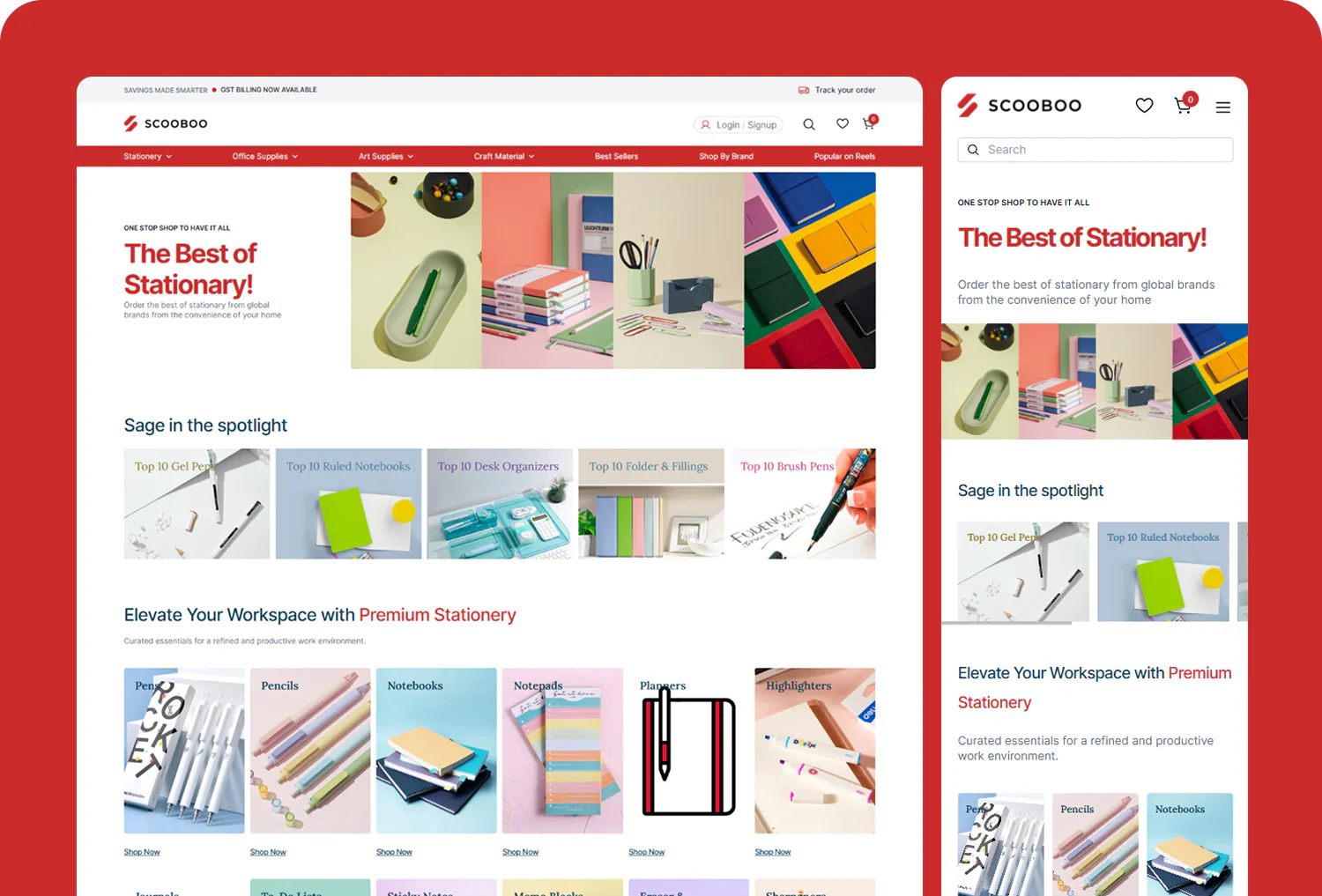
1. "Show me the data layer you designed for your last build"
This is the question that does the most work, and it is first for a reason.
A real headless build starts with how data moves: how products, collections and content flow from Shopify and the CMS into the storefront, which pages are generated ahead of time, which are rendered on demand, what gets cached and for how long, and what happens when a price changes. That design exists before any component is styled.
An agency that architected a storefront can walk you through that in a few minutes, from memory, with the trade-offs they chose and the one they regret. An agency that reskinned a template will describe the template.
2. "Where does content live, and who can edit it?"
The single most common failure in headless projects is content trapped in code.
If marketing cannot publish a landing page, reorder a homepage section, or fix a typo without a developer and a deployment, the build has quietly transferred your content operation into an engineering queue. That cost does not appear in the proposal, and it never goes away.
Ask specifically: which CMS, how the content model is structured, whether a non-developer can create a new page type or only fill in an existing one, and how long a copy change takes to appear live. "We use Sanity" is not an answer. How the model is shaped is the answer.
3. "What happens to my apps?"
Most Shopify apps inject themselves into a Liquid theme. Go headless and that injection point is gone. Reviews, upsells, loyalty widgets, banners, the popup your email agency insists on — each one now needs an API integration or a replacement, and a few have neither.
A good agency will ask for your installed app list before quoting. If a headless proposal arrives without anyone having looked at what you actually run, the number in it is a guess.
4. "What are you doing about checkout?"
Shopify's checkout is not yours to rebuild, and that is mostly a good thing — it is the most optimised part of the platform and it stays PCI-compliant without you. But it means the customer leaves your beautiful custom storefront and lands on Shopify-hosted checkout.
The seam is visible unless someone designs for it. Ask how they handle branding continuity, how the cart hands off, and what happens to analytics across that boundary. If the answer is vague, the handoff will be too.
Talk it through
Got a headless proposal you are not sure about?
Send it over with your store URL. We will tell you what it is actually proposing to build, and whether you need it — including when the honest answer is that a theme would serve you better.
Get a read on itA real read within one business day — not a sales call.
5. "Who is writing the code, and were they on this call?"
Not specific to headless, but it bites harder here. A Liquid theme built by a junior is recoverable — the platform constrains how wrong it can go. A custom Next.js application built by someone learning Next.js on your budget is a codebase you may end up paying twice for.
Ask for the name of the person who will be in the repository, and whether they were in the room when the project was scoped. An agency that cannot answer that is telling you the build will be handed to whoever is free.
6. "What does year two cost?"
Headless has running costs a theme does not: hosting, framework upgrades, API version migrations when Shopify deprecates one, and the maintenance of every integration written to replace an app.
Shopify versions the Storefront API and retires old versions on a schedule. Somebody has to keep up with that. If nobody has mentioned it, nobody has planned for it.
Get year-two numbers in writing before you sign for year one. Our own figures are on the headless service page, and we would rather you compare them against someone else's than discover them later.
7. "Tell me when I should not do this"
The most revealing question on the list, and the cheapest to ask.
Headless is a tool for specific bottlenecks: a storefront experience a theme genuinely cannot express, performance a well-built theme cannot reach, content and market complexity that has outgrown Liquid. It is not a status upgrade, and for most brands it is the wrong purchase.
An agency that will talk you out of a six-figure build when it is not warranted is worth more than one that will not. We put the whole argument on our own service page under When NOT to go headless, because a client who should not have gone headless is a bad outcome for both sides — they get a maintenance burden, we get a reference that never compounds.
If the agency you are talking to cannot produce a single scenario where they would tell you no, you have learned something.
The short version
| A build | A reskin | |
|---|---|---|
| Data layer | Designed before components | Whatever the template shipped with |
| Content | Modelled in a CMS, editable by marketing | Hard-coded, needs a deploy |
| Your apps | Inventoried and scoped before quoting | Discovered during build |
| Year two | Costed in writing up front | Discussed after launch |
| Saying no | Will tell you when a theme is right | Never met a headless project it disliked |
None of these questions requires you to be technical. They require the person answering to have done the work, which is exactly what you are trying to find out.
If you want a second opinion on a proposal in front of you, send it to us. We will tell you what it actually builds — and if the honest read is that you do not need headless at all, we will tell you that instead.
About the author
Manpreet Singh
Manpreet Singh is the founder of Proscube, an ecommerce growth studio. He leads the studio's Shopify and Shopify Plus engineering, headless builds, CRO, and its work on AI engine optimization, and writes its guidance on how to grow a DTC brand without wasting money. He works directly with founders — no account-manager layers between you and the people doing the work — and would rather tell a client not to build something than sell them work they don't need.
More about Manpreet