The headless pitch is performance and control. Both are real. What rarely makes the pitch is that decoupling the storefront quietly breaks a set of things that worked the day before — and every one of them becomes a line item.
None of this is an argument against headless. It is an argument against finding out in week six.
Why things break at all
On a Liquid theme, apps work by injecting code into your theme. That is the contract: Shopify renders your storefront, and apps get to put things in it.
Headless removes the theme. Shopify is no longer rendering your storefront — your Next.js app is. There is no longer a place for an app to inject into.
Four categories, in the order they usually bite.
1. Theme-injected apps
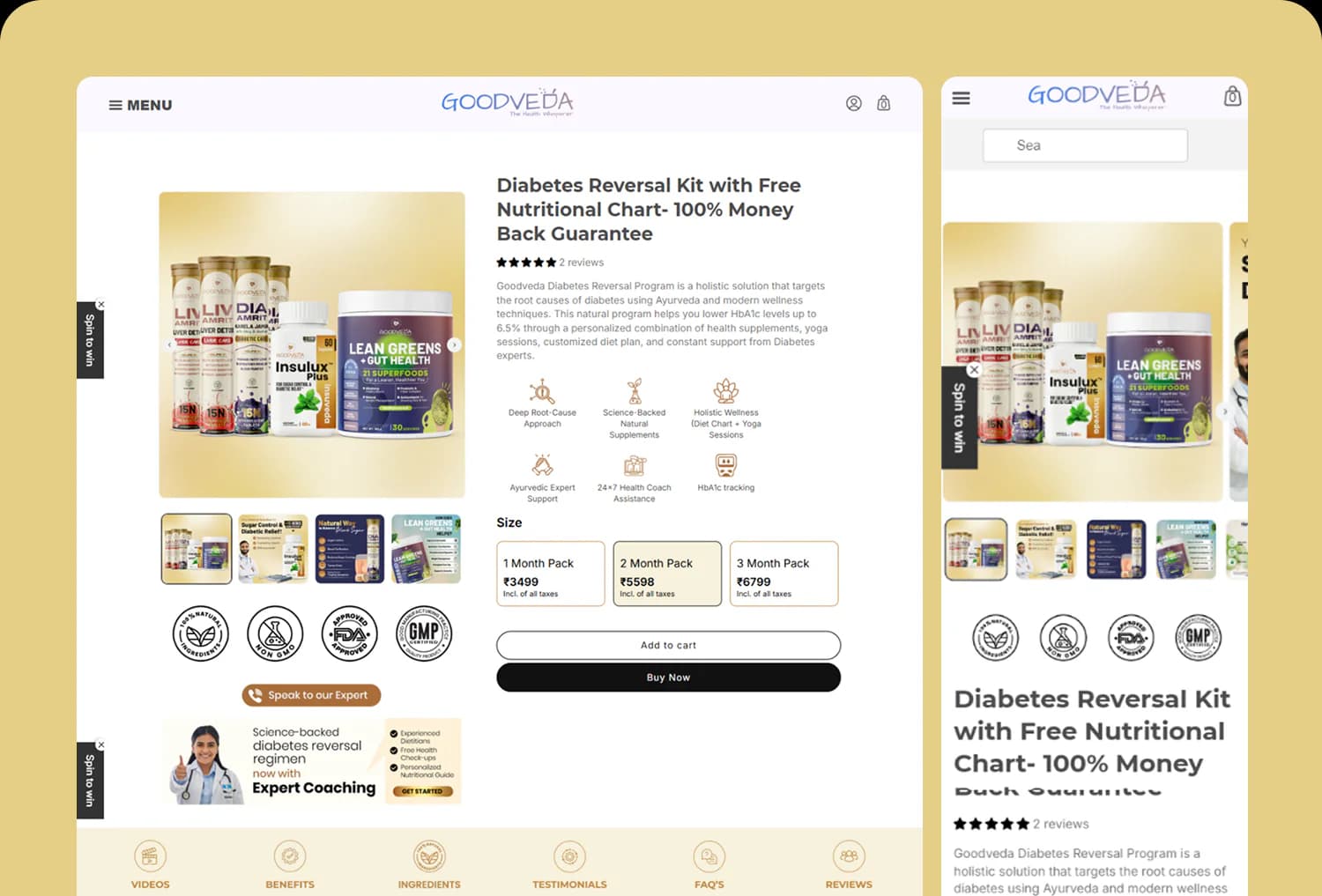
Reviews, loyalty widgets, upsells, sticky bars, popups, size guides, back-in-stock. Whether each survives depends entirely on whether it has a usable API.
- Has a proper API — integrate it. A day or a few, per app.
- API exists but is thin — you get data but rebuild the UI. More work, and the UI is now yours to maintain.
- Theme-only, no API — replace it or drop it.
Export your installed app list before you take a single headless quote. An agency that quotes without seeing it is guessing, and the gap always lands on your side of the invoice.
Count on somewhere between a handful and a couple of dozen apps on a mature store. A meaningful slice will need work.
2. Checkout
You do not rebuild Shopify's checkout, and you should not want to — it is the most optimised surface on the platform and it stays PCI-compliant without you thinking about it.
But your customer now moves from a storefront you fully control to a checkout hosted by Shopify. Three things need deliberate handling:
- Branding continuity — checkout customisation is real but bounded, and bounded in different ways depending on your plan.
- The handoff — cart state has to arrive intact, every time, including the awkward cases.
- Analytics across the seam — this is where attribution quietly breaks, and where nobody notices for a month.
Talk it through
Worried about what your store would lose?
Send your store URL and your installed apps. We will tell you which survive a headless build, which need rebuilding, and roughly what that adds — before you commit to anything.
Get your stack checkedA real read within one business day — not a sales call.
3. Page builders and theme editing
If your team uses Shopify's theme editor, or a page builder like Shogun or PageFly, that stops.
This is the change that upsets people most, because it is the one they feel weekly. Somebody who could rearrange a homepage on a Tuesday afternoon now files a request.
It is fixable, and the fix is the project. A properly modelled CMS gives marketing more control than the theme editor did — genuinely composable sections, real preview, proper content types. But that is deliberate architecture work in week one, not something that emerges from a good build by accident.
When it is skipped, you get the worst outcome available: content hard-coded into components, and a marketing team that needs a deploy to change a headline.
4. Same-day changes
On a theme, a copy change is live in a minute. On a headless build it depends on how the build is architected — what is statically generated, what revalidates, how long caching holds.
Well built, this is invisible; content changes propagate in seconds and nobody thinks about it. Badly built, a price change takes a rebuild.
What this adds up to
| Handled well | Handled badly | |
|---|---|---|
| Apps | Inventoried and scoped before quoting | Discovered mid-build, invoiced as extras |
| Checkout | Branded, tested, analytics intact | Visible seam, broken attribution |
| Page editing | CMS gives marketing more control than before | Content in code, deploys for typos |
| Content changes | Live in seconds | Needs a rebuild |
Every row on the left is a decision somebody made early and deliberately. Every row on the right is the same decision skipped.
The question to ask
Before you sign anything, ask the agency to walk through your installed apps one by one and say what happens to each. It takes twenty minutes and it tells you two things: whether they have scoped your project, and whether the number in the proposal covers the project you actually have.
If you want us to do that pass, send your store URL and app list. We will tell you what survives, what does not, and what it adds — and if the answer is that a well-optimised theme keeps everything and costs a fraction, we will tell you that too.
About the author
Manpreet Singh
Manpreet Singh is the founder of Proscube, an ecommerce growth studio. He leads the studio's Shopify and Shopify Plus engineering, headless builds, CRO, and its work on AI engine optimization, and writes its guidance on how to grow a DTC brand without wasting money. He works directly with founders — no account-manager layers between you and the people doing the work — and would rather tell a client not to build something than sell them work they don't need.
More about Manpreet