
Berlin · Germany and DACH region
Shopify agency for Berlin brands.
Your store gets traffic. Something between the product page and the thank-you page is losing it. We rebuild that part, ship it as a live test against the page you have now, and you see the number before you pay for it.
Written by Manpreet Singh, Founder · Proscube


80+
Shopify stores built
20+
of them on Shopify Plus
60K+
installs on apps we shipped
$1,500
CRO audit, fixed price
Proscube is a Shopify and CRO studio working with Berlin brands on Shopify Plus builds, replatforming and conversion optimisation. The team works remotely from India and publishes its A/B test results with sample sizes and confidence intervals rather than headline percentages.
Working with us from Berlin
We work from India, roughly 3.5 to 4.5 hours ahead of Central European time. Your whole morning and most of your afternoon overlap our working day. No European office.
What we do
What Berlin brands ask us for.
What changes here
What selling into Germany and the DACH region actually changes.
Germany's packaging law requires LUCID registration before you ship a single parcel.
VerpackG applies to anyone putting packaging into the German market, including sellers based elsewhere. Registration is public and enforceable, and marketplaces check it. It is routinely missed by brands expanding into Germany and it is not something your theme can fix after the fact.
German buyers expect invoice and direct debit payment, not just cards.
Pay-on-invoice has unusually high share here. A checkout offering only cards and PayPal is leaving German conversions on the table, and that is a measurable gap rather than a preference.
Right of withdrawal is 14 days and your returns copy is legally load-bearing.
Vague returns wording is a legal exposure in Germany, not just a conversion problem. It also has to be reachable before checkout.
Not sure which page is costing you the most?
Send the URL. We will tell you what we would look at first — and if the answer is that your store is fine, we will say that too.
Selected work
Stores we have built.
Product pages, rebuilt and shipped. Two of these carry a published A/B test; the other two carry the redesign and no claim, because no test was run on them.
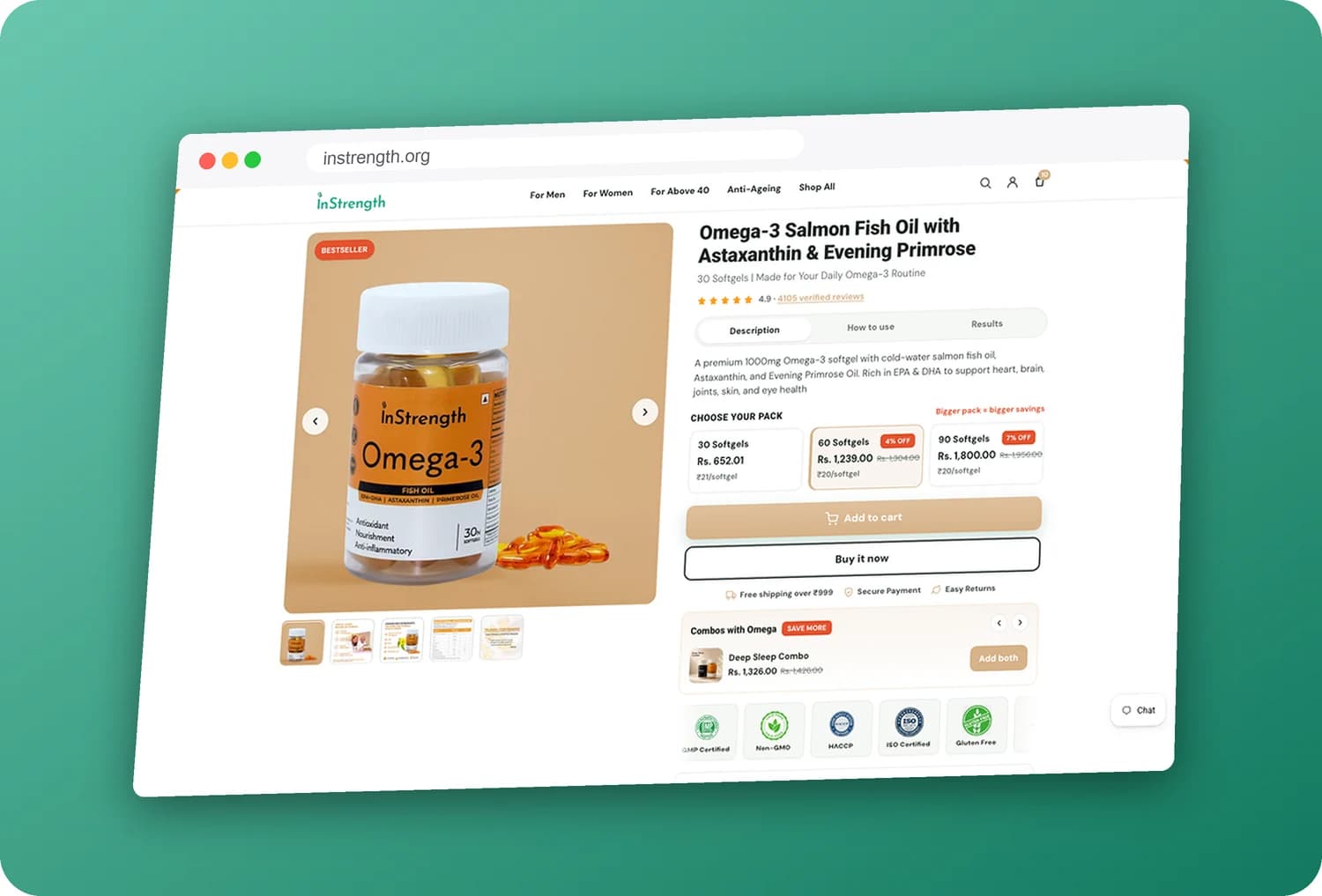
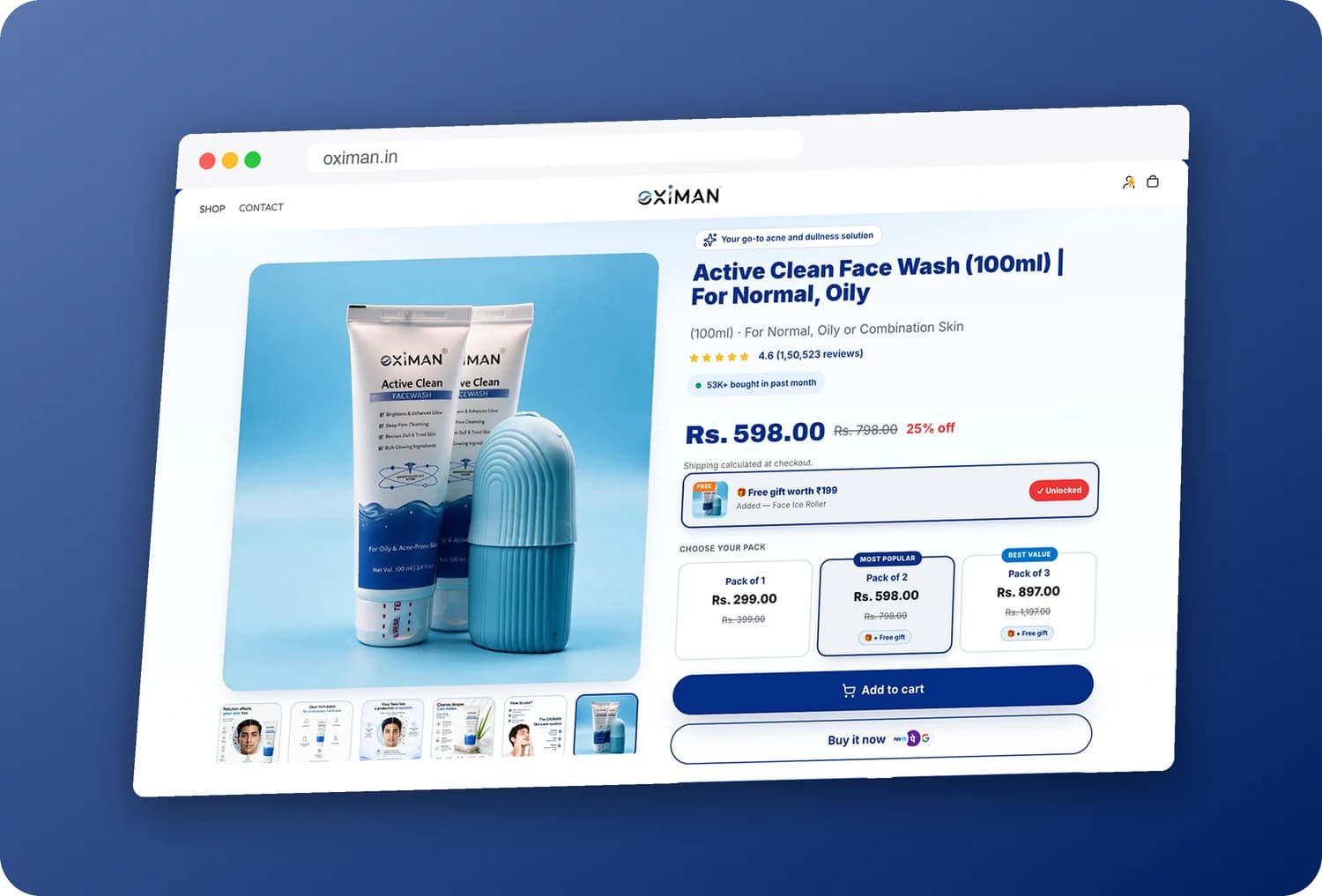
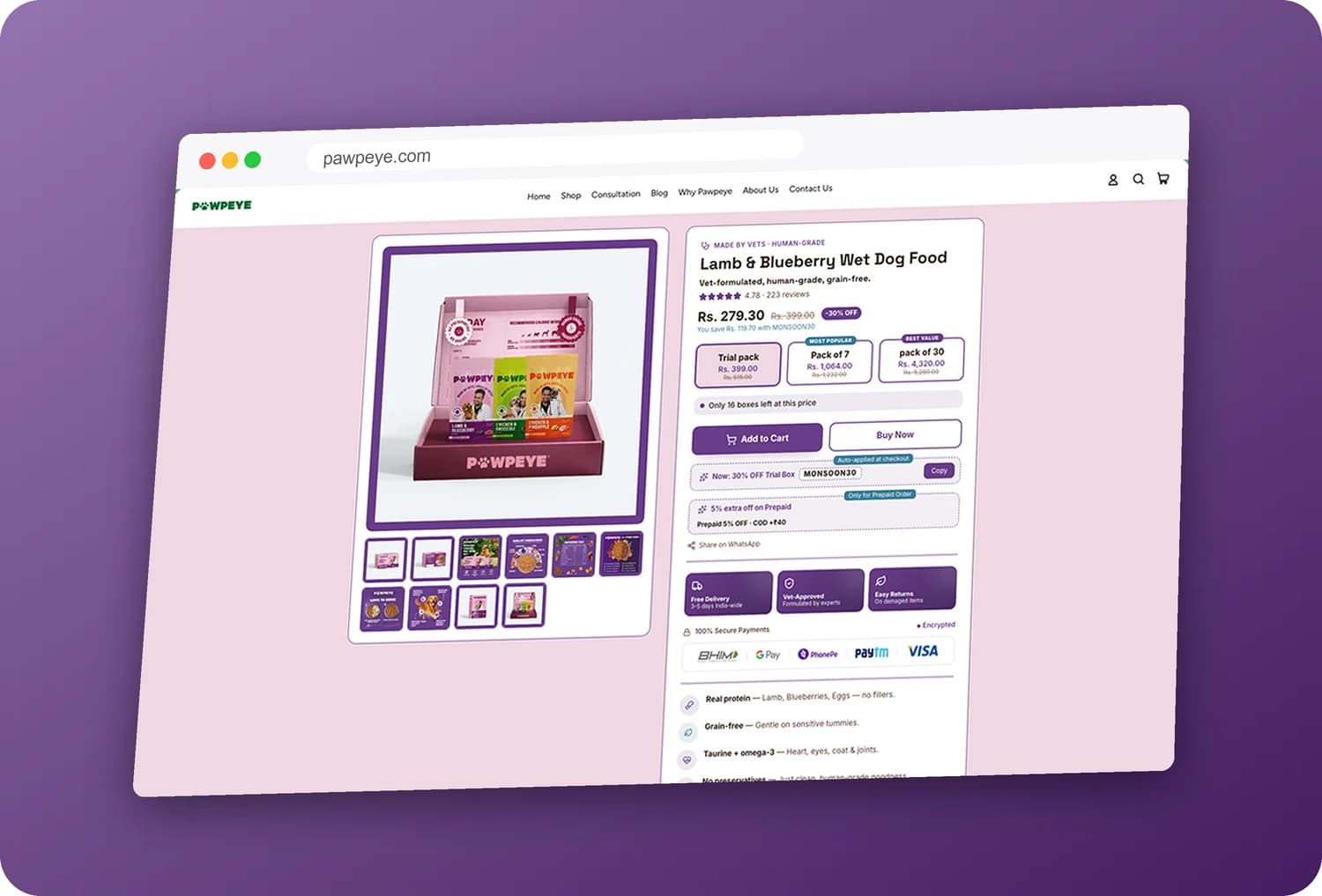
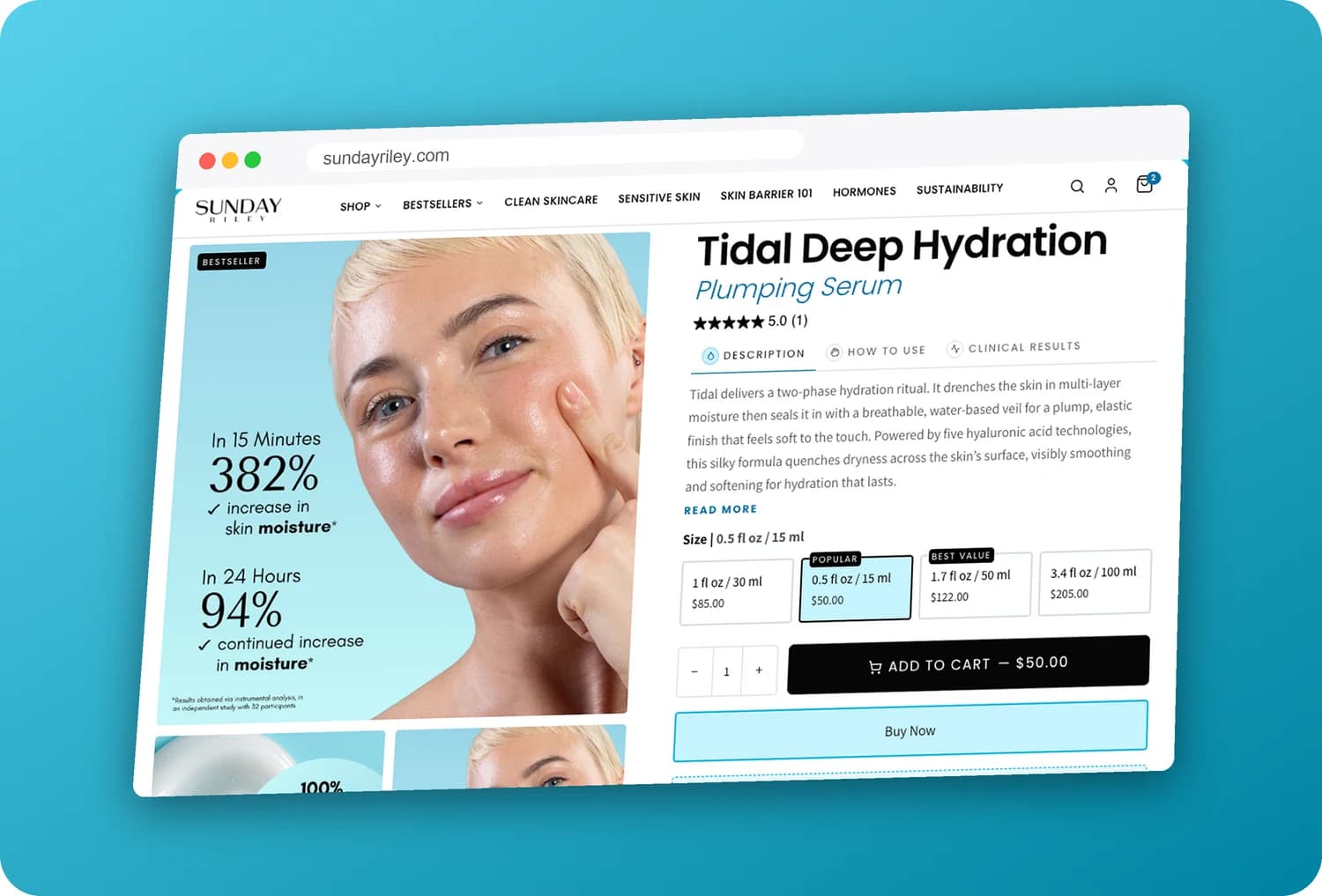
Live on client stores
The buying blocks we build.
Not mockups. These are running right now on stores we built, and each one is a decision the shopper makes before they reach checkout.
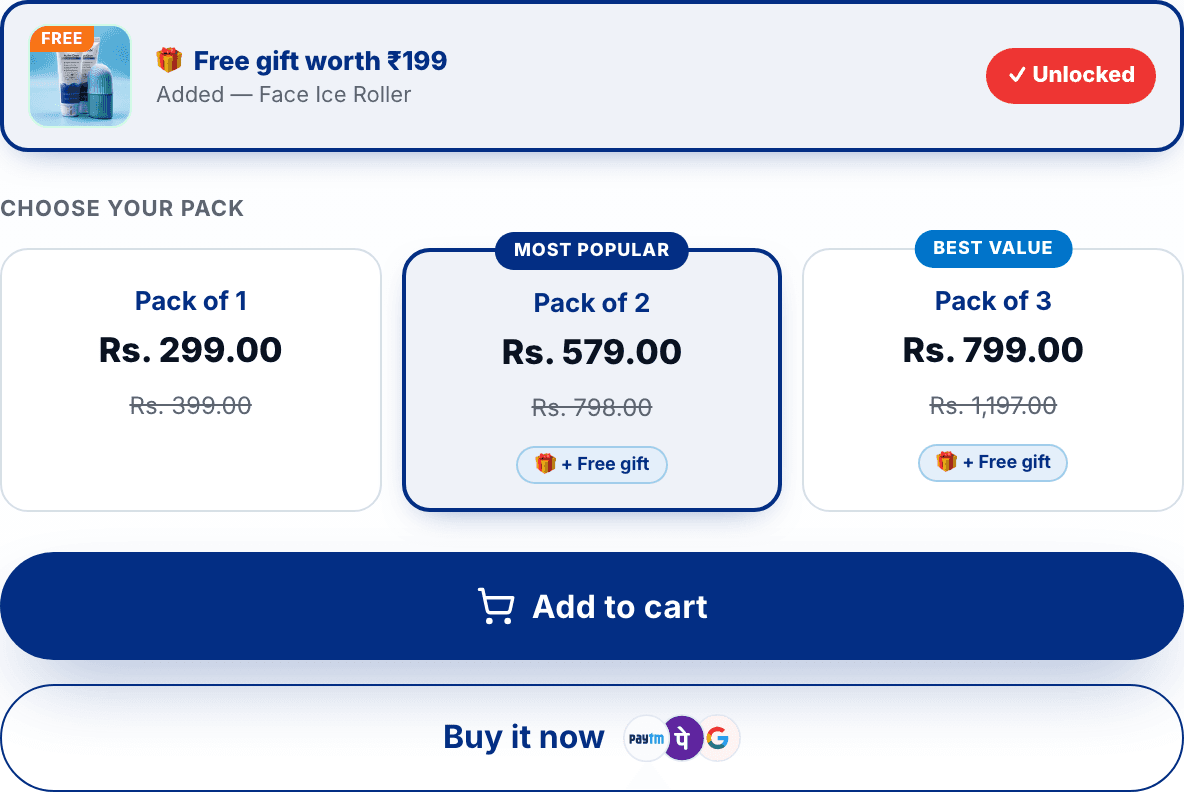
Live on Oximan
Pack tiers with a best-value badge
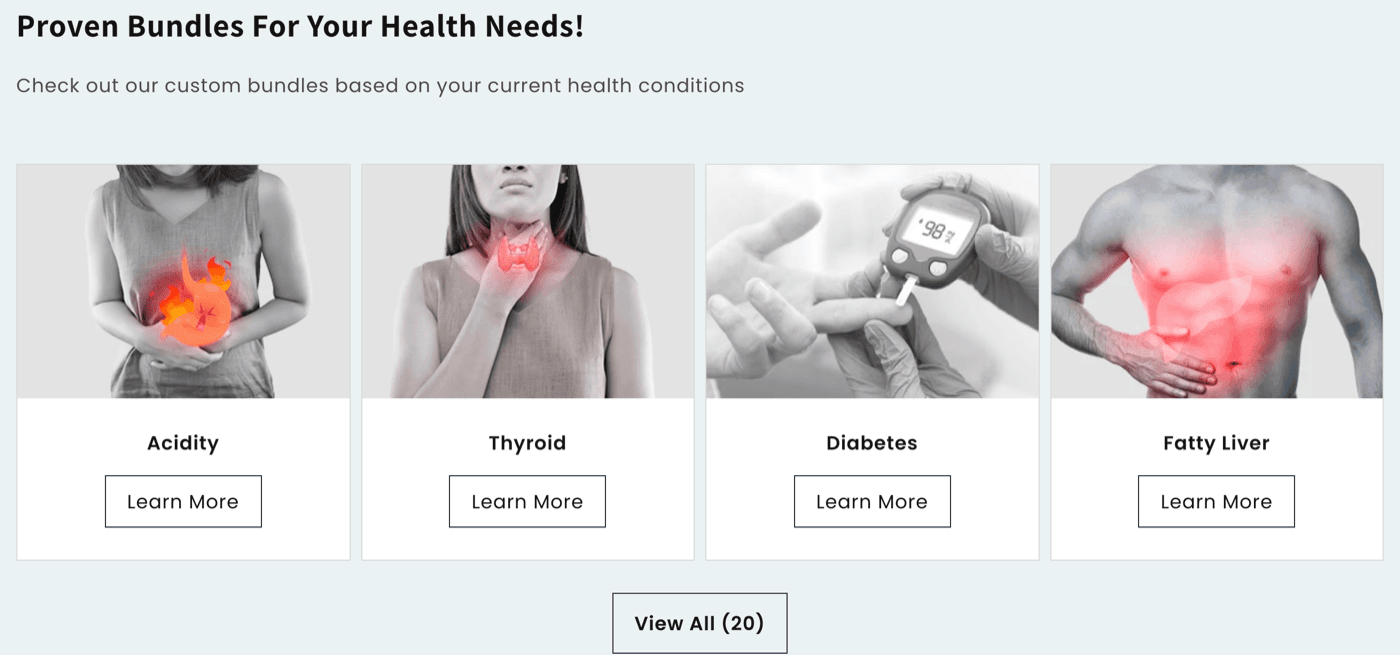
Live on Miduty
Bundles built around the need
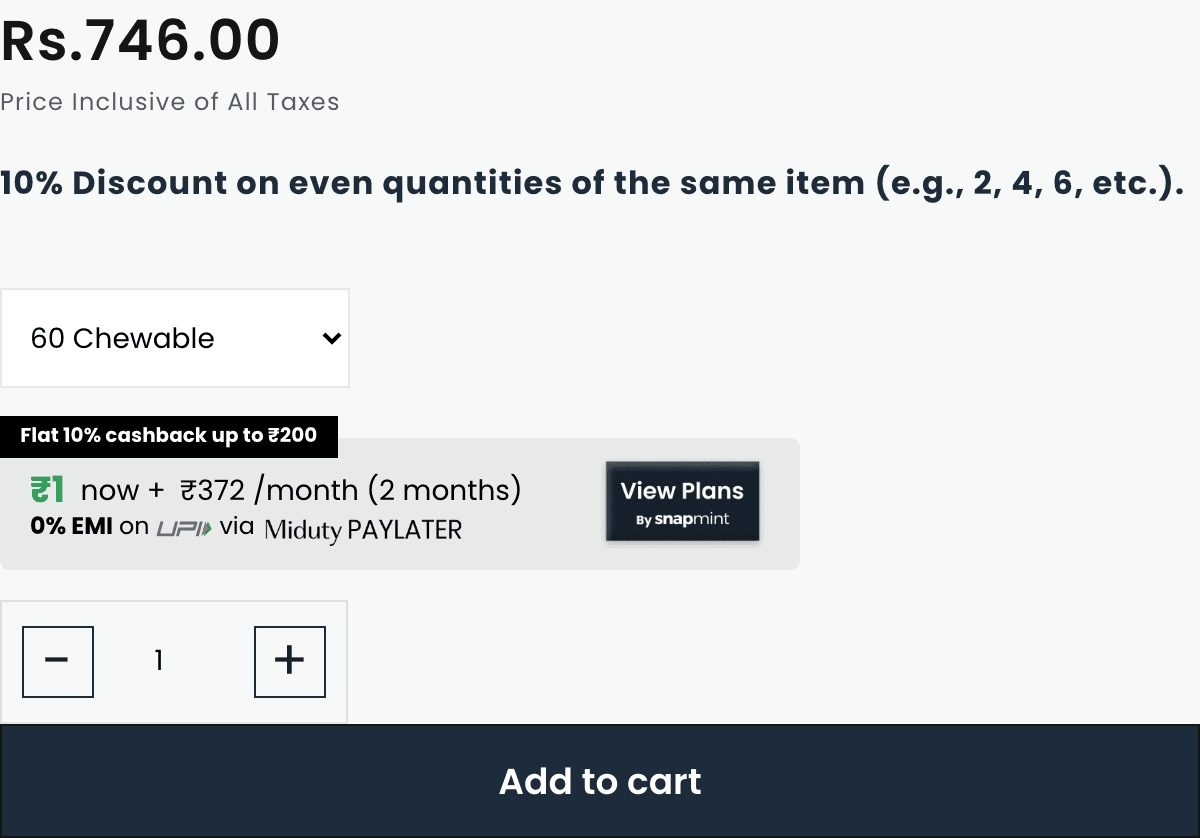
Live on Miduty
Multi-buy discount on the PDP
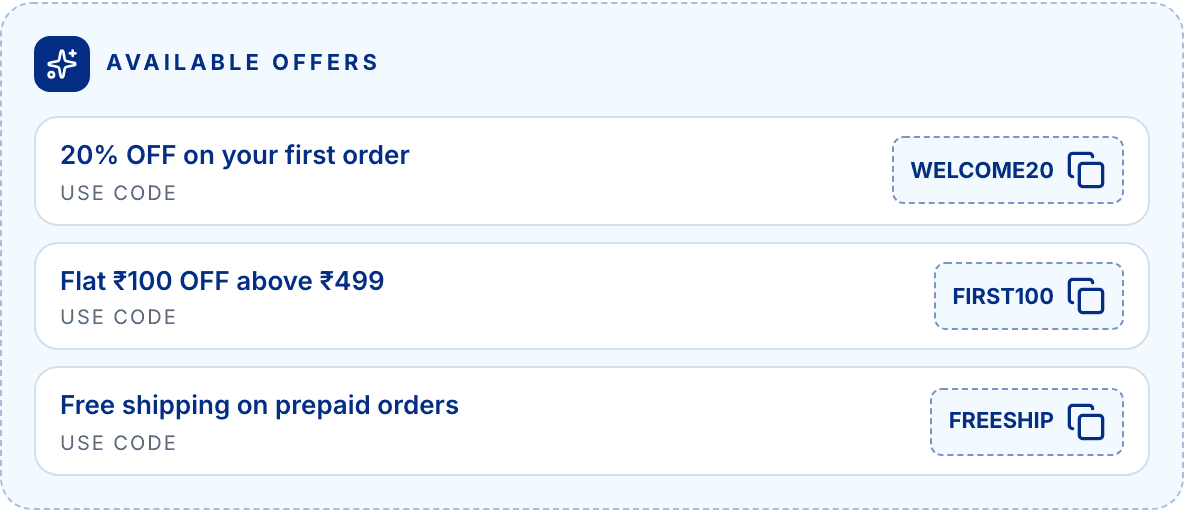
Live on Oximan
Offer codes surfaced before checkout

Live on InStrength
Urgency that is actually true

Live on Oximan
Free gift, shown as already unlocked
Proof
Two tests, published with their statistics.
Anyone can publish a percentage. A percentage with no sample size behind it is not a result, it is a claim with a number attached. Ours are published with the working — including the test that did not clear significance, which is the one that tells you most about how we report.
How we start
You only pay if it wins.
We rebuild one product page — the one carrying your ad spend, or your hero SKU — and ship it as a live A/B test against your current page. If our version does not win, you do not pay, and you keep the page you had.
- One page: the PDP behind your ads, or your best seller
- Shipped live as an A/B test against your current page
- If it does not win, no invoice — your original page stays
- If it wins, you decide whether we carry on
No retainer, no minimum term. One page, one test.
Questions Berlin brands ask.
Yes, remotely from India, with your whole morning overlapping our working day. No German office.
Yes, through the providers that offer it on Shopify. It matters more in Germany than almost anywhere else and it is usually the single biggest checkout gap we find on DACH stores.
CRO audit $1,500 USD, fixed scope, two weeks.
Nearby markets
Also working with Amsterdam, Paris.
Same team, same published test results. What changes between these pages is the tax rule, the payment rail and the delivery promise — which is the part that actually breaks a checkout.
Send us your store.
Tell us the URL and what is not converting. You get a real read within one business day — what we would look at first, and whether it is worth doing at all. Not a sales call.